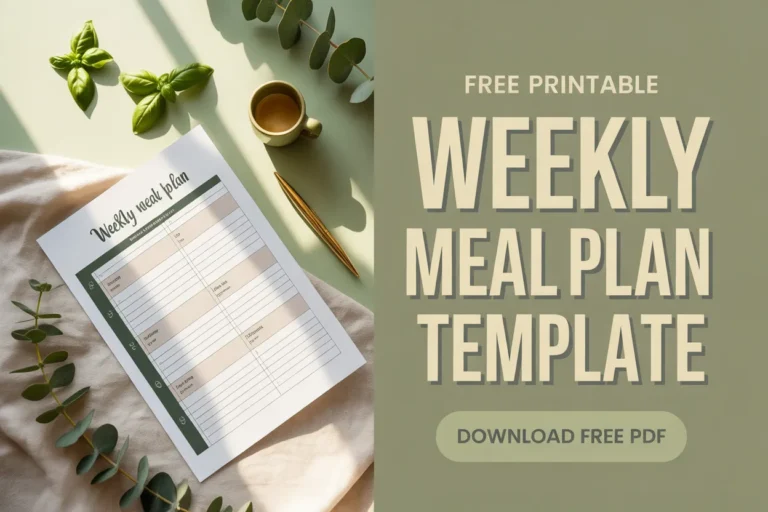

The Printable Grocery List for Weekly Meal Prep That Actually Saves You Time and Money
It’s Sunday afternoon. You’ve got a vague plan to meal prep, a half-written list on the back of an envelope, and a creeping suspicion you’re about to buy three jars of pasta sauce again. Two hours later, you’re wandering aisle 7 wondering if you needed quinoa or just thought you did. We’ve all been there, and a printable grocery list fixes it in about 15 minutes flat.
This post is for the home cook who wants Sunday prep to feel calm instead of chaotic. The five free printables below are organized by aisle, scaled by household size, and paired with a pantry-check sheet so you stop double-buying olive oil. If you’ve ever lost a receipt, blown your budget on impulse snacks, or come home without the one thing you went in for, this list system was built for you.
Why a Printable Grocery List Beats the Notes App
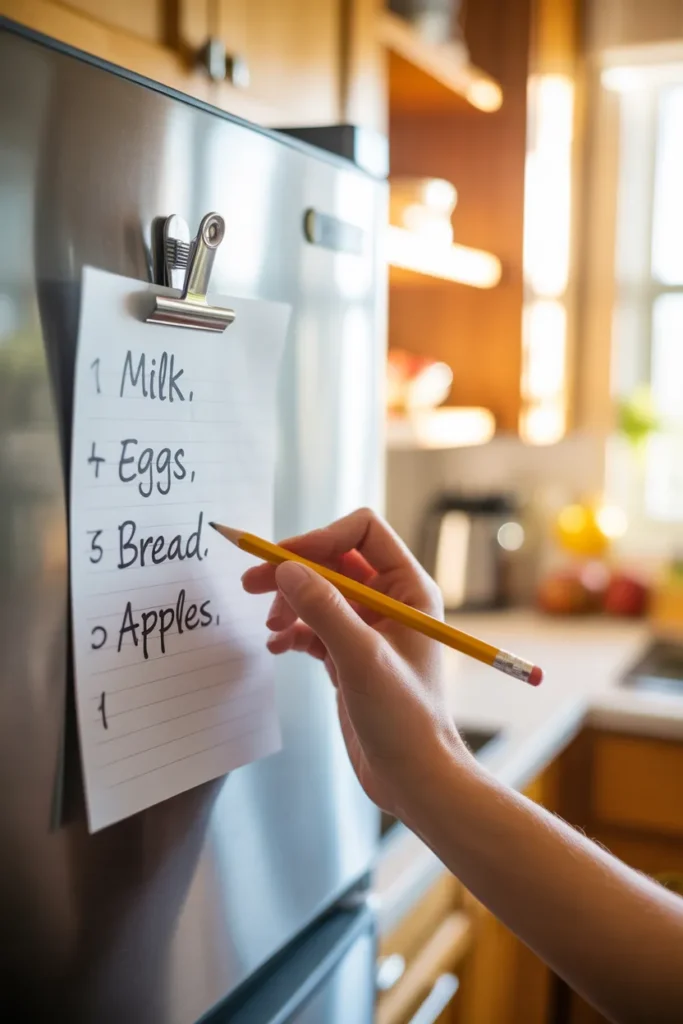
Phones die. Apps log you out. The Notes list gets buried under three screenshots and a parking receipt. A paper grocery list, clipped to the fridge or folded in your purse, never crashes mid-aisle.
There’s also a focus angle that nobody talks about. When you write things down, you remember them. A 2014 Princeton study on note-taking found longhand beats typing for retention, and the same principle holds in the cereal aisle. You’re less likely to forget the eggs when you’ve physically checked them off.
A printable grocery list template also forces structure. You can’t write “snacks?” on a paper list with categories and aisle headers. You’re nudged to be specific, which cuts impulse buys and keeps the cart honest.
Who This Printable Grocery List Is For
This system works hardest for a few specific shoppers:
- Busy parents running a Sunday-cook-for-Mon-through-Fri rhythm
- Couples and roommates splitting the grocery run and needing one shared sheet
- Single-portion preppers who need to scale a family-sized recipe down to one
- Budget shoppers running Aldi, Walmart, or Costco hauls with hard dollar limits
- Beginner meal preppers who want a system instead of a free-for-all
The organization axis here is prep day workflow. We’re treating Sunday (or whatever your prep day is) as the anchor and reverse-engineering the list from there.

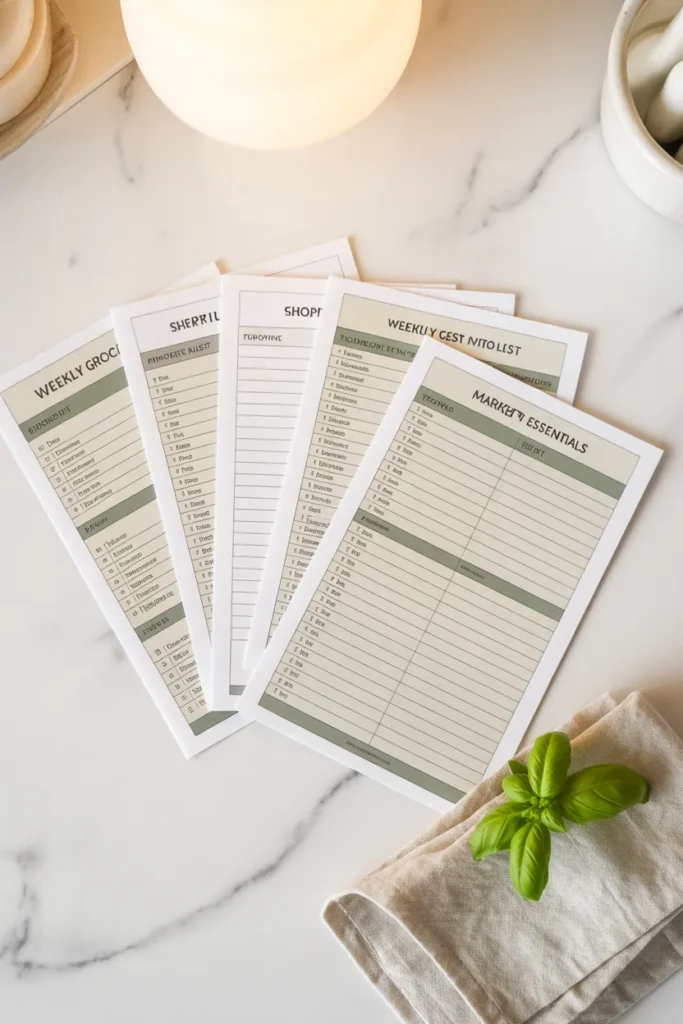
The 5 Free Printable Grocery List Templates Inside
Instead of one rigid template, we built five so you can pick what fits your week. Save the whole pack to one folder on your phone and pull up whichever version you need.
1. The Weekly Meal Prep Shopping List
The default. One sheet, seven days of meals, a clean column for ingredients sorted by category. Best for the standard Sunday-cook-for-the-week rhythm. Covers breakfast, lunch, dinner, and 2 snack slots.
2. The Two-Week Bulk Shopping List
Built for Costco runs and big-batch preppers. Designed around proteins and pantry staples that hold up for 14 days, with a separate “fresh top-up” section you’ll grab on day 8.
3. The Category-Sorted Grocery List by Aisle
This is the one that cuts shopping time noticeably. Ingredients grouped by where they live in the store, in the order you’ll walk past them. More on the aisle order system below.
4. The Aldi-Style Budget Grocery List
A stripped-down version for under-$60-a-week shoppers. Built around Aldi pricing (which runs roughly 20 to 30% lower than Walmart on staples) but works at any discount grocer. Pairs with our budget-friendly meal prep guide for college students if you’re trying to keep the whole week under $40.
5. The Pantry Inventory + Grocery List Pair
Two sheets that work together. You fill out the pantry sheet first, fridge and freezer included, then write your grocery list with that visible. Stops the third pasta sauce jar from happening.
The Store-Layout Aisle Order That Cuts Shopping Time
Here’s the angle no other printable list mentions. Most US grocery stores follow a near-identical traffic pattern. You enter, hit produce on the right or left, loop the perimeter (bakery, meat, seafood, dairy), then weave through the inner aisles, ending at frozen and checkout.
If your list matches that order, you walk the store once. If it doesn’t, you backtrack three or four times per trip.
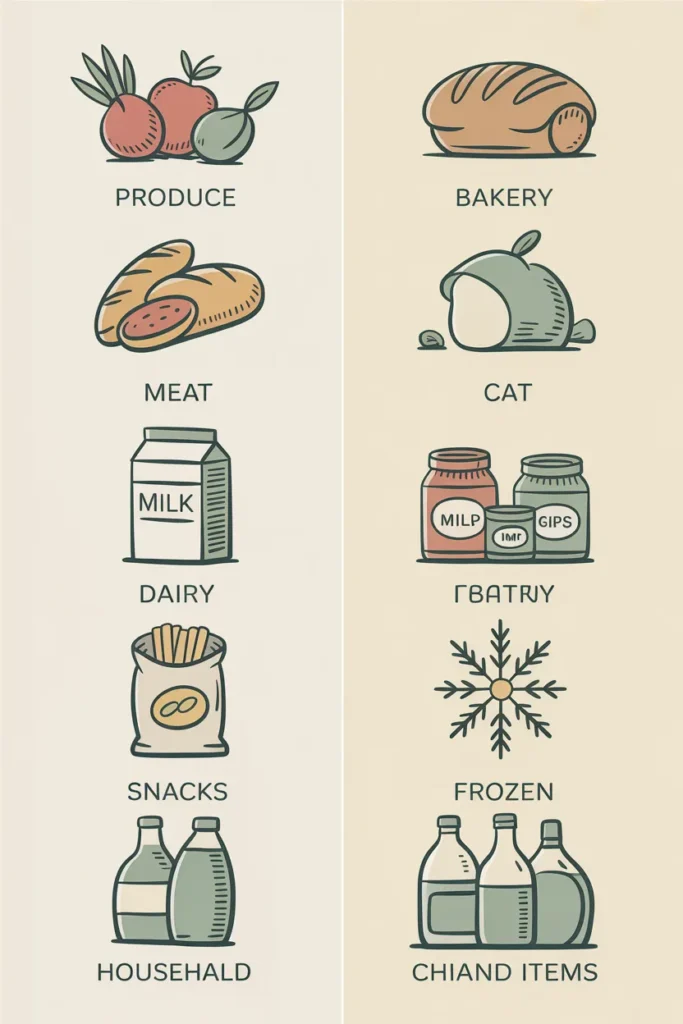
Here’s the standard order we built into the category-sorted printable:
- Produce (vegetables, fruit, fresh herbs)
- Bakery (bread, tortillas, bagels)
- Meat and seafood (chicken, beef, fish, deli)
- Dairy and eggs (milk, yogurt, cheese, butter, eggs)
- Pantry center aisles (rice, pasta, canned goods, oils, spices)
- Snacks and breakfast (oats, granola, crackers, nuts)
- Frozen (because frozen goes last, always)
- Household and personal care (paper goods, cleaning, toiletries)
A small note. If your store layout flips produce and bakery (some Krogers and Publix do), just swap those two lines on your printable. The rest holds.
Weeknight vs Weekend: How to Use the Printable
Two scenarios. Same printable, different speeds.
Weekend full-prep mode (60 to 90 minutes total): You sit down with coffee, browse recipes, fill in the meal plan column on the left of the printable, and let the ingredients populate the grocery side. You check the pantry sheet, cross off what you already have, and head out with one organized list. Best for the cook who actually enjoys the process.
Weeknight shortcut mode (10 minutes flat): You grab the category-sorted printable, run through your standard rotation in your head (taco bowls, chicken and rice, sheet pan veg), and check off the staples you know you need. No meal plan, no recipe browsing. Best for the week you’re running on fumes and just need food in the fridge.
Both modes work. Don’t let the perfect prep become the enemy of the good one.
Cost Per Meal: What This System Actually Saves
A printable grocery list isn’t magic, but the impulse-buy reduction is real. Here’s a rough breakdown of what you can hit per serving when you stick to a written list.
| Tier | Cost / Serving | Where to Shop |
|---|---|---|
| Budget | Under $3 | Aldi, Walmart, Costco bulk; rolled oats, eggs, frozen vegetables, dried beans, whole chickens, ground turkey on sale |
| Mid-range | $3 to $6 | Trader Joe’s, Target, Kroger; chicken thighs, salmon when on sale, pre-cut produce, quinoa, farro |
| Splurge | $6+ | Whole Foods, Sprouts, local butcher; grass-fed beef, wild salmon, organic produce, specialty cheeses |
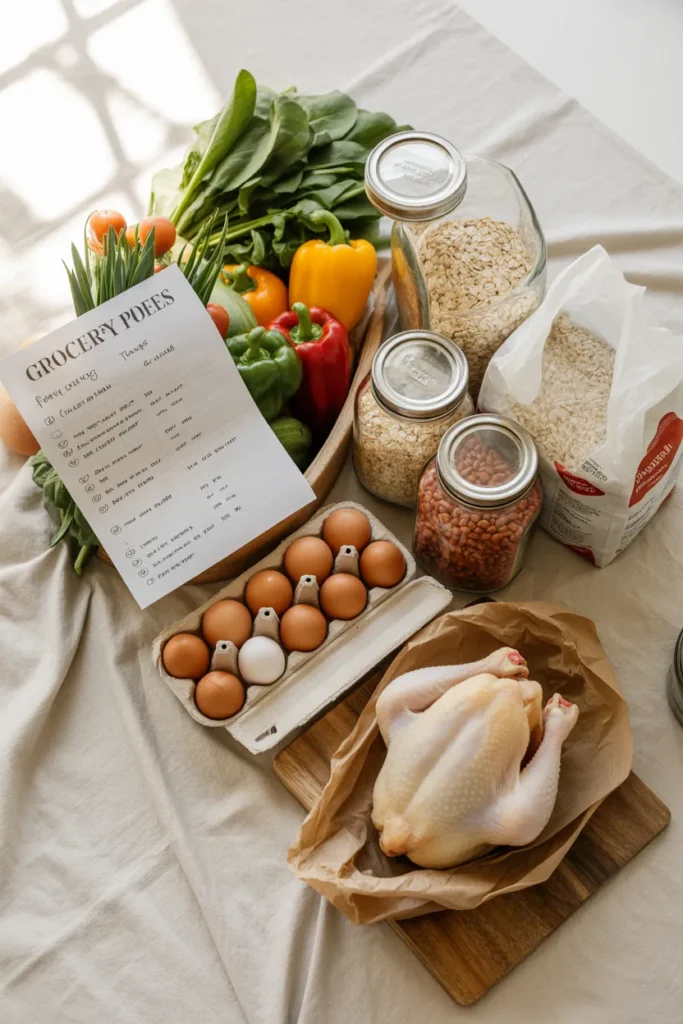
The biggest savings come from the pantry-check step. Most US households throw out roughly $1,500 of food a year, and a chunk of that is stuff you bought twice because you forgot you had it. Even cutting that in half is real money back in the budget
How to Pair the List with a Pantry Inventory
This is the move that pays for itself in week one.
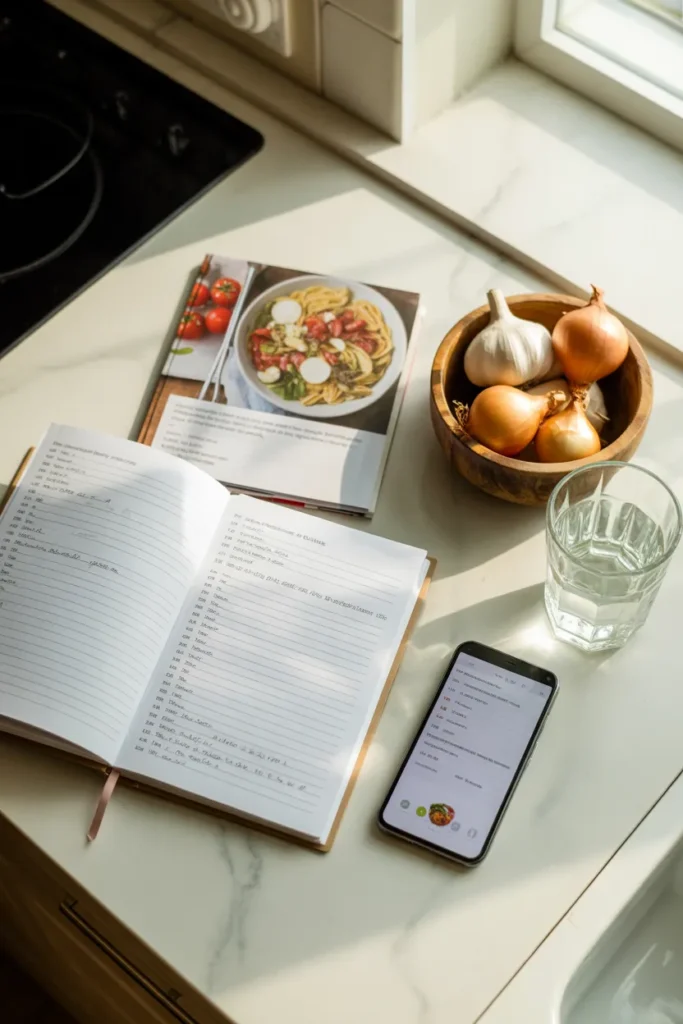
Before you write the grocery list, walk to the pantry with the inventory sheet. Spend 5 minutes writing down what you’ve got. Cans, dried goods, oils, spices, freezer proteins, condiments. Note any quantities under “low” if you’re running close to empty.
Then build your grocery list with that sheet next to you. Cross off anything that’s already covered. The first time you do this, expect to find at least 4 or 5 items you would have re-bought. After a month, you’ll know your pantry well enough that the inventory step takes 2 minutes.
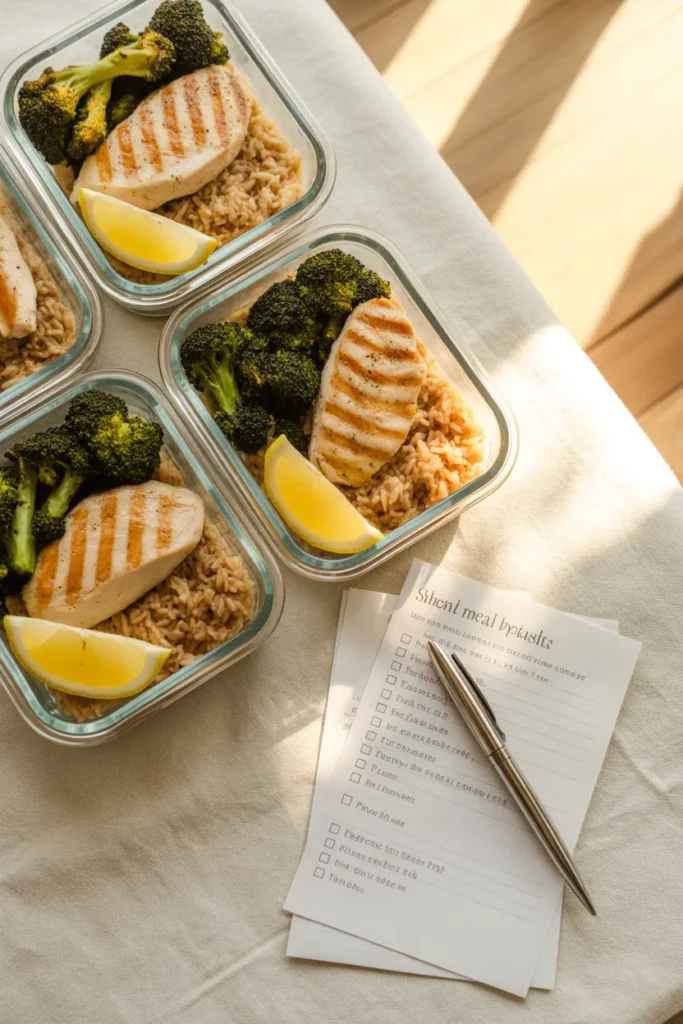
This pairs especially well with our chicken meal prep recipes where the same 8 ingredients (chicken thighs, garlic, olive oil, lemon, rice, broccoli, soy sauce, paprika) cycle through 6 different meals. Knowing what’s already in stock makes the rotation almost free.
Scaling the Printable for Different Household Sizes
Most templates assume 4 servings per meal. Here’s how to scale without rewriting the whole thing.
- Single-portion preppers (1 person): Divide proteins and grains by 4, but keep aromatics (garlic, onion, ginger) at 50% (not 25%) because they don’t scale linearly when small. Spices stay roughly the same.
- Couples (2 people): Halve the printable, but keep one full bunch of fresh herbs because half a bunch wilts before you use it.
- Family of 4: Use the printable as written.
- Family of 6+: Multiply proteins and grains by 1.5, but for baking or anything with leavening, scale carefully (baking soda doesn’t double cleanly).
Print 4 copies if you’re a family that runs through a list weekly. The templates are designed to be reusable, but a fresh sheet each Sunday keeps things tidy.
Editable Versions: PDF vs Google Sheets vs Excel
Some readers want to type, not write. Here’s the quick breakdown.
PDF printable: Best for the fridge clip-on, the purse fold, the kid who can’t accidentally delete the file. Print, write, done.
Google Sheets template: Best for shared households where two people are adding items from different rooms. Auto-syncs to phones. Free with any Google account.
Excel template: Best for budget trackers who want formulas (sum the cost column, watch the total update live). Works offline.
Pick one as your primary, but don’t fight a system that works. If you’ve been running grocery lists in your phone notes for three years and it works, the printable just becomes a backup for the weeks your phone dies in the parking lot.
Common Mistakes That Make a Grocery List Useless
Even with a perfect template, a few habits will tank the system. Watch for these.
- Writing items in random order. Defeats the whole point of a category sheet. Take 30 extra seconds to slot each item into the right section as you write it.
- Skipping the pantry check. You’ll buy three rice bags. Trust us.
- Listing meals instead of ingredients. “Tacos” is not a grocery list item. Break it down: ground beef, taco seasoning, tortillas, lettuce, cheese, salsa.
- Forgetting the snack and breakfast slots. Most lists die mid-week because nobody bought oatmeal. Always fill those rows.
- Not cross-checking with the meal plan. If you wrote “salmon dinner” but didn’t add salmon, the list is broken before you leave.
A list catches these in advance. The pantry pairing catches them twice
What to Always Have on the Printable: The Master Pantry Staples List
These are the items that earn a permanent spot on your list, in light pencil if you want to reuse the printable, or as a pre-printed line on the template itself.
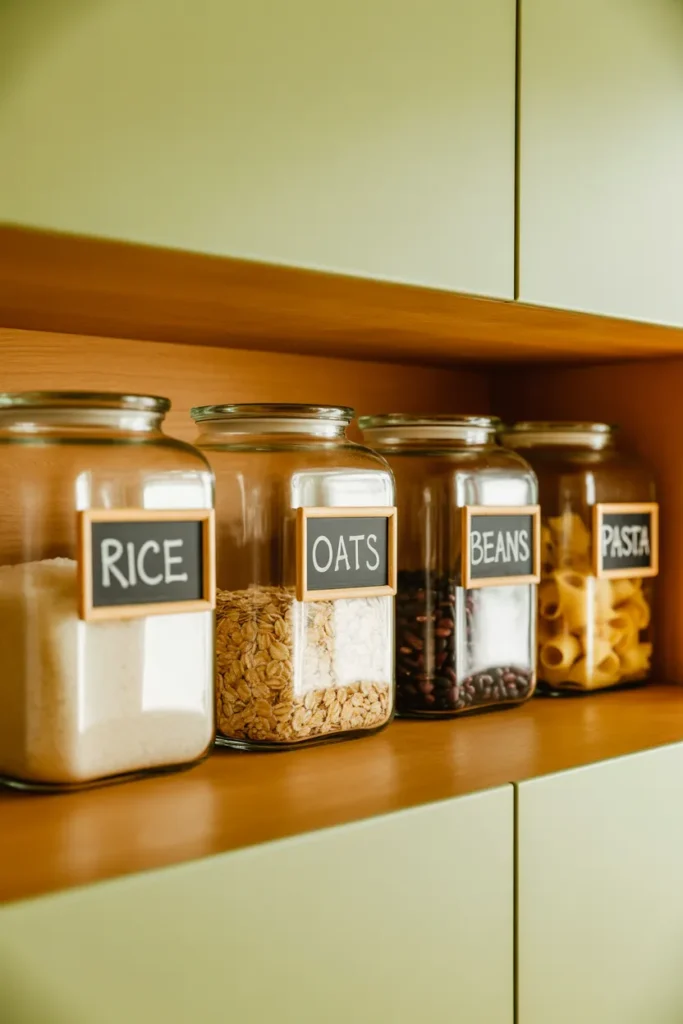
Proteins: eggs, chicken thighs, ground turkey, canned tuna, Greek yogurt Grains and starches: brown rice, rolled oats, whole wheat pasta, sweet potatoes Pantry basics: olive oil, kosher salt, black pepper, garlic, yellow onions Canned goods: black beans, chickpeas, diced tomatoes, low-sodium broth Frozen backups: frozen broccoli, frozen berries, frozen edamame Dairy: milk or oat milk, cheddar, plain yogurt, butter Flavor builders: soy sauce, hot sauce, lemon, fresh ginger, smoked paprika
Build any week’s list around 3 fresh proteins, 2 grains, 5 vegetables, and the master staples above and you’ll always have dinner. For the lighter weeks, our low-calorie meal prep under 500 calories leans on this same staple list with a few smart swaps.
For broader healthy-shopping guidance, the USDA’s MyPlate shopping resources and the federal nutrition.gov meal planning hub are solid bookmarks if you want to layer in nutrition goals on top of the printable system.
How to Print the Templates
Quick how-to so the file actually makes it from screen to fridge:
- Click the download link to open the PDF in your browser.
- On desktop, hit Ctrl+P (Windows) or Cmd+P (Mac).
- On mobile, tap the share icon and select “Print” or “Save to Files.”
- Use US Letter size (8.5 x 11 inches), portrait orientation, scaled to 100%.
- Print on regular printer paper, or card stock if you want it to live on the fridge for a month.
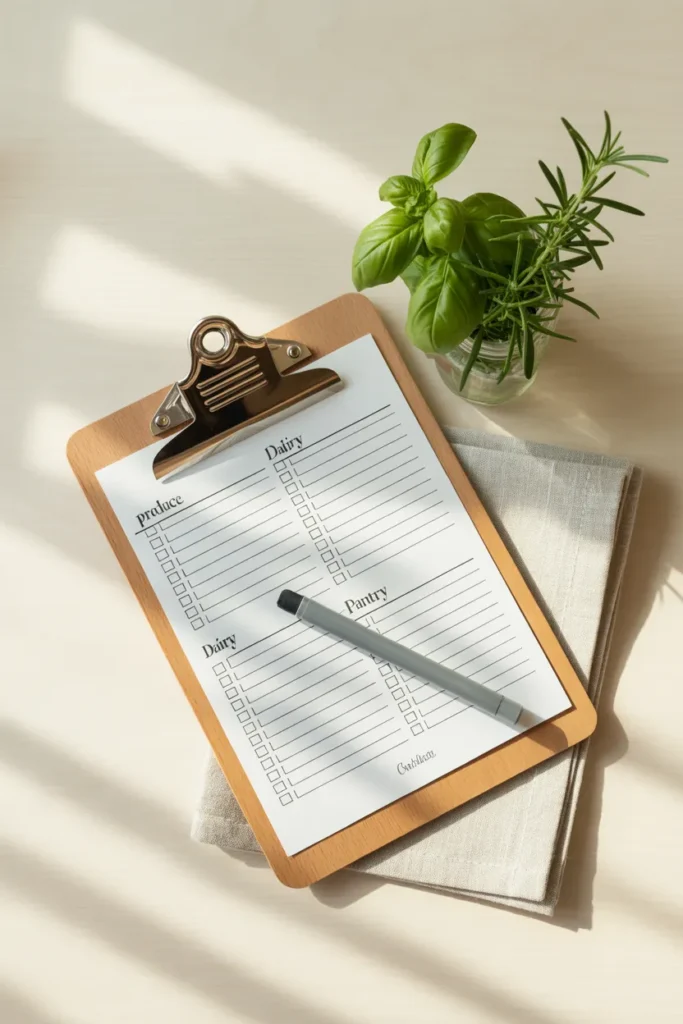
- For a reusable version, print once, slide into a clear sheet protector, and write with a dry-erase marker.
A Quick Sunday Prep Walkthrough Using the Printable
Here’s how 30 minutes on a Sunday afternoon turns into a full week of meals.
Minutes 0 to 5: Brew coffee. Pull out the pantry inventory sheet. Walk the pantry, fridge, and freezer. Note what’s low.
Minutes 5 to 15: Open the meal plan side of the printable. Write 5 dinners (or whatever your week needs), 1 breakfast batch, 1 snack batch. Don’t get fancy. Repeat last week’s wins.
Minutes 15 to 25: Translate meals into ingredients on the grocery side, sorted by aisle. Cross off anything the pantry check covered.
Minutes 25 to 30: Snap a phone photo of the list as backup. Clip the original to the fridge or fold it into your bag.
That’s it. Shop once, prep once, eat all week
Frequently Asked Questions
How do I make a printable grocery list?
Start with a blank template (or download one of the five above), then add 4 sections at minimum: produce, protein, dairy, and pantry. Sort items in the order you’ll find them at your store. Save the file as a PDF so the formatting doesn’t shift when someone else prints it.
What should be on every grocery list?
Eggs, a leafy green, a protein, a grain, a healthy fat (olive oil or avocado), a dairy or dairy alternative, an allium (garlic or onion), and at least one frozen vegetable backup. Build out from there based on the week’s recipes.
How do I organize a grocery list by category?
Match it to your store’s layout. The standard US grocery store flow is produce, bakery, meat, dairy, pantry center aisles, snacks, frozen, then household. Sorting your list in that order means you walk the store once instead of zigzagging.
Is there a free printable grocery list PDF?
Yes. The five templates linked at the top of this post are free to download as PDFs, no email required. Print as many copies as you want, or slide one into a sheet protector for a reusable version.
What’s the best way to plan meals and a grocery list together?
Use a single sheet that has the meal plan on one side and the grocery list on the other. Fill in the meal plan first (5 dinners, 1 breakfast batch, 1 snack), then translate each meal into ingredients on the grocery side. The printables in this post are built that way.
How do I make a grocery list for the whole month?
Use the 2-week bulk template twice. Stock the pantry and freezer-stable items on week 1, then run a “fresh top-up” list on week 3 for produce, dairy, and bread. Monthly grocery lists work best for households running a tight budget through Aldi or Costco.
Can I edit a printable grocery list?
The PDF version is print-only, but the same templates exist as Google Sheets and Excel files for typing. Pick the format that matches how you actually shop. Some weeks call for paper, some for the phone.
Save This Printable Grocery List for Sunday
Sunday prep gets easier the second you stop reinventing the list every week. Pick the version above that fits your household, print 4 copies, and let the system carry the load. Pin this post to your meal prep board so you can find it next Sunday at 2 PM, and let us know in the comments which template you reached for first.