

10 Low Calorie Meal Prep Ideas Under 500 Calories That Actually Fill You Up
By 7:42 PM on a Tuesday, the fridge tells the truth. There’s a sad bag of spinach, half an onion, and the leftover takeout container from Sunday that you swore you’d eat for lunch but didn’t. You’re hungry, you’re tired, and the only thing standing between you and another $19 delivery order is a plan you don’t have. Sound familiar?
That’s exactly why I started building a low calorie meal prep rotation that actually keeps me full. Not a sad-salad routine. Not a chicken-rice-broccoli loop that makes you want to scream by Thursday. A rotating list of low calorie meals that come in under 500 calories per serving, hit at least 25 grams of protein, cost less than $6 per portion, and reheat without turning into rubber. You’ll find all 10 below, plus a calorie-stacking framework so you can mix-and-match a full day under 1,500 calories without doing math at 6 AM.
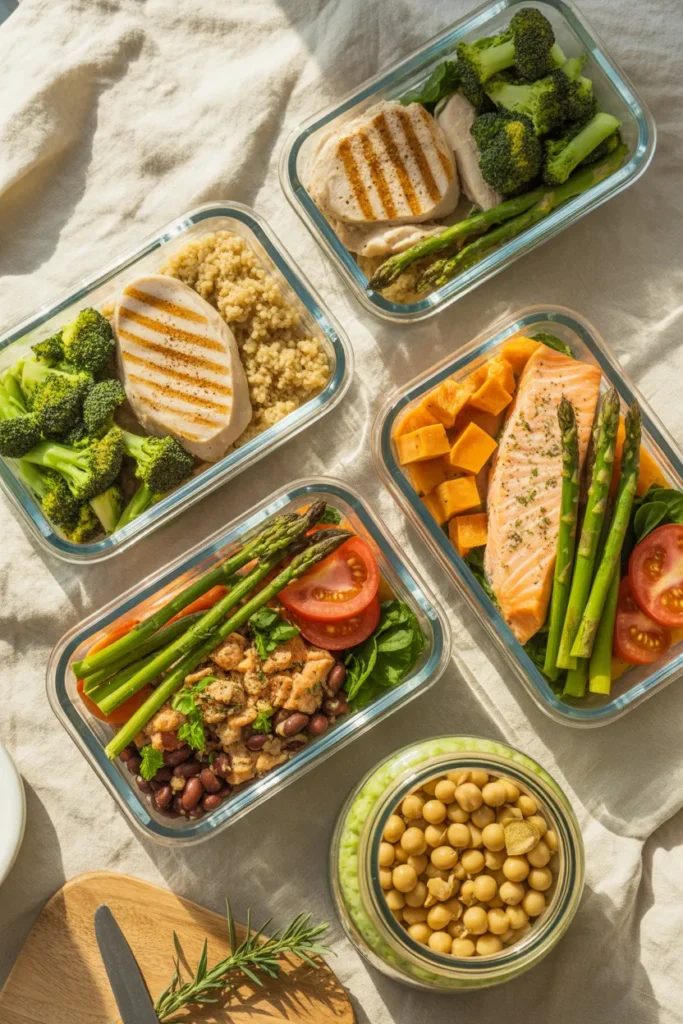
Who This Low Calorie Meal Prep Guide Is For
This isn’t a one-size-fits-all roundup. Pick the lane that fits you and skip the rest:
- Busy parents who need 10 minutes of plating, not a Pinterest-perfect Sunday afternoon.
- Gym-goers tracking macros who want every meal hitting at least 25g of protein per serving.
- Anyone in a calorie deficit for slow, sustainable weight management.
- Beginners with one sheet pan, one pot, and a microwave at the office.
- Single-portion preppers living solo, who don’t want a casserole staring them down all week.
If you’ve been searching for low calorie meals that are easy to make, high protein, and don’t taste like cardboard by Wednesday, you’re in the right corner of the internet.
How This Roundup Is Organized
I’ve grouped these 10 low calorie meal prep ideas by meal slot (breakfast, lunch, dinner) and tagged each one with a calorie band: 300, 400, or 500 calories per serving. That structure matters because it lets you stack a full day. Two 300-cal meals plus one 500-cal dinner equals a 1,100-calorie day with snacks left over. Three 400-cal meals equals 1,200. You get the idea.
Every recipe includes macros, cost per serving, reheating method, fridge and freezer life, and the exact container size I use. Skip to whatever calorie slot you’re filling.
The 3-Tier Calorie Ceiling Framework
Before the recipes, here’s the framework no other low calorie meal prep guide gives you. Pick a daily calorie target, then stack from the right column:
| Daily Target | Breakfast Slot | Lunch Slot | Dinner Slot | Snack Buffer |
|---|---|---|---|---|
| 1,200 cal | 300 cal | 400 cal | 400 cal | 100 cal |
| 1,400 cal | 300 cal | 400 cal | 500 cal | 200 cal |
| 1,500 cal | 400 cal | 400 cal | 500 cal | 200 cal |
| 1,600 cal | 400 cal | 500 cal | 500 cal | 200 cal |
Print it, screenshot it, tape it inside your pantry. The math is done. Now let’s prep.
10 Low Calorie Meals Under 500 Calories
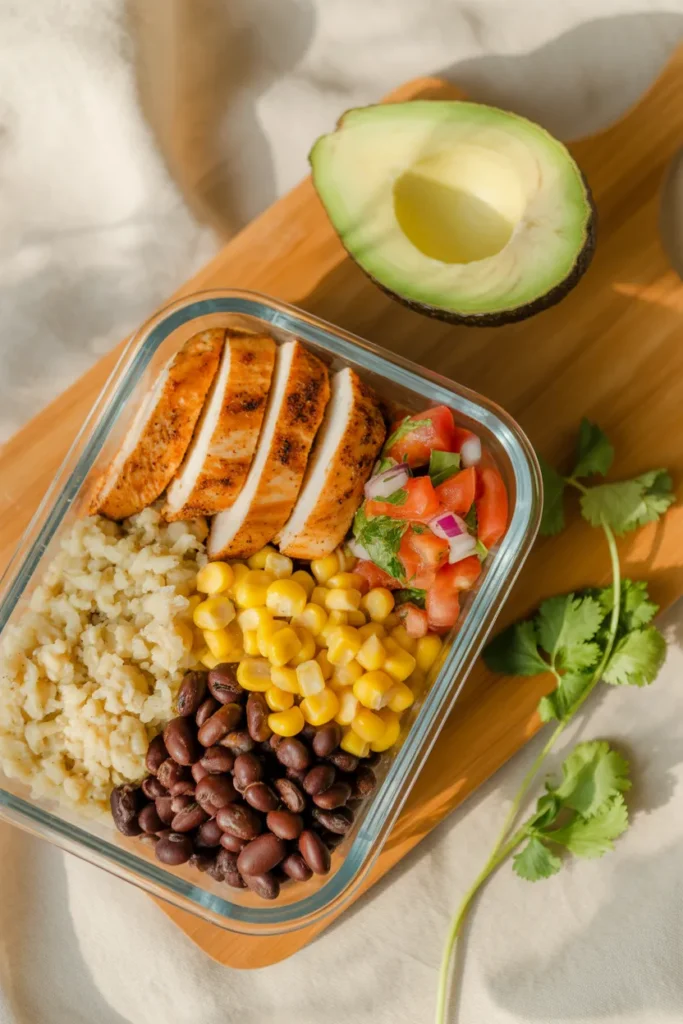
1. High-Protein Chicken Burrito Bowls (445 cal, 42g protein)
I’ll lead with the highest-impact meal in the rotation. These low calorie meals high protein bowls land at 445 calories per serving, hit 42 grams of protein, and cost about $3.80 per portion when chicken thighs are on sale at Aldi.
Build them in 3-cup glass containers: a bed of cilantro lime cauliflower rice, 4 ounces of grilled chicken thighs seasoned with cumin and smoked paprika, a half cup of black beans, a quarter cup of roasted corn, pico de gallo, and a small lime wedge tucked in the corner. The avocado goes in fresh on the day you eat it, not on prep day.
Why it works: Cauliflower rice cuts about 180 calories vs traditional rice and adds fiber, which keeps you fuller longer. Chicken thighs hold moisture better than breasts on day three, so reheating doesn’t dry them out.
Macros per serving: 445 cal, 42g protein, 28g carbs, 16g fat Cost: $3.80 Container: 3-cup glass with snap lid Fridge: 4 days. Freezer: 3 months (assemble after thawing) Reheat: 2 minutes at 50% power, stir, 1 minute at full power, then add cold avocado and pico
2. Mediterranean Mason Jar Salads (390 cal, 28g protein)
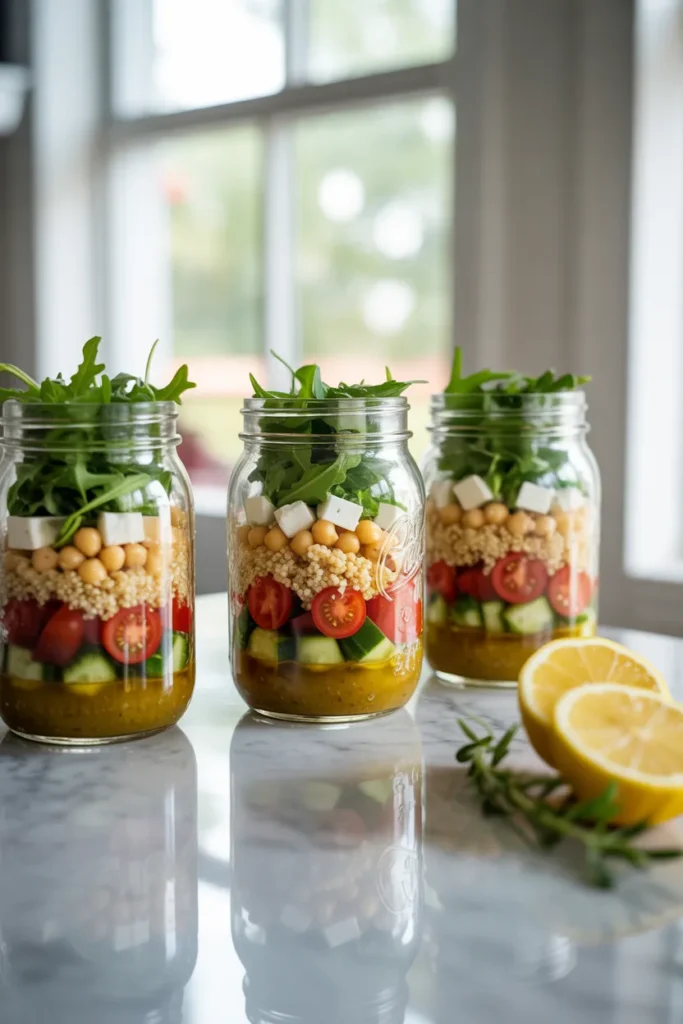
The mason jar salad is the most underrated low calorie meal idea on Pinterest, and I’ll die on that hill. Layered correctly, it stays crisp for 5 full days. Layered wrong, you’ve got soup by Wednesday.
The order, from bottom to top in a 32-ounce wide-mouth mason jar: 3 tablespoons lemon herb vinaigrette at the very bottom, then dense vegetables (cucumber, cherry tomatoes, red onion), then a half cup of cooked quinoa, then a half cup of chickpeas, then 3 ounces of grilled chicken or chickpeas for vegetarian, then crumbled feta, then 2 cups of arugula and baby spinach packed loosely on top. The dressing only touches the dense vegetables, so the greens stay dry and crisp.
Macros per serving: 390 cal, 28g protein, 38g carbs, 14g fat Cost: $4.10 Container: 32 oz wide-mouth mason jar Fridge: 5 days To serve: Shake hard, dump into a bowl, eat cold
This is the recipe that taught me how much container choice matters for low calorie meal prep. If you’re still using flimsy plastic, here’s the meal prep container breakdown I follow when stocking my own kitchen.
3. Sheet Pan Lemon Garlic Salmon and Asparagus (480 cal, 38g protein)
Easy low calorie meal prep under 500 calories, pulled off in 25 minutes flat with one sheet pan and zero brain power. Toss 4-ounce salmon fillets and trimmed asparagus with olive oil, lemon zest, minced garlic, salt, and red pepper flakes. Roast at 425°F for 12 minutes. Pair with a half cup of pre-cooked farro from a Trader Joe’s pouch.
Why it works: Salmon is one of the few proteins that improves with a day in the fridge because the lemon and garlic keep penetrating the flesh. By Wednesday it tastes better than Sunday.
Macros per serving: 480 cal, 38g protein, 32g carbs, 22g fat Cost: $5.90 (Costco salmon dropped to $4.20) Container: 4-cup glass rectangular Fridge: 3 days for salmon. Freezer: not recommended, salmon goes mushy Reheat: 90 seconds at 50% power, splash of water in the corner of the container, then check. Salmon overcooks fast.
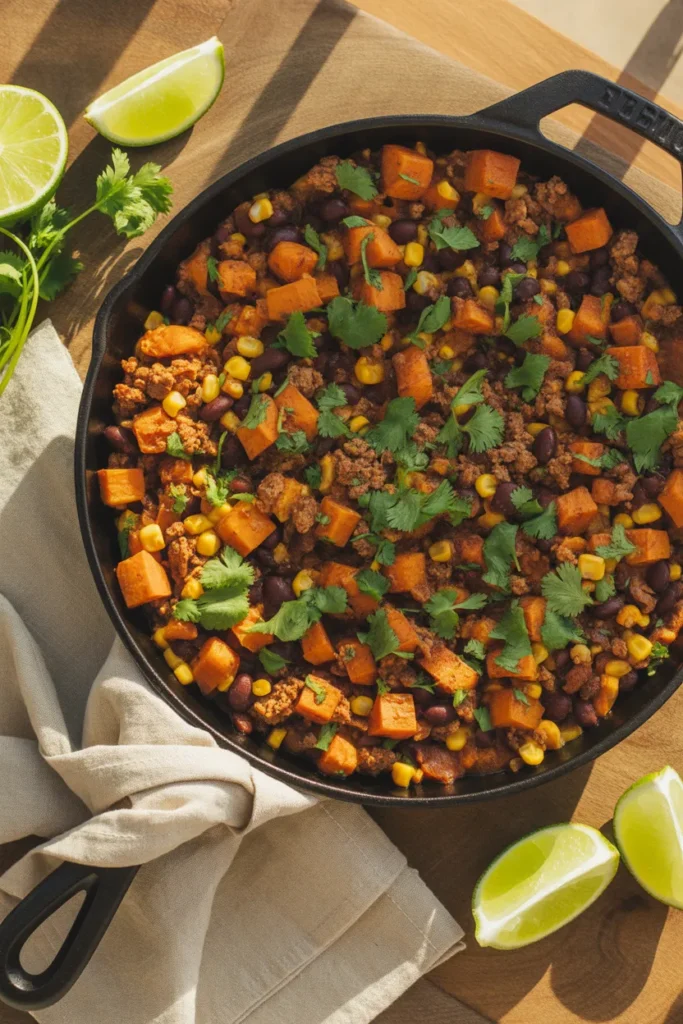
4. Ground Turkey and Sweet Potato Skillet (420 cal, 35g protein)
Anyone searching low calorie meals chicken alternatives needs this on rotation. One pan, 30 minutes, and the cleanup is a single skillet.
Brown 1 pound of 93/7 ground turkey with diced onion and a tablespoon of taco seasoning. Add 2 cups of diced sweet potato (cut to half-inch cubes so they cook fast), 1 cup of corn, and 1 cup of black beans. Cover and steam for 12 minutes until the sweet potato is fork-tender. Top with chopped cilantro and a squeeze of lime.
Macros per serving (makes 4): 420 cal, 35g protein, 38g carbs, 14g fat Cost: $3.20 Container: 3-cup glass Fridge: 4 days. Freezer: 3 months Reheat: 2 minutes at full power, stir, 1 more minute. Add a squeeze of fresh lime to wake it up.
5. Egg White and Veggie Breakfast Cups (180 cal, 18g protein)
This is the breakfast slot of the calorie ceiling framework, and a great answer for anyone searching low calorie meals breakfast. Whisk 12 egg whites with 4 whole eggs, salt, pepper, and a splash of milk. Pour into a sprayed muffin tin (12 cups), then top each with diced bell pepper, spinach, cherry tomato, and a sprinkle of feta. Bake at 375°F for 20 minutes until set.
Two cups equals one serving at 180 calories. Stack three on a 1,200-calorie day, two on a 1,500-calorie day.
Macros per serving (2 cups): 180 cal, 18g protein, 4g carbs, 9g fat Cost: $1.40 Container: Reusable silicone bag or 2-cup glass Fridge: 5 days. Freezer: 2 months Reheat: 45 seconds at full power straight from the fridge, 90 seconds from frozen
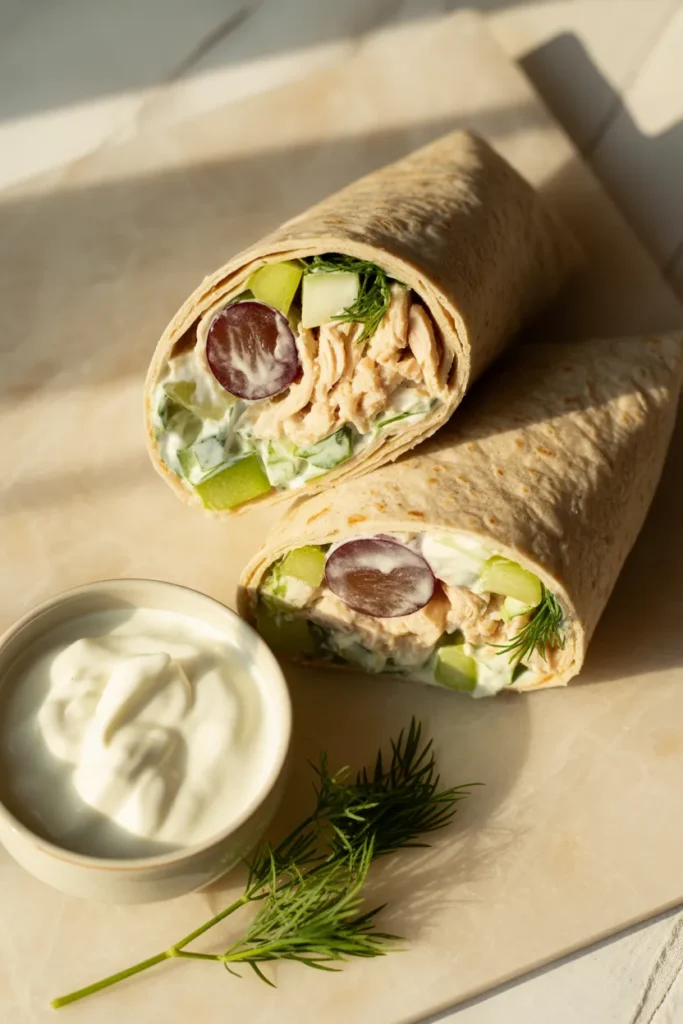
6. Greek Yogurt Chicken Salad Wraps (385 cal, 32g protein)
Forget mayo-loaded chicken salad. This swap uses plain non-fat Greek yogurt for half the calories and triple the protein. Mix 2 cups shredded rotisserie chicken with a half cup Greek yogurt, 2 tablespoons Dijon, diced celery, halved grapes, and a tablespoon of fresh dill. Wrap in a low-carb tortilla with romaine.
Why it works: The Greek yogurt mimics mayo’s creaminess but adds 8 grams of protein per quarter cup. The grapes are non-negotiable. They give you that pop of sweetness that keeps the wrap from feeling diet-y.
Macros per serving: 385 cal, 32g protein, 28g carbs, 12g fat Cost: $3.40 (using a Costco rotisserie chicken) Container: Bento-style 2-compartment, wrap goes in unrolled, fillings separate Fridge: 3 days for the chicken mixture. Wrap day-of, not in advance. Reheat: Eat cold
7. Slow Cooker Beef and Vegetable Stew (455 cal, 36g protein)
For anyone who searched the Pinterest pill “Crock pot,” here’s the low calorie meals dinner answer. Lean stew meat, beef broth, diced tomatoes, carrots, celery, baby potatoes, and a packet of onion soup mix go in the slow cooker on low for 8 hours. Skim the fat at the top before portioning.
Macros per serving: 455 cal, 36g protein, 32g carbs, 18g fat Cost: $4.60 Container: 4-cup glass with snap lid Fridge: 4 days. Freezer: 3 months Reheat: 3 minutes at 50% power, stir, 1 more minute. Stews always reheat better at lower power.
8. Tofu and Edamame Buddha Bowls (410 cal, 24g protein)
The vegetarian slot. Cube extra-firm tofu, toss with cornstarch and soy sauce, and bake at 400°F for 25 minutes until crispy at the edges. Pair with a half cup of brown rice, a half cup of shelled edamame, shredded purple cabbage, julienned carrots, and a 2-tablespoon ginger sesame dressing in a separate cup.
Macros per serving: 410 cal, 24g protein, 42g carbs, 16g fat Cost: $3.10 Container: 3-cup glass Fridge: 4 days. Freezer: not recommended (tofu turns spongy after thawing) Reheat: 90 seconds at full power for the tofu and rice. Cabbage and carrots stay raw and crunchy.
9. Shrimp and Quinoa Power Bowls (435 cal, 34g protein)
Shrimp is the unsung hero of low calorie meal prep. It’s the lowest-calorie complete protein at the seafood counter, cooks in 4 minutes, and reheats without going rubbery if you do it right.
Sauté 5 ounces of large shrimp with garlic, chili flakes, and lemon for 4 minutes total. Build the bowl: half cup cooked quinoa, half cup roasted zucchini, half cup roasted red pepper, the shrimp, and a drizzle of tahini lemon dressing.
Why it works: Cold shrimp is actually the play here. Reheating shrimp is where most preppers go wrong. Pull it out 10 minutes before eating, let it come to room temperature, eat the bowl warm-cold style.
Macros per serving: 435 cal, 34g protein, 36g carbs, 14g fat Cost: $5.80 Container: 3-cup glass Fridge: 3 days. Freezer: not recommended Reheat: Microwave the quinoa and vegetables for 90 seconds, then top with cold shrimp.
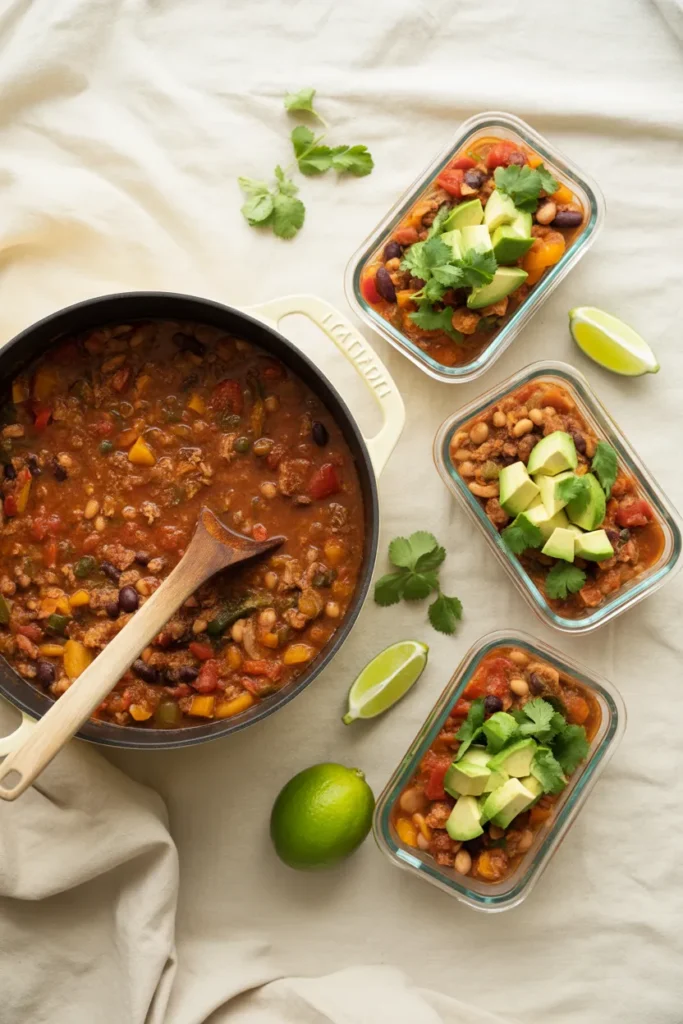
10. Veggie-Loaded Turkey Chili (380 cal, 32g protein)
The freezer MVP. Brown a pound of ground turkey, add diced onion, bell pepper, garlic, two cans of diced tomatoes, one can of kidney beans, one can of black beans, chili powder, cumin, and oregano. Simmer 30 minutes. Makes 6 portions, freezes for 3 months, reheats like a dream.
Macros per serving: 380 cal, 32g protein, 38g carbs, 10g fat Cost: $2.40 Container: 4-cup glass or freezer-safe silicone cube Fridge: 5 days. Freezer: 3 months Reheat: From fridge, 3 minutes at full power, stir. From frozen, 6 minutes at 50% power, stir, 2 more minutes.
Cost Per Serving by Tier
Cost matters more than total grocery bill in meal prep. Here’s where I shop for each tier and what it actually costs:
| Tier | Cost Per Serving | Where I Shop | What I Buy |
|---|---|---|---|
| Budget | $2.40 to $3.50 | Aldi, Walmart, Costco bulk | Ground turkey, dried beans, frozen vegetables, eggs, rolled oats, in-season produce, whole chickens |
| Mid-range | $3.50 to $5.50 | Trader Joe’s, Target, Kroger | Pre-cooked farro, chicken thighs, salmon on sale, pre-cut produce, ginger sesame dressing |
| Splurge | $5.50 and up | Whole Foods, Sprouts | Wild-caught salmon, grass-fed beef, organic shrimp, single-estate olive oil, specialty cheeses |
The 10 recipes above land in the budget and mid-range tiers on purpose. If you’re doing low calorie meal prep for weight loss, the goal is sustainability, and $4 per serving stays sustainable longer than $9.
Weeknight Shortcut vs Weekend From-Scratch
You don’t need 4 hours every Sunday to make this work. Here’s how the same 10 recipes break down by time investment.
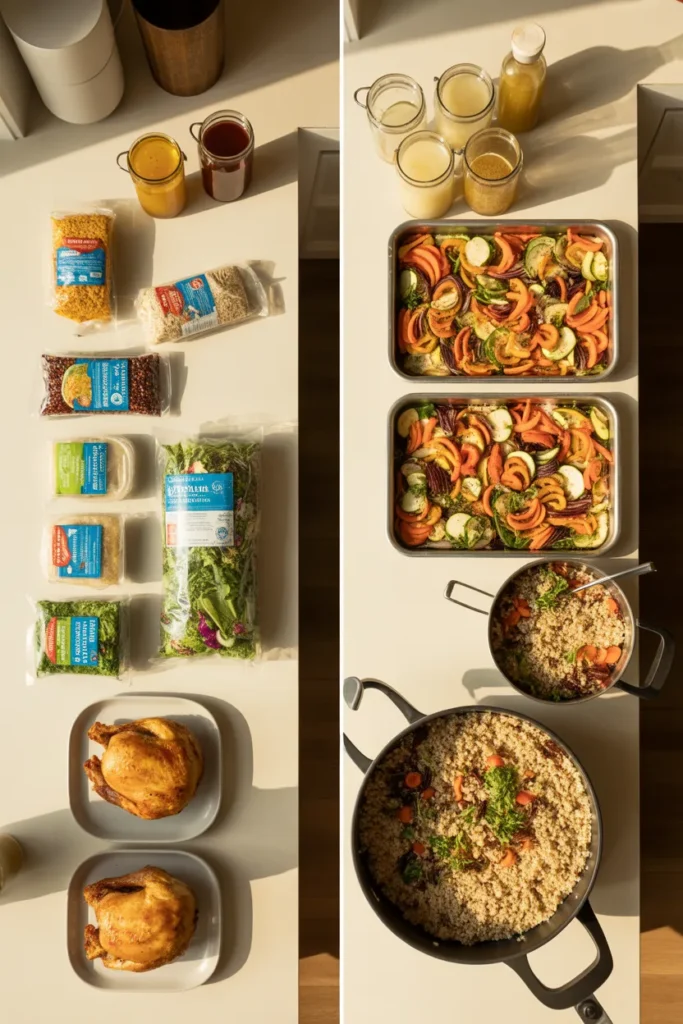
Weeknight shortcut (45 minutes total): Pick 3 recipes that share a protein. Use a Costco rotisserie chicken for recipes 1, 6, and split the meat across bowls. Buy pre-cooked farro and quinoa pouches. Use bagged shredded cabbage and pre-washed greens. Skip homemade dressings, grab Trader Joe’s Goddess or Cilantro Chili.
Weekend from-scratch (2 hours): Cook your own grains in batches (1 cup quinoa, 1 cup brown rice, 1 cup farro). Roast a tray of mixed vegetables at 425°F while a sheet pan of salmon and a sheet pan of chicken go in. Whisk three different dressings in mason jars. Portion everything into containers and label by day.
The weeknight version costs about $1 more per serving in convenience markups but saves 75 minutes. The weekend version is cheaper and tastes a hair better. Both work.
How To Reheat Without Rubberizing or Wilting
The single biggest reason people abandon low calorie meal prep by week three is reheated food that tastes bad. Here’s the protocol I use, broken down by protein:
- Chicken breast: 90 seconds at 50% power, flip, 60 more seconds at 50%. Add a splash of broth before microwaving.
- Chicken thighs: 2 minutes at full power. They hold up better and don’t dry out.
- Salmon: 90 seconds at 50% power max. Salmon overcooks in 15 seconds. Watch it.
- Ground meats: 2 minutes at full power, stir, 30 more seconds. Stirring redistributes moisture.
- Shrimp: Don’t reheat. Bring to room temp, eat cold or warm-cold style.
- Rice and grains: Splash of water on top, cover loosely, 90 seconds at full power.
- Roasted vegetables: 60 seconds at full power. Any longer and they steam into mush.
- Greens and salads: Never microwave. Eat cold.
The two universal rules: cover loosely so steam can escape, and reheat in the original glass container, never plastic. Plastic warps the moisture distribution.
For the full breakdown of how I plan a meal-prep weekend, this Sunday meal prep system is the routine I run every week.
Container Size Matched To Calorie Target
This is the detail nobody talks about. Container size dictates portion size, which dictates whether you actually hit your calorie goal.
| Calorie Target | Container Size | Best For |
|---|---|---|
| 300 cal | 2-cup glass or silicone bag | Egg white cups, snack-style bowls, breakfast |
| 400 cal | 3-cup glass with snap lid | Burrito bowls, Buddha bowls, skillet meals |
| 500 cal | 4-cup glass rectangular | Sheet pan dinners, stews, hearty bowls |
| Layered salads | 32 oz wide-mouth mason jar | Mason jar salads, parfaits |
I use 3-cup glass containers for about 70% of my prep. They’re the sweet spot. Big enough for a real meal, small enough that you physically can’t overserve.
Common Low Calorie Meal Prep Mistakes To Avoid
After 4 years of weekly prepping, these are the mistakes I see most often, including the ones I made:
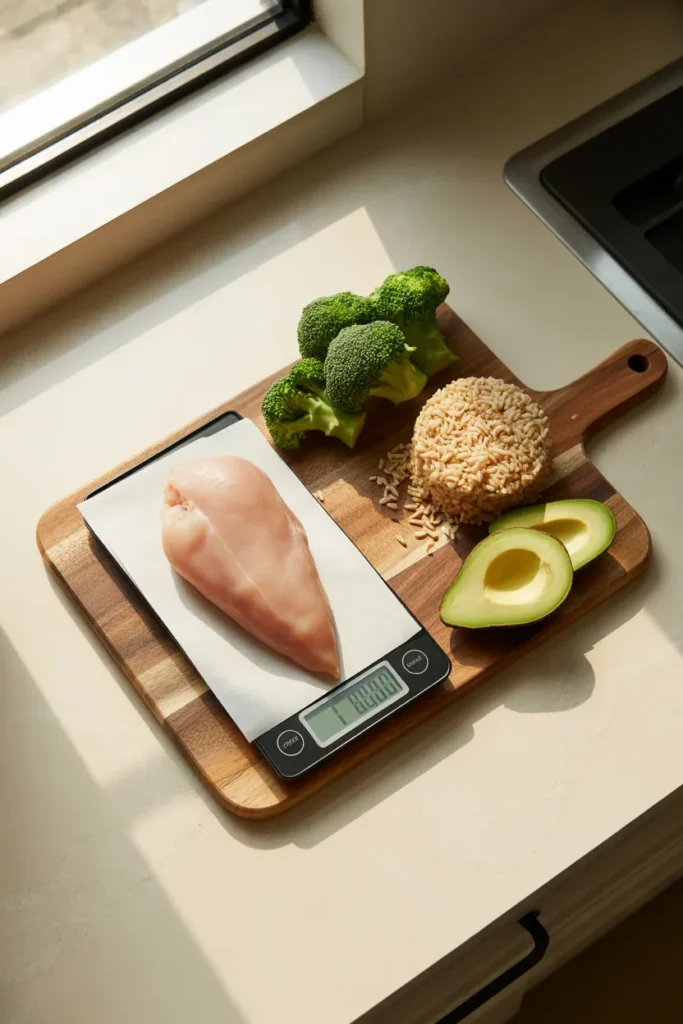
- Eyeballing the protein. A “palm-sized” piece of chicken is 3 to 5 ounces depending on your hand. Use a kitchen scale once a week to recalibrate.
- Skipping fiber. A 400-calorie meal with no fiber leaves you ravenous by 3 PM. Aim for 8g of fiber per meal minimum.
- Dressing greens on prep day. They wilt in hours. Always pack dressings in 2 oz separate containers.
- Cooking once a week and expecting Friday food to taste like Monday food. Most proteins peak at days 2 and 3. Freeze Thursday and Friday portions and thaw Wednesday night.
- Picking 5 of the same meal. Boredom kills the habit. Rotate at least 3 different recipes per week.
- Overcooking chicken breast on prep day “to be safe”. It dries out further when reheated. Pull at 160°F internal, let carryover cooking finish it to 165°F.
- Buying low-fat everything. Fat is satiety. A 500-calorie meal with 18g of fat from olive oil, avocado, or salmon will keep you full longer than a 500-calorie meal with 4g of fat. According to the USDA Dietary Guidelines, healthy adults should get 20% to 35% of daily calories from fat, including unsaturated sources like fish and nuts.
A Quick Word on Calorie Deficits and Sustainable Weight Loss
Low calorie meal prep works best when paired with a small, sustainable calorie deficit, not extreme restriction. The CDC’s healthy weight guidance recommends a steady 1 to 2 pound per week loss for most adults, which translates to roughly a 500-calorie daily deficit. Eating three 500-calorie meals plus a 200-calorie snack puts most adults at or below that mark without leaving you starving by 9 PM.
This is general information, and it’s a smart move to talk with your doctor or a registered dietitian about your specific calorie needs before starting a new eating pattern.
Frequently Asked Questions
What is a good low calorie meal under 500 calories?
The strongest low calorie meals under 500 calories combine a lean protein (28 to 40 grams), a fiber-rich whole grain or starchy vegetable, two cups of non-starchy vegetables, and a healthy fat source like avocado, olive oil, or salmon. The chicken burrito bowls and turkey chili in this roundup are great starting points.
How many calories should each meal be to lose weight?
For most adults aiming for 1 to 2 pounds of weight loss per week, three meals at 400 to 500 calories plus one 200-calorie snack lands in the right zone. Your specific number depends on your height, weight, age, and activity level. A registered dietitian or the calculators on a reputable health site can dial in your exact target.
How long does low calorie meal prep last in the fridge?
Most cooked proteins and grains hold for 3 to 4 days in the fridge at 40°F or below. Cooked chicken, ground turkey, and beef hit their peak on days 2 and 3. Salmon is best at days 1 to 3. Dressed salads are best within 2 days. For Thursday and Friday portions, freeze on prep day and move to the fridge Wednesday night.
Can I eat 500 calorie meals and still lose weight?
Yes, if your total daily calories sit below your maintenance level. Three 500-calorie meals equals 1,500 calories, which is at or below maintenance for many adult women and creates a small deficit for many adult men. Pair with two 100 to 200-calorie snacks if you’re hungrier or more active.
How do I meal prep low calorie meals for a week without getting bored?
Rotate at least 3 different recipes across 5 lunches, change the sauce or dressing across recipes, and use different cuisines (Mediterranean, Tex-Mex, Asian-inspired) within the same week. Boredom is the number one reason people quit meal prep. Variety beats perfection.
What if I don’t have a meal prep container?
Any glass container with an airtight lid works. In a pinch, a wide-mouth pint or quart mason jar handles bowl meals beautifully. Mixing bowls with plastic wrap also work for short-term storage, but glass with a snap lid is the long-term winner.
Can I make this lower calorie or higher protein?
For lower calorie: swap brown rice for cauliflower rice (saves ~150 cal), swap regular tortillas for low-carb (saves ~80 cal), and use more non-starchy vegetables to bulk up volume. For higher protein: add a half cup of cottage cheese, two extra ounces of grilled chicken, or a hard-boiled egg to any meal.
Can I double the recipes for a family of 4 or 6?
Yes, with two notes. Salt scales linearly only up to about 4 servings. Beyond that, taste and adjust. Roasting times stay the same as long as you don’t crowd the sheet pan; if you do, add 5 to 7 minutes and rotate the pans halfway through.
Save This and Start Sunday
If you cook even three of these low calorie meals this week, you’ll save somewhere around $40 in takeout and at least 4 hours of “what should I eat” decision fatigue. That’s a real win, repeated 52 times a year.
The hardest part is the first Sunday. After that, the system runs itself.
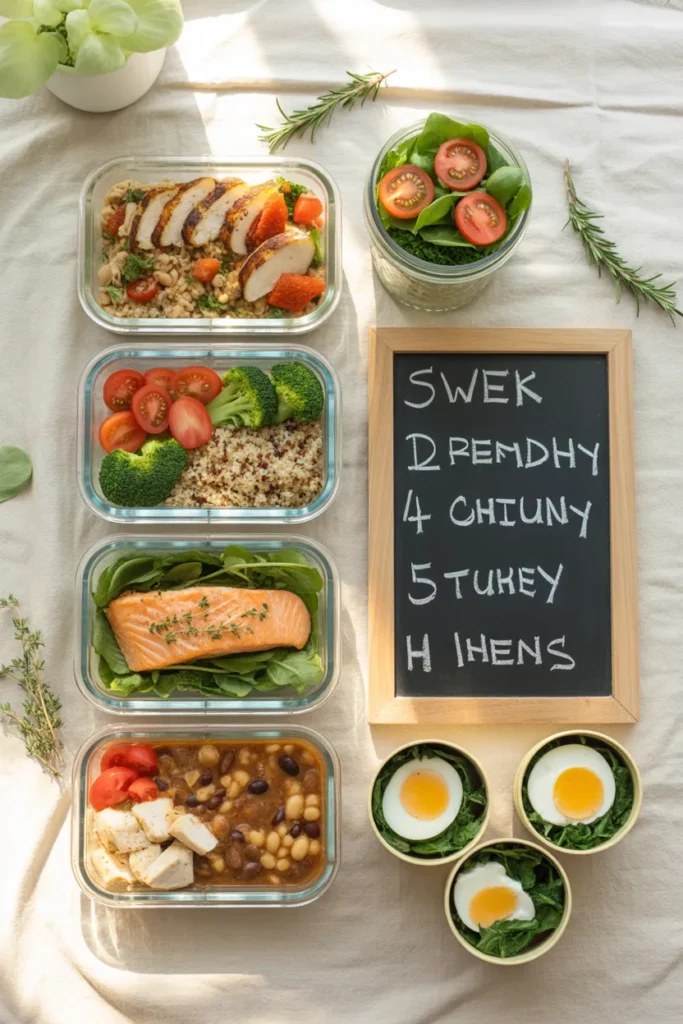
Want a smoother start? The Sunday meal prep routine I follow walks through the exact 90-minute timeline that turns this list into actual containers in your fridge by 4 PM.
Save this post to your Pinterest meal prep board, screenshot the calorie ceiling framework, and tell me in the comments which recipe you’re starting with. I read every one.


