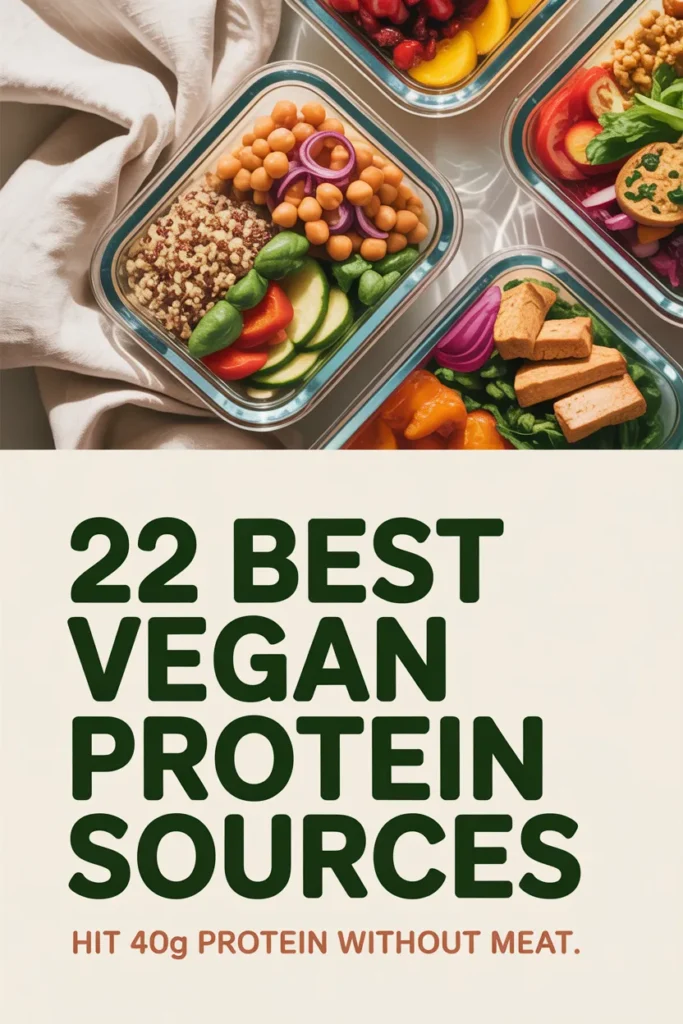

Vegan Protein Sources: 22 Best Picks for Plant-Based Meal Prep (Per Serving, Per Dollar, Per Container Day)
It’s Sunday at 4 PM. You’ve got six empty meal prep containers on the counter, a bag of lentils, half a block of tofu, and a quiet panic that by Wednesday lunch you’ll be staring at sad cucumber slices and wondering where your protein went. I’ve been there. After three years of testing every vegan protein source on the shelf in my own kitchen, I built this guide so you never have to guess again.
Below you’ll find 22 vegan protein sources ranked by grams per serving, cost per 20 grams of protein at US stores, and (the part nobody else covers) how each one actually behaves on day 4 of meal prep. No vague “add some beans” nonsense. Real numbers, real containers, real Tuesday lunches that still taste like food.
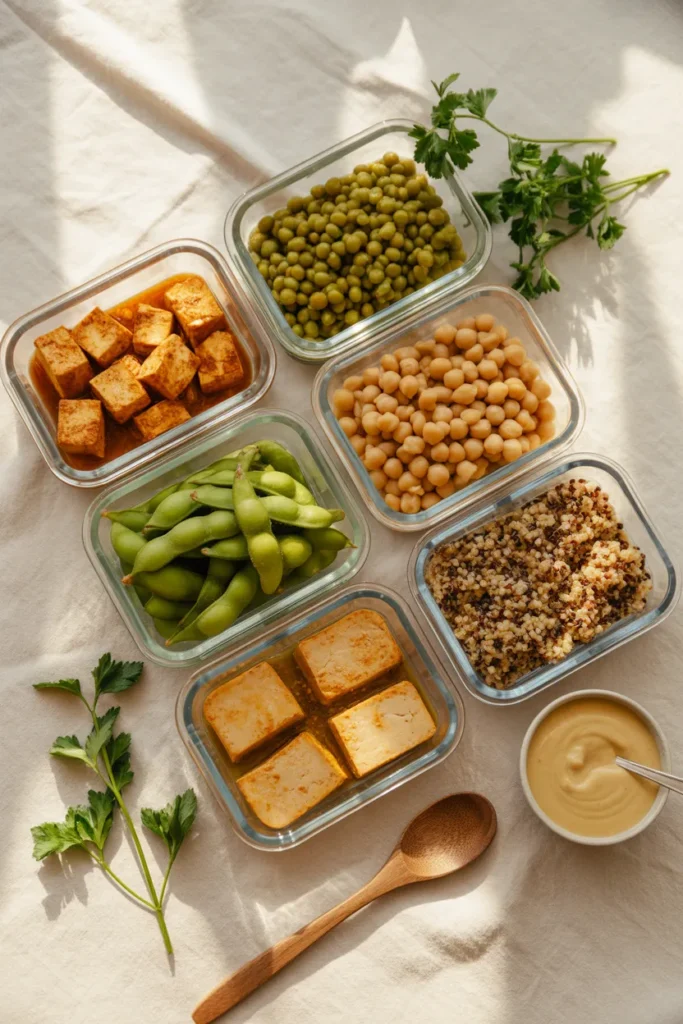
Who This Vegan Protein Guide Is For
This guide is built for:
- Plant-based preppers packing 4 to 5 weekday lunches every Sunday
- Gym-goers chasing 30g+ protein per meal without animal products
- Curious omnivores running Meatless Monday or a soft reduction plan
- Budget cooks who need protein under $1.50 per 20g serving
- Beginners intimidated by tofu, tempeh, or “where do you get your protein”
If you’re brand new, start with my vegan meal prep recipe hub for the easy wins, then come back here for the deeper protein math.
How I Ranked These (The Organization Axis)
Every plant-based protein source on this list is scored on four things: grams of protein per common serving, cost per 20g of protein at typical US grocery prices, completeness of amino acid profile, and meal-prep stability (days in fridge, freezer behavior, texture after reheating). That last one is what makes this list different from the Healthline-style encyclopedia entries. Knowing tempeh has 31g of protein per cup doesn’t help you if it goes weird by Thursday.
The Plant Protein Stack: Quick Reference Chart
Save this one. Screenshot it, pin it, tape it to your fridge.
| Protein Source | Protein (per common serving) | Cost per 20g protein (US avg) | Complete? | Meal-Prep Behavior |
|---|---|---|---|---|
| Seitan | 25g per 3.5 oz | $1.20 | Almost | Holds 5 days, freezes well |
| Tempeh | 31g per cup cooked | $1.80 | Yes | Best at day 2–4, freezes well |
| Tofu (firm) | 20g per cup cubed | $0.90 | Yes | Holds 4 days, freezes oddly |
| Edamame (shelled) | 18g per cup | $1.10 | Yes | Holds 5 days, freezes great |
| Lentils (cooked) | 18g per cup | $0.55 | Almost | Holds 5 days, freezes well |
| Black beans | 15g per cup | $0.65 | Almost | Holds 5 days, freezes great |
| Chickpeas | 15g per cup | $0.70 | Almost | Holds 5 days, freezes great |
| Quinoa | 8g per cup | $1.40 | Yes | Holds 4 days, freezes ok |
| Hemp seeds | 10g per 3 tbsp | $2.20 | Yes | Indefinite raw, no reheat needed |
| Chia seeds | 5g per 2 tbsp | $2.50 | Almost | 5+ days as pudding |
| Pea protein powder | 24g per scoop | $0.95 | Almost | Pre-portioned, indefinite |
| Soy milk (unsweetened) | 8g per cup | $1.40 | Yes | 7-day fridge |
| Nutritional yeast | 5g per 2 tbsp | $2.80 | Almost | Indefinite pantry |
| Oats (rolled) | 6g per ½ cup dry | $0.45 | Almost | 5 days as overnight oats |
| TVP (textured vegetable protein) | 24g per ½ cup dry | $0.50 | Yes | Holds 5 days rehydrated |
Cost numbers are based on March 2026 average pricing at Aldi, Walmart, and Trader Joe’s. Costs at Whole Foods or Sprouts will run 30 to 60 percent higher.
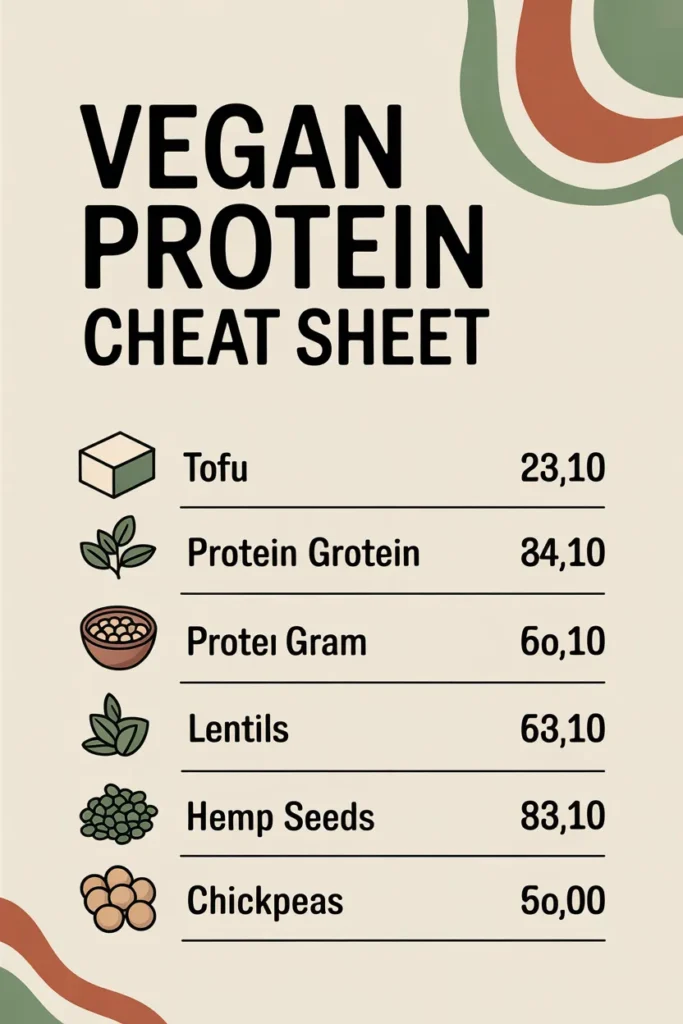
What Counts as a Complete Vegan Protein (And Why You Don’t Need to Stress)
A complete protein contains all nine essential amino acids your body can’t make on its own. For decades, the myth that vegans had to “combine” proteins at every meal kept people scared off plants. Harvard’s nutrition team and most current research show that as long as you eat a variety of plant proteins across the day, your body handles the amino acid pool just fine. You don’t need to eat rice and beans in the same bite.
That said, a few plant foods are complete all by themselves: soy (tofu, tempeh, edamame, soy milk), quinoa, buckwheat, hemp seeds, chia seeds, and pistachios. Pea protein is nearly complete (a touch low in methionine), which is why pea-rice blends dominate the vegan protein powder shelf. The combo fills the gap.
If you want the deep nutritional breakdown straight from a primary source, the USDA FoodData Central database lets you look up exact amino acid profiles for any food on this list. Bookmark it.
The 22 Best Vegan Protein Sources, Ranked by Meal-Prep Usefulness
1. Tempeh (31g per cup, the meal-prep MVP)
Tempeh is the protein I reach for first every Sunday. It’s fermented soybeans pressed into a firm cake, with a nutty flavor and dense, almost meaty bite. One cup of cooked tempeh delivers 31 grams of protein, more than three eggs, and the fermentation makes the nutrients more digestible than plain soy.
Meal-prep behavior: Cube it, marinate it for 20 minutes in soy-maple-ginger, then bake at 400°F for 22 minutes until the edges turn a deep amber brown and the surface looks lacquered. It holds beautifully for 5 days in the fridge and freezes well in airtight containers for up to 3 months.
Best US brands: Lightlife Original (Walmart, $3.50 per 8 oz block) and Trader Joe’s Organic Tempeh ($2.49 per block, the budget winner).
2. Tofu, Firm or Extra-Firm (20g per cup)
Tofu is the workhorse. Cheap, complete, takes any flavor you throw at it. A cup of cubed firm tofu has 20 grams of protein and lands at about $0.90 per 20g serving when bought at Aldi or Costco.
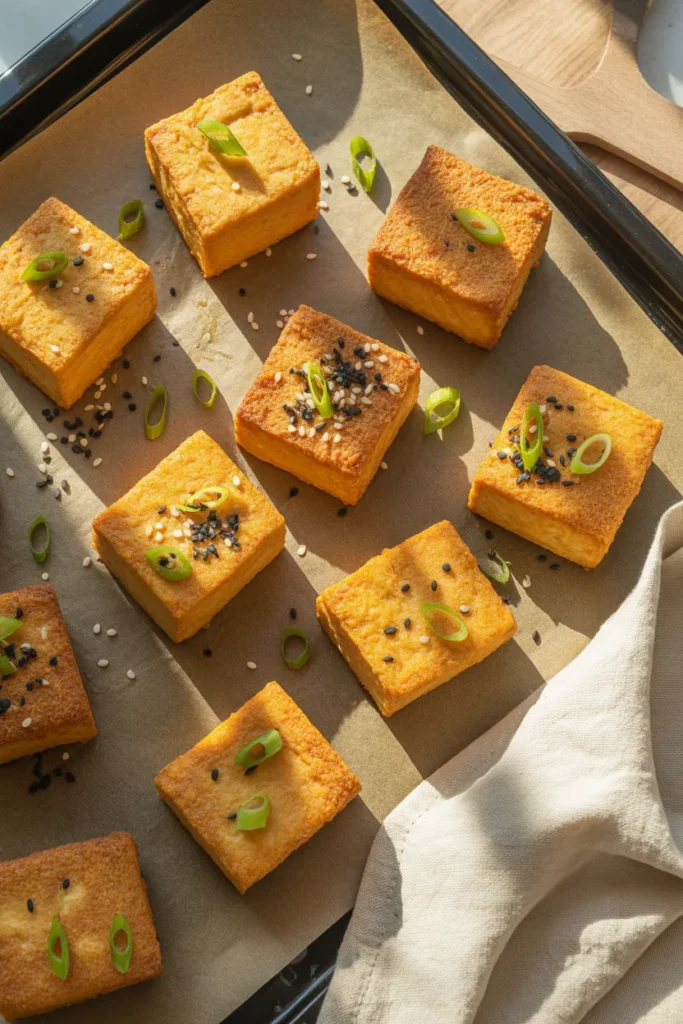
The mistake everyone makes: skipping the press. Wet tofu steams instead of browns, and you get a sad, beige, slightly soggy cube. Press a block between two clean kitchen towels with a heavy pan on top for 15 minutes, then cube and toss with 1 tablespoon cornstarch and 1 tablespoon soy sauce. Air fry at 400°F for 14 minutes, shaking the basket halfway, until each cube has a crackly golden crust and gives a quiet thump when you tap it with a spoon.
Meal-prep behavior: Holds 4 days in the fridge. Reheats best in the air fryer for 3 minutes at 375°F to restore crisp. Freezing changes the texture (gives it a chewier, almost meat-like crumb), which some people love and others don’t. Test one cube before committing a whole batch.
3. Seitan (25g per 3.5 oz, the closest thing to chicken)
Seitan is wheat gluten, which means it’s not gluten-free (skip this one if you’re celiac). What it is: 25 grams of protein per 3.5 oz serving, almost no fat, and a texture that genuinely passes for shredded chicken or beef in tacos, sandwiches, and stir fries.
Best US brands: Upton’s Naturals Traditional Seitan (Whole Foods, $4.99) or homemade for about $0.40 per serving if you buy vital wheat gluten in bulk from Bob’s Red Mill.
Meal-prep behavior: Holds 5 days in the fridge, freezes well. Slice thin, pan-sear in a screaming hot cast iron with 1 tablespoon oil for 2 minutes per side until you see crisp dark caramelized edges, then portion into containers over rice or grain bowls.
4. Lentils (18g per cup cooked, the budget king)
Lentils are the cheapest complete-ish protein on this list at about $0.55 per 20g serving. Green and brown lentils hold their shape for stews and grain bowls; red and yellow lentils dissolve into creamy dal-style sauces.
The meal-prep angle: Cook 2 cups of dry lentils on Sunday in 4 cups of vegetable broth with a bay leaf and 1 teaspoon kosher salt, about 20 minutes for green lentils until each one is tender but still keeps a gentle bite when you crush it between your tongue and the roof of your mouth. You’ll get about 5 cups cooked, enough for 5 lunches at 18g protein each. Holds 5 days in the fridge, freezes 3 months.
5. Black Beans (15g per cup)
A cup of cooked black beans delivers 15g protein plus 15g fiber, which is the real superpower here. Fiber slows digestion, keeps you full longer, and feeds the gut bacteria that produce short-chain fatty acids linked to better metabolic health. The Harvard School of Public Health has a thorough breakdown of beans and legumes worth bookmarking.
Meal-prep tip: Make your own from dried beans for $0.30 per 20g protein, or grab canned Goya or Bush’s Best from any grocery store. Rinse canned beans well to cut about 40% of the sodium.
6. Chickpeas (15g per cup)
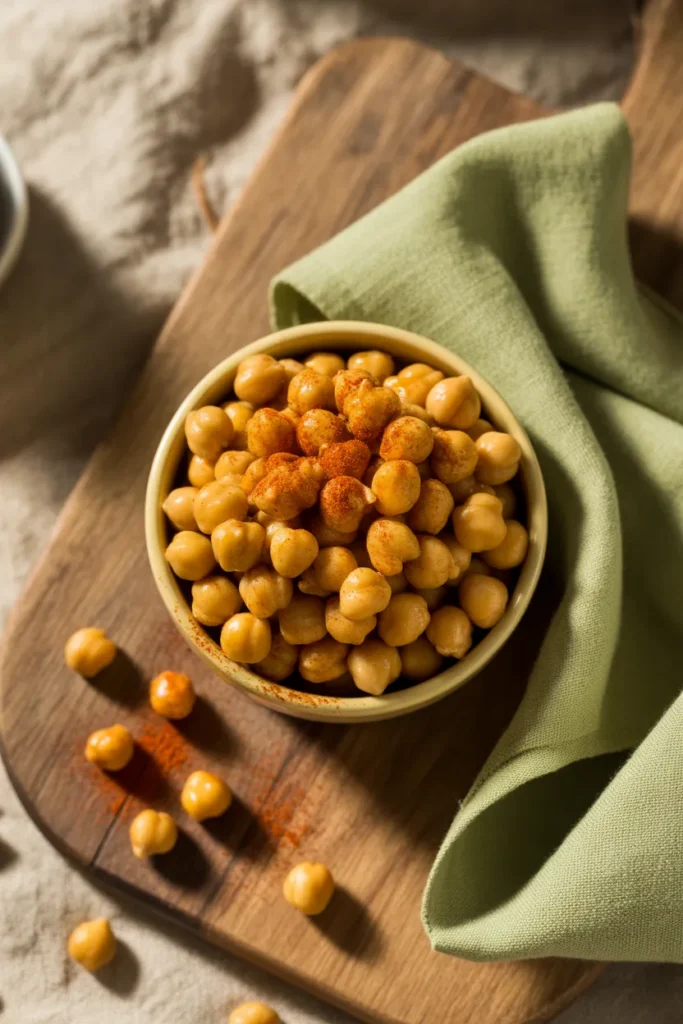
Garbanzo beans, same family as black beans, slightly different superpower: they roast crispy. Toss drained chickpeas with 1 tablespoon olive oil, 1 teaspoon smoked paprika, ½ teaspoon kosher salt, and ¼ teaspoon garlic powder, then roast at 425°F for 28 minutes, shaking the pan twice, until each chickpea is deep golden and gives a satisfying crunch when you bite one. They lose crisp after a day in the fridge, so store them separately from wet ingredients and add to bowls at serving time.
7. Edamame (18g per cup shelled)
Frozen shelled edamame from Trader Joe’s or Walmart costs about $1.10 per 20g protein and goes from freezer to ready in 4 minutes of boiling water. Edamame is a complete protein (it’s just immature soybeans), and the texture survives a week of meal prep without going mushy.
8. Quinoa (8g per cup, the complete grain)
Quinoa is the only common grain that’s a complete protein. It’s not the highest-protein item on this list, but it does double duty as your carb base AND a protein contributor. Rinse it well before cooking to wash off the saponins (the bitter coating). Cook 1 cup quinoa in 2 cups water for 15 minutes until you see tiny white tails curling out of each seed and the grains are fluffy.
9. Hemp Seeds (10g per 3 tbsp)
Hemp seeds are a complete protein, raw, no cooking, no prep. Sprinkle 3 tablespoons on top of oatmeal, salads, or yogurt parfaits for an instant 10g protein boost. Manitoba Harvest at Costco runs about $14 per pound, which works out to $2.20 per 20g protein, on the splurgier end but worth it for breakfast prep.
10. Chia Seeds (5g per 2 tbsp)
Chia pudding is the laziest high-protein vegan breakfast in existence. Stir 3 tablespoons chia into 1 cup unsweetened soy milk, add 1 teaspoon maple syrup, refrigerate overnight. By morning you’ve got a thick pudding with about 14g protein (chia + soy milk together). Holds 5 days in mason jars.
11. Pea Protein Powder (24g per scoop)
When you absolutely need 30g protein and don’t have time to cook, a scoop of pea protein in a blender with frozen banana, soy milk, and peanut butter delivers a complete amino acid profile in 90 seconds. I’ve tested NOW Sports, Naked Pea, and Orgain, and Naked Pea wins on neutral taste (no artificial sweetener weirdness). About $0.95 per 24g serving when bought in 5-pound bags.
12. TVP (Textured Vegetable Protein, 24g per ½ cup dry)
TVP is dehydrated soy flour, which sounds depressing and tastes amazing once you know how to use it. Rehydrate ½ cup dry TVP in ½ cup hot vegetable broth for 5 minutes until it’s plump and tender, then use it anywhere you’d use ground beef: chili, tacos, bolognese, sloppy joes. Bob’s Red Mill TVP costs $0.50 per 24g protein, which is wild value.
13. Nutritional Yeast (5g per 2 tbsp)
“Nooch” is more of a sprinkle-on flavor boost than a primary protein, but 2 tablespoons add 5g protein plus a savory, cheesy depth to popcorn, pasta, soups, and roasted vegetables. Bragg’s Premium and Bob’s Red Mill are the two US standards.
14. Soy Milk (8g per cup, unsweetened)
The protein winner among plant milks by a long shot. Almond milk has 1g protein per cup. Oat milk has 2 to 3g. Soy milk has 8g, and it’s a complete protein. Use it as your latte base, smoothie base, and overnight oats base to stack protein everywhere without thinking about it.
15. Rolled Oats (6g per ½ cup dry)
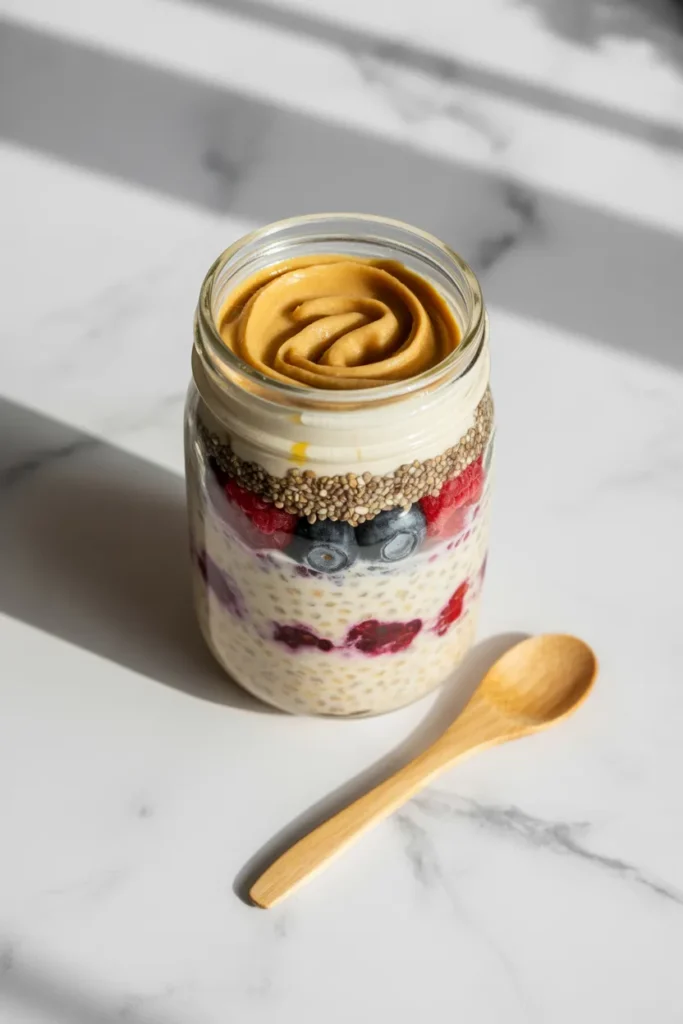
Half a cup of dry rolled oats has 6g protein. Stack with soy milk (8g) and hemp seeds (10g) and your overnight oats jar lands at 24g protein before you even think about peanut butter. Bob’s Red Mill or Quaker Old Fashioned, both at any US grocery.
16. Peanut Butter (7g per 2 tbsp)
Peanut butter isn’t a complete protein on its own, but 2 tablespoons add 7g and turn a 14g overnight oats jar into a 21g powerhouse. Stick with brands that list “peanuts, salt” only. Crazy Richard’s, Trader Joe’s, and Costco’s Kirkland Organic all qualify.
17. Almonds (6g per ¼ cup)
A handful of almonds adds 6g protein, healthy fats, and Vitamin E. Buy them raw and roast a 16 oz bag at 325°F for 12 minutes with a sprinkle of salt, then portion into 1 oz snack bags for the week.
18. Pumpkin Seeds / Pepitas (9g per ¼ cup)
Underrated protein. A quarter cup of raw pepitas has 9g protein, more than almonds. Toast them in a dry skillet for 4 minutes until you hear them start to pop and the kitchen smells warm and nutty. Sprinkle on grain bowls and salads.
19. Spirulina (4g per 1 tbsp)
Tiny powerhouse. One tablespoon of spirulina has 4g protein, vivid blue-green color, and a mild seaweed taste that disappears completely inside a fruit smoothie. Not your primary source, but a clean stacking ingredient.
20. Spelt and Teff (10–13g per cup cooked)
Ancient grains your supermarket probably stocks now. Teff has the most protein of any grain at 13g per cup cooked, and a slightly sweet, malty flavor that works beautifully in porridge or as a polenta-style base.
21. Wild Rice (7g per cup cooked)
Not technically rice, technically an aquatic grass seed. Wild rice has nearly double the protein of brown rice and a chewy, almost smoky texture. Cook in vegetable broth with a bay leaf for 45 minutes.
22. Mycoprotein (Quorn, 15g per cup)
Fungi-based protein, sold as Quorn in the US. Not all Quorn products are vegan (some contain egg white), so read the label. The Vegan Quorn Pieces are a complete protein at 15g per serving and behave like chicken in stir fries and curries.
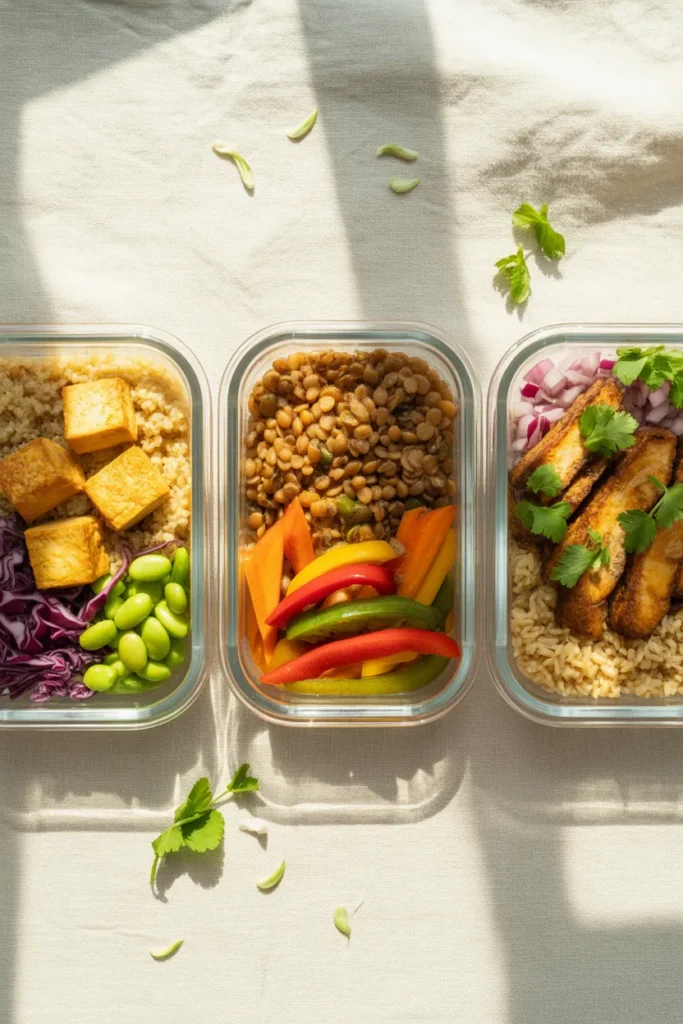
How to Hit 40 Grams of Protein in One Vegan Meal (The Stacking Method)
This is the question nobody else answers cleanly. Forty grams in one sitting feels intimidating until you see the math.
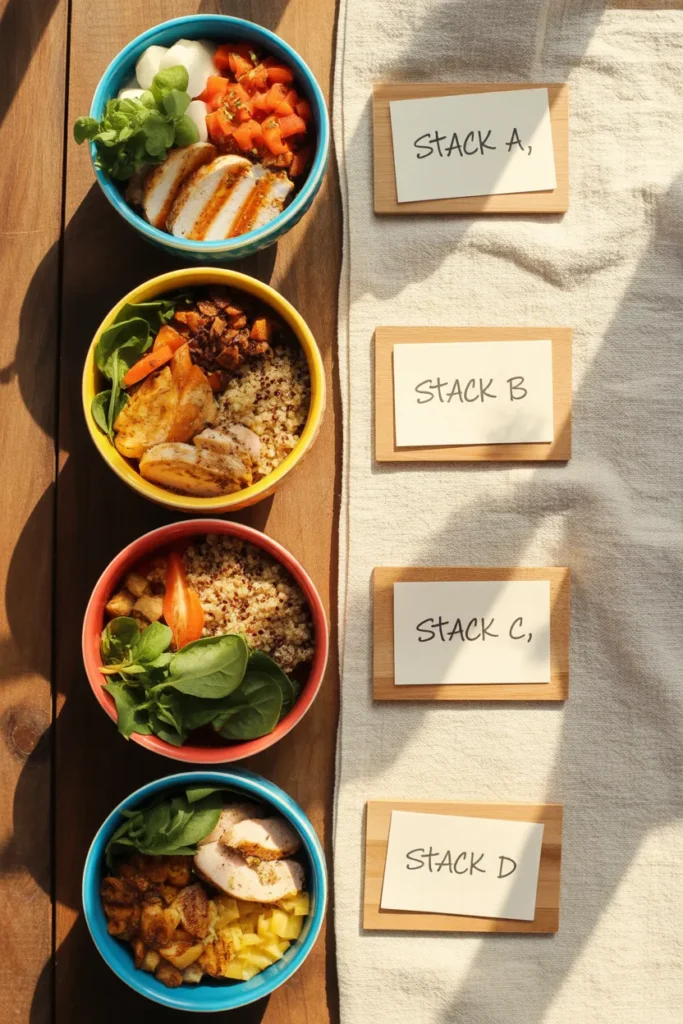
Stack A: The High-Protein Lunch Bowl (43g protein)
- 1 cup cooked tempeh, cubed and glazed: 31g
- ½ cup cooked quinoa: 4g
- 1 cup steamed edamame: 18g (mix in or serve as a side)
- Total: about 53g, easy
Stack B: The Buddha Bowl That Actually Fills You (40g protein)
- 1 cup chickpeas, roasted: 15g
- 1 cup cooked lentils: 18g
- 3 tablespoons hemp seeds sprinkled on top: 10g
- Total: 43g
Stack C: The Smoothie Breakfast (38g protein)
- 1 scoop pea protein: 24g
- 1 cup soy milk: 8g
- 3 tablespoons hemp seeds: 10g
- Total: 42g
Stack D: The Weeknight Bowl (42g protein)
- 1 cup firm tofu, air-fried: 20g
- ½ cup TVP (rehydrated, added to a tomato sauce): 24g over rice
- Total: 44g
Pin these. Honestly, this section alone is why people will save this post.
Cost Per Serving: Budget vs Mid-Range vs Splurge
| Tier | Cost per serving | What it buys you |
|---|---|---|
| Budget (under $3) | Dried lentils, dried chickpeas, TVP, oats, frozen edamame from Aldi or Walmart, store-brand tofu | |
| Mid-range ($3 to $6) | Lightlife tempeh, Trader Joe’s organic tofu, Bob’s Red Mill quinoa, Manitoba Harvest hemp seeds, pea protein powder | |
| Splurge ($6+) | Whole Foods 365 organic tempeh, Naked Pea protein in 5-lb tubs, Sprouts grass-fed-equivalent specialty seitan, organic chia from Whole Foods |
A full week of vegan meal prep using budget-tier proteins runs about $18 to $25 per person for 15 meals. Mid-tier doubles that. Splurge tier runs $60 to $80. Worth knowing before you commit to a tier.
Weeknight Shortcut vs Sunday From-Scratch
Weeknight shortcut (15 minutes): Canned chickpeas + microwave brown rice pouch + frozen edamame + a jar of curry sauce. About $4 per serving, 32g protein, ready in the time it takes to boil water.
Sunday from-scratch (90 minutes, makes 5 meals): Dry lentils simmered in broth, baked seasoned tempeh, homemade peanut sauce, fresh roasted vegetables. About $2.50 per serving, 38g protein each, and the flavor difference is genuine. I default to weeknight twice a week and Sunday-from-scratch on the long days.
For more on building this rhythm, my high-protein meal prep collection has the recipes I rotate.
Meal Prep Containers and Equipment That Actually Work for Vegan Prep
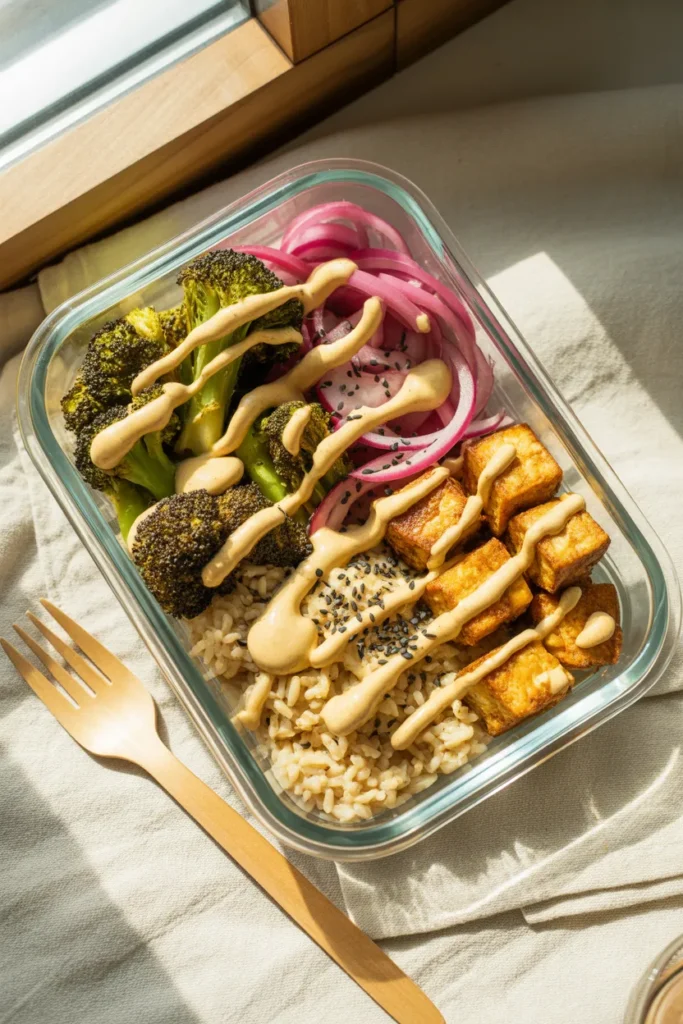
- 3-cup glass meal prep containers for bowl meals (Pyrex 3-cup with snap-on lids are dishwasher and microwave safe)
- 32 oz wide-mouth mason jars for layered salads and overnight oats
- Silicone food bags for portioned chickpeas, almonds, and pepitas
- A good tofu press (TofuBud is the one I bought after testing four brands)
No air fryer? Use a 425°F oven for 22 minutes instead, flipping halfway. No tofu press? Stack three heavy plates on a kitchen-towel-wrapped block for 20 minutes.
Storage and Reheating Cheat Sheet
| Protein | Fridge | Freezer | Reheat Method |
|---|---|---|---|
| Cooked tempeh | 5 days | 3 months | Microwave 90 sec, or skillet 3 min |
| Crispy tofu | 4 days | 2 months (texture changes) | Air fryer 375°F for 3 min |
| Cooked lentils | 5 days | 3 months | Microwave 2 min, stir, 30 sec more |
| Cooked chickpeas | 5 days | 3 months | Microwave 90 sec |
| Roasted crispy chickpeas | 2 days (lose crisp) | Not recommended | Re-crisp at 400°F for 5 min |
| Seitan | 5 days | 3 months | Skillet 2 min per side |
| Cooked quinoa | 4 days | 2 months | Microwave 60 sec with 1 tbsp water |
| Overnight oats | 5 days | Not recommended | Eat cold |
| Chia pudding | 5 days | Not recommended | Eat cold |
Scaling Notes
Most of these proteins scale linearly. Doubling lentils, chickpeas, or tofu = double everything. Exceptions: salt and spices scale at about 1.5x, not 2x (start at 1.5 and taste before adding more). Yeast in baked goods doesn’t scale linearly either, but that’s a different conversation.
Dietary Swaps
- Gluten-free: Skip seitan and Ezekiel bread. Everything else on this list is naturally gluten-free.
- Soy-free: Skip tofu, tempeh, edamame, soy milk, TVP, and most pea-soy protein blends. Lean on lentils, chickpeas, hemp seeds, seitan, and pea-only protein powder.
- Nut-free: Skip almonds, peanut butter, and any nut-based protein bars. Pumpkin seeds and hemp seeds fill the gap.
- Low-FODMAP: Skip beans, chickpeas, lentils (or use small portions of canned, well-rinsed). Tofu, tempeh, and quinoa are FODMAP-friendly.
Common Mistakes to Avoid
- Not pressing tofu. Wet tofu steams instead of browns. Always press.
- Reheating crispy chickpeas in the microwave. They turn into sad mush. Always re-crisp in the oven or air fryer.
- Storing crispy elements with wet sauces. Pack sauces in a 2 oz portion cup on the side, every single time.
- Skipping the soak on dried beans. A 12-hour cold soak cuts cook time in half and improves digestibility (cuts down on the bean gas issue most people complain about).
- Buying flavored tempeh. It’s almost always over-sweetened. Buy plain and season it yourself.
- Trusting “vegan protein” labels without checking grams. Plenty of vegan protein bars have 6g of protein. Read the label.
Pair These Recipes With Your Protein Prep
The proteins above are the building blocks. To turn them into actual finished meals that last all week, my freezer meal prep guide walks through the Sunday system I use to fill the freezer with lentil chili, tempeh-glazed bowls, and curry bases that hold up to 90 days.
Frequently Asked Questions
What is the 30/30/30 rule for vegans?
The 30/30/30 rule means eating 30 grams of protein within 30 minutes of waking up, followed by 30 minutes of low-intensity movement (a walk, gentle yoga). For vegans, hitting 30g at breakfast is doable with a smoothie that stacks pea protein (24g), soy milk (8g), and hemp seeds (10g), or a savory tofu scramble built on 1 cup of firm tofu (20g) plus a side of vegan sausage or chickpeas.
What is the best protein for diabetics on a vegan diet?
Plant proteins lowest in starchy carbs tend to work best for blood sugar control. Tempeh, tofu, edamame, seitan, hemp seeds, and pea protein powder are all low-glycemic and pair well with non-starchy vegetables. Lentils and beans are still excellent because their fiber slows the carb absorption, but watch portion sizes. Always consult a registered dietitian or your doctor for personalized guidance; this is general information, not medical advice.
What plant protein is good for kidney patients?
Kidney patients often need lower-protein diets and need to limit potassium and phosphorus. Egg-white-equivalent vegan options like tofu, seitan (if not gluten-restricted), and small portions of pea protein isolate are often recommended because they’re easier on the kidneys than high-potassium options like beans and lentils. This is a case where a renal dietitian’s input is non-negotiable, so please consult a US-based qualified professional for your specific situation.
Does a vegan diet lower cortisol?
Research is mixed but trending positive. Several studies have linked plant-forward diets to lower inflammation markers and reduced cortisol, likely because of higher fiber intake, lower saturated fat, and more antioxidants. A vegan diet won’t fix chronic stress on its own, but it can be one helpful piece of a broader plan.
How much protein do vegans really need per day?
The standard recommendation is 0.36g per pound of bodyweight for sedentary adults, which works out to about 54g per day for a 150-pound person. Active vegans, those building muscle, or anyone over 60 should aim higher, around 0.7 to 1g per pound. For a 150-pound active adult, that’s 105 to 150g per day, which translates to 30 to 40g per meal across three to four meals.
Can you build muscle on a vegan diet?
Yes, and the research is clear on this now. A 2021 study in Sports Medicine showed that vegan and omnivore lifters built muscle at equivalent rates when total protein intake and leucine content matched. The trick is hitting enough total protein (around 1g per pound of bodyweight if you’re actively training) and including leucine-rich sources like tempeh, seitan, soy, and pea protein.
What is the cheapest vegan protein?
Dried lentils at about $0.55 per 20g of protein when bought from Aldi or in bulk from Costco. TVP comes close at $0.50 per 24g protein. Both beat any animal protein on price, and both beat almost every other vegan protein source too.
Can I double or halve these protein servings?
Yes, all proteins on this list scale linearly. The only adjustments: salt and spices scale at 1.5x rather than 2x, and cooking times for larger batches go up by about 20% (a bigger pot of lentils takes a few extra minutes to come to a simmer).
Pin This and Build Your Week
Vegan protein isn’t a math problem you have to solve from scratch every meal. Pick three or four proteins from this list, prep them on Sunday, and you’ve got 40g per meal sorted for the entire week. Save this post to your Pinterest meal prep board so the Plant Protein Stack chart is one tap away when you’re standing in the grocery aisle on Saturday morning wondering what to grab.
Which protein on this list are you adding to your prep this week? Drop a comment and tell me what’s going in the containers.