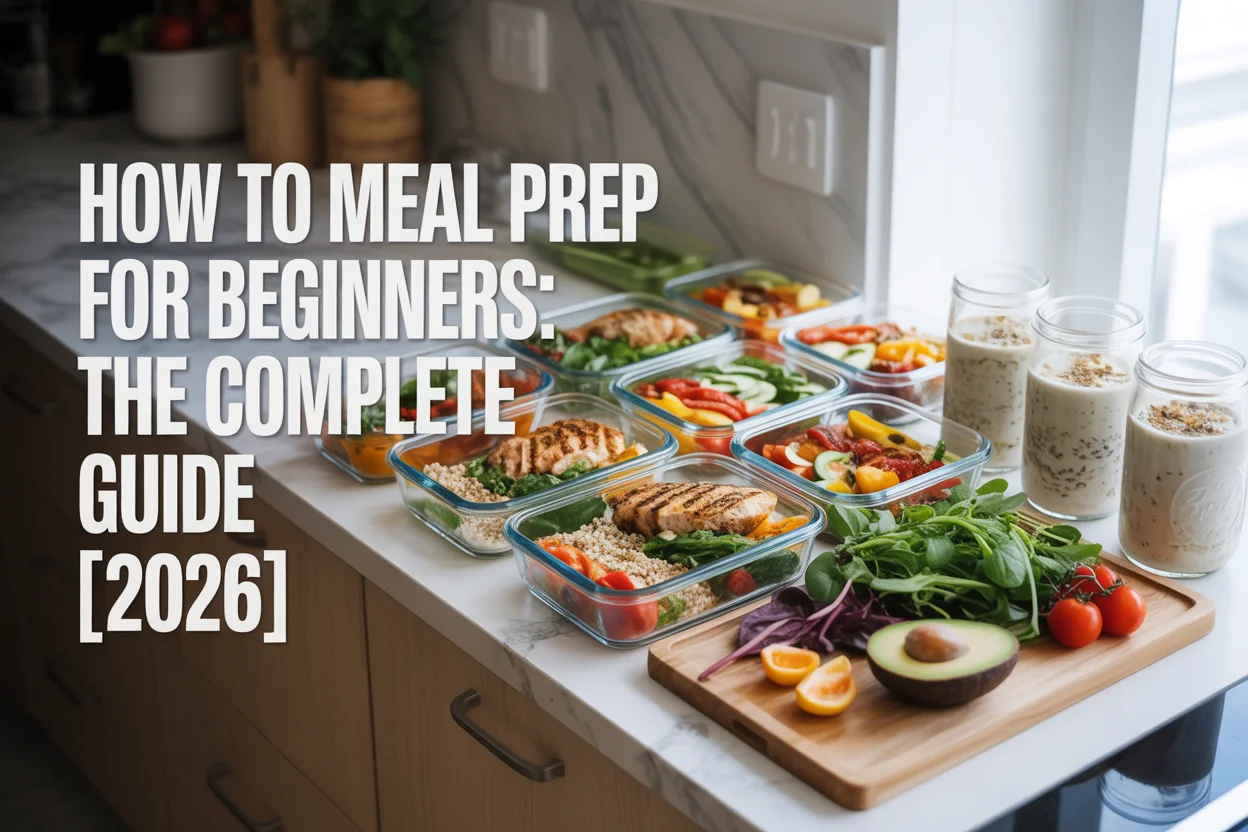
How to Meal Prep for Beginners: Complete Guide
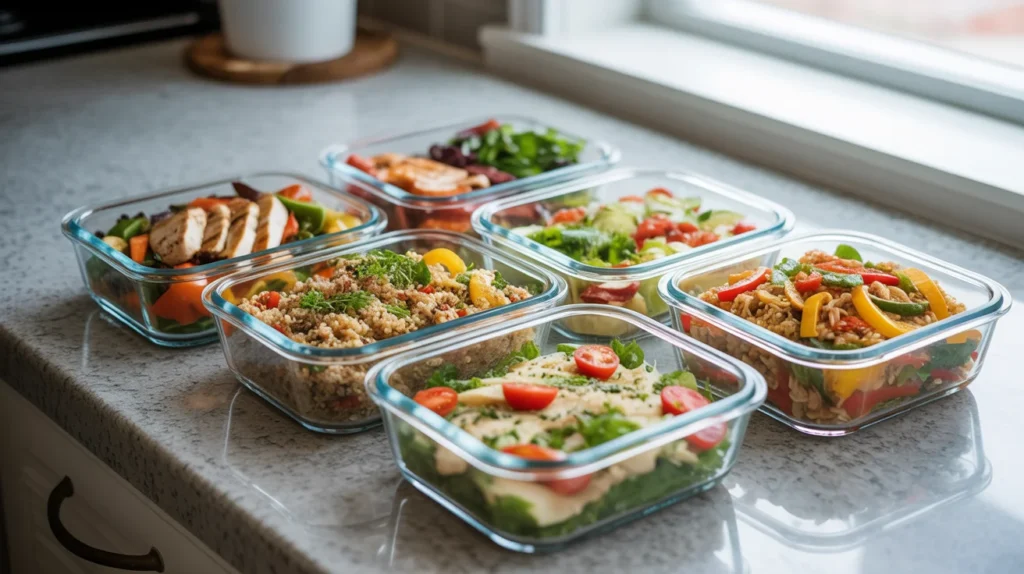
A row of neatly stacked containers sits in the refrigerator, each labeled with a day of the week, each holding a complete meal. It looks orderly, almost deliberate in a way everyday cooking rarely is. Meal Prep for Beginners begins there—not as a rigid system, but as a quiet decision to trade daily uncertainty for a bit of structure.
What Is Meal Prep? (And Why It’s Worth Your Time)
Meal prep, short for meal preparation, refers to the practice of planning, cooking, and storing meals in advance rather than making food from scratch every day. In practical terms, it means setting aside a few hours—often once or twice a week—to prepare multiple meals ahead of time.
For beginners, meal planning for beginners often starts simply: cooking a few lunches for the week, chopping vegetables in advance, or preparing ingredients so meals come together faster later. Food prep can be as minimal or as structured as you need. The defining feature is intention—deciding ahead of time what you’ll eat and preparing for it.
Benefits of Meal Prep
The advantages of meal prep become noticeable within a week. Time, which usually disappears in small increments across busy evenings, is consolidated into a single session. Many people recover six to eight hours each week by avoiding daily cooking and cleanup.
Money follows a similar pattern. When meals are planned, grocery shopping becomes more focused, and takeout becomes less frequent. Food waste drops as well, since ingredients are used with a purpose rather than forgotten at the back of the fridge.
There’s also a quieter benefit: fewer decisions. Dinner is no longer a daily negotiation. For those trying to maintain healthy meal prep habits, having pre-portioned meals makes portion control more consistent, and healthier choices become the default rather than the exception.
Types of Meal Prep for Beginners (Choose Your Style)
Meal prep doesn’t follow a single method. It adapts to how you prefer to cook and eat.
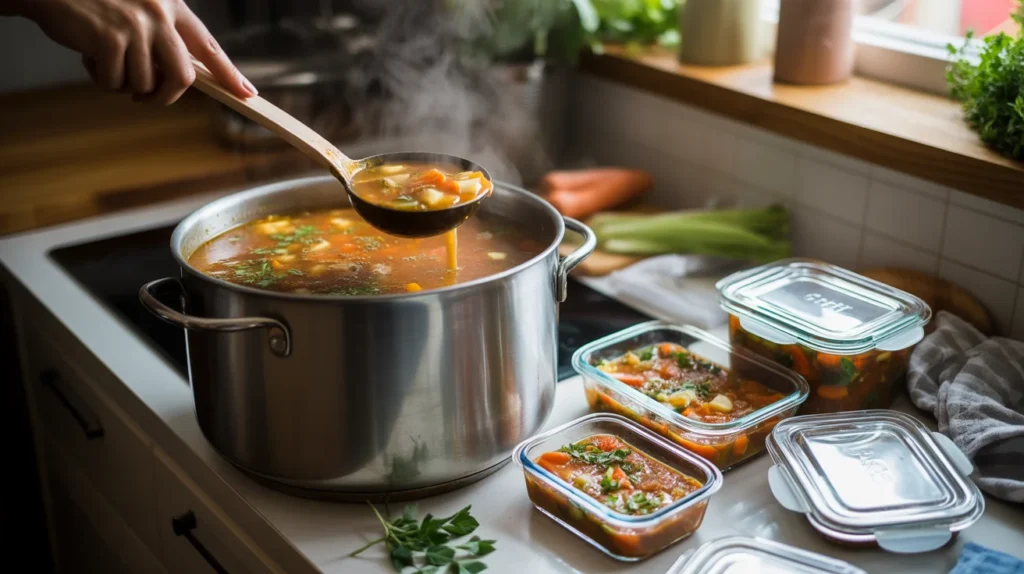
Batch cooking involves preparing large quantities of a single dish—such as a pot of lentil soup or a tray of roasted chicken—and dividing it into portions for the week. Individually portioned meals take that a step further, assembling complete grab-and-go meals in advance, ready to reheat.
Ingredient prepping is more flexible. Vegetables are washed and chopped, proteins are marinated, grains are cooked—then combined fresh throughout the week. Many people settle into a hybrid approach, mixing batch cooking with lighter prep work depending on their schedule.
How to Start Meal Prepping: Step-by-Step
Step 1 — Set Your Meal Prep Goal
Clarity helps at the beginning. Decide whether you’re preparing breakfast, lunch, dinner, or a combination. Meal prep for one often looks different from meal prep for families, where volume and variety become more important.
Starting with a single meal—often lunch—keeps the process manageable. Expanding later feels natural once the routine settles.
Step 2 — Choose Your Recipes (Keep It Simple)
Complex recipes tend to discourage consistency. Begin with two or three easy meal prep recipes that store and reheat well. Grain bowls, roasted vegetables, and simple proteins work reliably.
Meal prep ideas for beginners should prioritize familiarity. If you already enjoy the food, you’re more likely to stick with the habit.
Step 3 — Write a Meal Prep Grocery List
A structured meal prep grocery list prevents both overspending and missed ingredients. Organizing items by category—proteins, grains, produce, pantry staples—makes shopping more efficient.
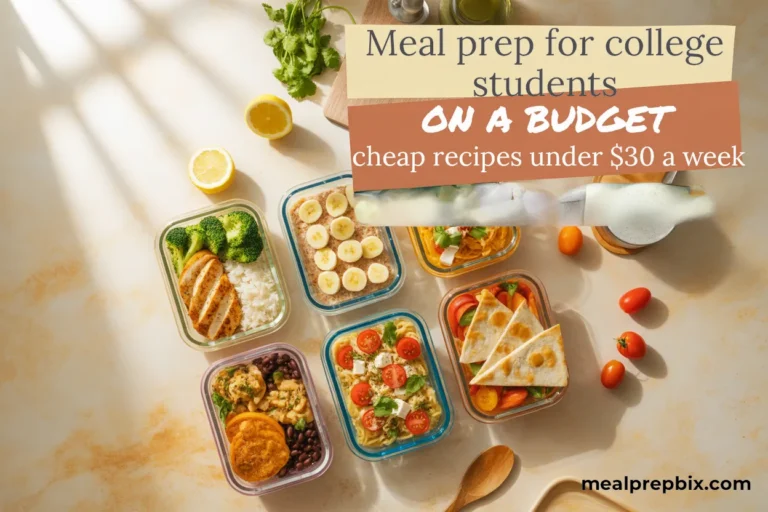
Budget-friendly ingredients like rice, beans, eggs, frozen vegetables, and chicken form the backbone of meal prep on a budget. They’re versatile, affordable, and store well.
Step 4 — Pick a Meal Prep Day and Schedule
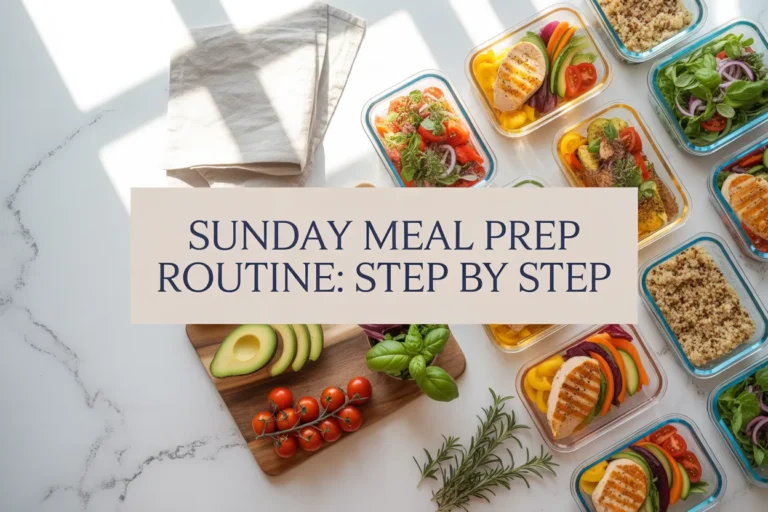
Sunday meal prep is common because it sets up the week, but any consistent day works. Beginners typically need one to two hours for a weekly meal prep session.
The key is consistency rather than perfection. A predictable schedule reduces the effort required to start.
Step 5 — The Actual Prep Session (Minute-by-Minute Walkthrough)
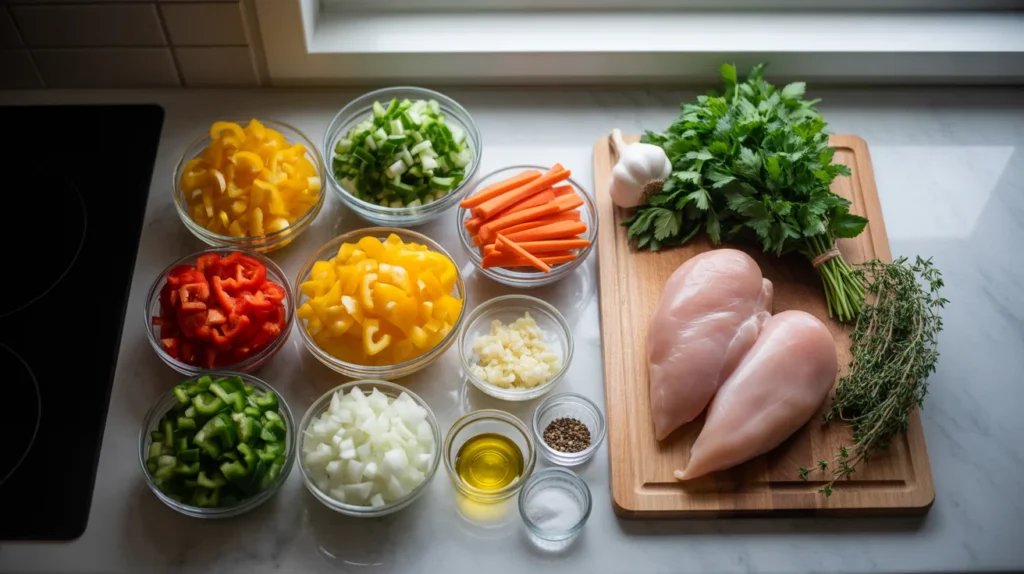
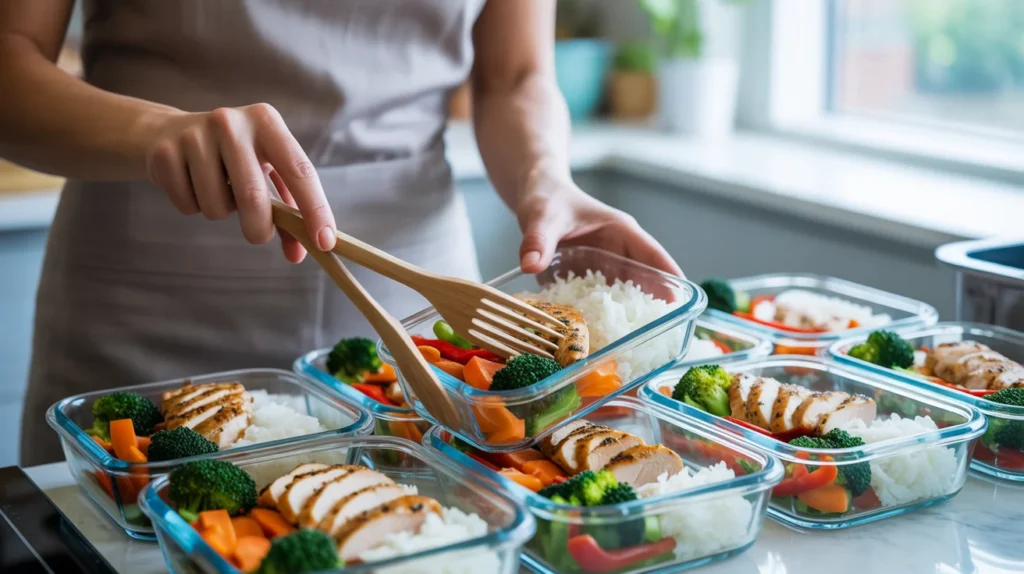
Efficiency comes from sequencing. Start with foods that take the longest—grains simmering on the stove, proteins roasting in the oven. While those cook, chop vegetables, prepare sauces, and organize containers.
Cooling matters. Food should cool before being sealed to avoid condensation and spoilage. Once cooled, portion meals, label them, and store them promptly.
Step 6 — Store, Label, and Organize
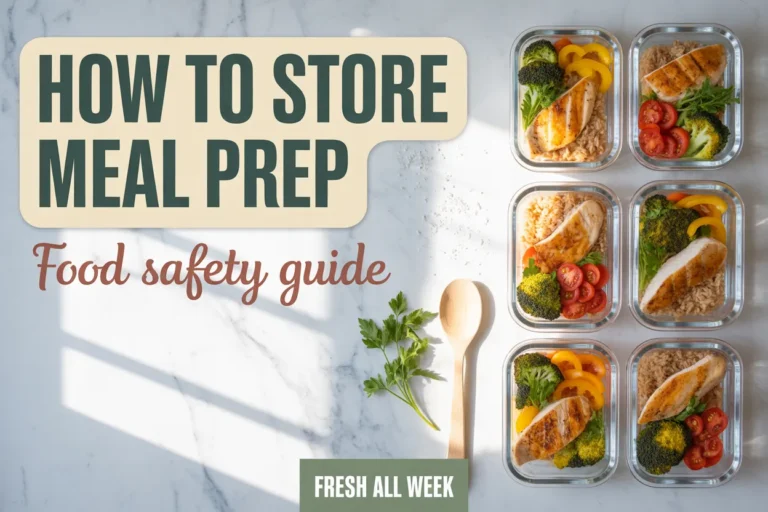
Most meal prep lasts three to five days in the refrigerator. Freezer meal prep extends that window significantly, often up to two or three months depending on the dish.
Clear labeling—name and date—prevents confusion later. Organization turns the fridge into a system rather than a guessing game.
Best Meal Prep Containers (Glass vs. Plastic)
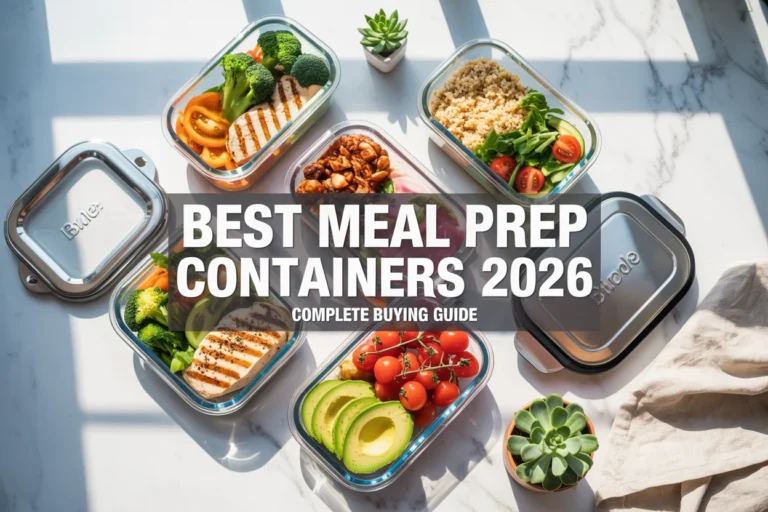
Containers shape the practicality of meal prep more than most people expect. Glass containers are durable, microwave-safe, and don’t absorb odors, though they’re heavier and more expensive. BPA-free plastic containers offer a lighter, more affordable alternative, especially when transporting meals.
Divided containers support portion control by separating proteins, grains, and vegetables. Mason jars work well for layered salads, overnight oats, and soups, particularly when visibility and stacking matter.
Meal Prep Recipes for Beginners (Breakfast, Lunch, Dinner, Snacks)
Breakfast Meal Prep Ideas
Breakfast benefits from simplicity. Overnight oats, egg muffins, breakfast burritos, and chia pudding all store well and require minimal morning effort. Easy breakfast meal prep often means assembling rather than cooking each day.
Lunch Meal Prep Ideas
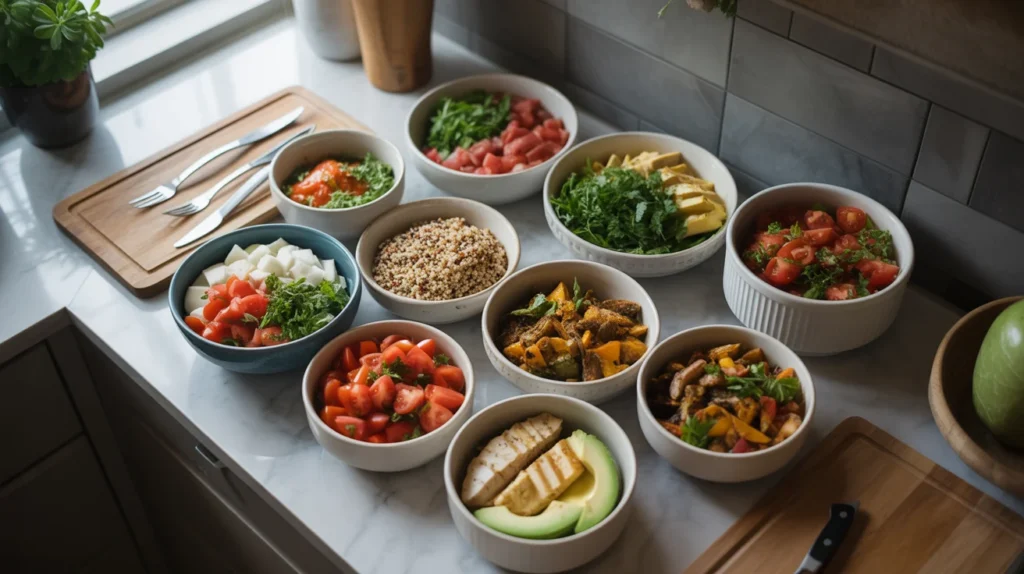
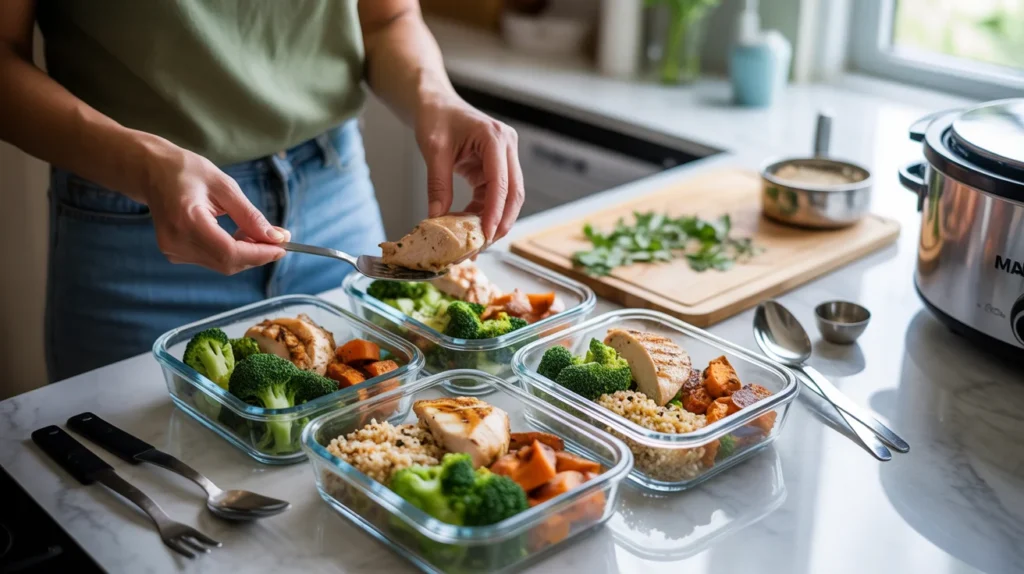
Lunch is where meal prep shows its value most clearly. Grain bowls, chicken and rice, quinoa salads, and wraps hold up well and offer variety without complexity. Healthy meal prep lunch options often rely on repeatable combinations rather than entirely new recipes.
Dinner Meal Prep Ideas
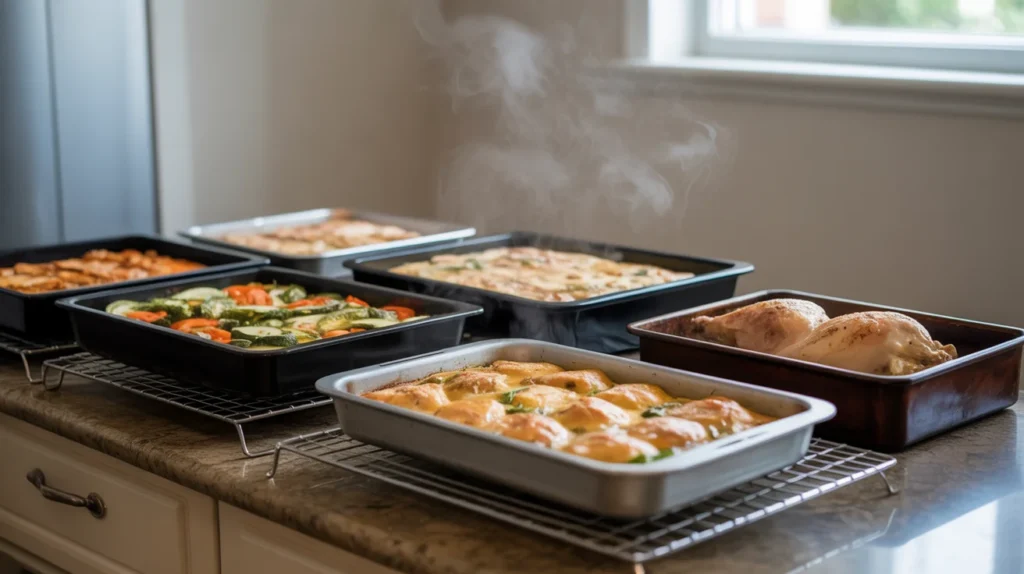
Dinner tends to be the most flexible. Sheet pan meals, stir-fries, soups, and slow cooker dishes allow for large batches with minimal oversight. Easy meal prep dinners often rely on cooking everything at once rather than in stages.
Meal Prep Snacks
Snacks fill the gaps between meals. Hard-boiled eggs, hummus with vegetables, energy bites, and trail mix provide structure without requiring daily preparation.
Meal Prep for Specific Goals
Meal Prep for Weight Loss
Meal prep for weight loss centers on portion control and balanced nutrition. Meals are structured with appropriate ratios of protein, carbohydrates, and fats, reducing the likelihood of overeating or impulsive choices.
Meal Prep on a Budget
Budget meal prep depends on consistency rather than restriction. Buying in bulk, choosing seasonal produce, and relying on inexpensive staples keeps costs predictable. Over time, the cost per meal drops noticeably compared to eating out.
Meal Prep for Special Diets
Dietary preferences shape ingredient choices but not the structure of meal prep itself. Keto meal prep may emphasize fats and low carbohydrates, while vegan meal prep focuses on plant-based proteins. Gluten-free meal prep requires careful ingredient selection but follows the same planning process.
Food Safety Tips for Meal Prep
Food safety underpins the entire process. Cooked food should be refrigerated within two hours to prevent bacterial growth. Meats should reach safe internal temperatures—165°F (75°C) for poultry, for example.
Cooling food quickly, storing it in shallow containers, and labeling with dates helps maintain freshness. Most meals remain safe for three to five days in the fridge, while freezer storage extends usability significantly. Even small practices, like placing a paper towel in containers with greens, can slow spoilage.
Meal Prep Tools and Equipment You Actually Need
The essentials are straightforward: a sharp knife, sturdy cutting boards, and a few reliable pans. Sheet pans allow for efficient oven cooking, while a slow cooker or Instant Pot simplifies large batches.
Measuring tools and a food scale help with portion control when needed. Digital tools—meal prep apps like Mealime, Prepear, or Plan to Eat—assist with planning and organization, though they’re optional rather than required.
7-Day Meal Prep Plan for Beginners (Sample Week)
A simple weekly meal prep plan might include overnight oats for breakfast, grain bowls for lunch, and sheet pan dinners, with snacks like fruit, nuts, and yogurt. The structure repeats, but small variations in seasoning or ingredients keep meals from feeling repetitive.
A corresponding grocery list would include grains, proteins, vegetables, fruits, and pantry staples, organized for efficiency. Prep day would involve cooking grains, roasting vegetables, preparing proteins, and assembling meals in a single session.
Common Meal Prep Mistakes to Avoid
Beginners often try to prepare too many recipes at once, turning a manageable task into an overwhelming one. Ignoring personal preferences leads to uneaten meals, which defeats the purpose entirely.
Skipping snacks, failing to label containers, and repeating the same meal without variation can all undermine consistency. Washing greens too early can also shorten their lifespan, creating unnecessary waste.
How to Stay Consistent with Meal Prep
Consistency grows from restraint rather than ambition. Starting with one or two meals per week makes the process sustainable. Over time, variety can be introduced without disrupting the routine.
Rotating recipes prevents fatigue, while involving family or housemates distributes the workload. Treating prep day as a fixed ritual—music playing, kitchen organized—turns it into something anticipated rather than avoided.
Tracking what gets thrown away offers quiet feedback. It reveals patterns, helping refine future plans. Over time, meal prep shifts from a deliberate effort into something closer to habit—less about discipline, more about rhythm.
FAQ — People Also Ask
What is the best day to meal prep?
Any day that fits your schedule consistently works, though many people prefer Sunday to prepare for the week ahead.
How long does meal prep last in the fridge?
Most meals remain fresh for three to five days when stored properly.
Is meal prep cheaper than eating out?
In most cases, yes. Planning reduces impulse spending and food waste.
Can you meal prep for the whole week?
Yes, especially when combining fridge storage with freezer meals.
What are the easiest meals to prep?
Grain bowls, roasted vegetables, and simple proteins are among the easiest.
Is meal prep good for weight loss?
It can support weight loss by improving portion control and reducing unplanned eating.
Meal prep rarely begins as a habit. It starts as a small adjustment—an hour set aside, a few meals prepared ahead—and gradually reshapes how the week unfolds. Over time, the structure it provides becomes less noticeable, not because it matters less, but because it has quietly become part of how things are done.