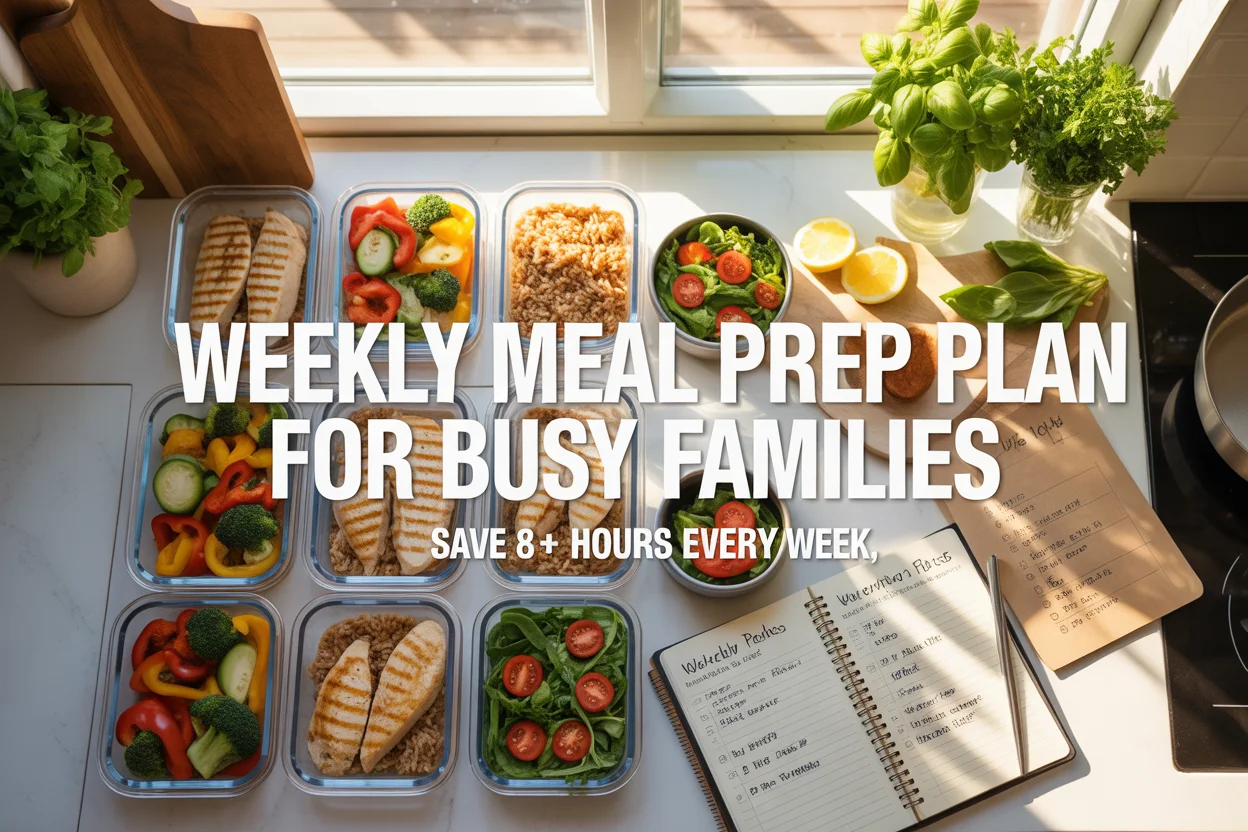
Weekly Meal Prep Plan for Busy Families: Save 8+ Hours and Eat Healthier Every Week
Between school drop-offs, soccer practice, work deadlines, and bedtime routines, the question that haunts every parent at 5 PM is painfully familiar: “What’s for dinner?” If you’ve ever stood in front of an open refrigerator, exhausted and out of ideas, you already know the frustration.
A weekly meal prep plan changes that entirely. Instead of scrambling every evening, you invest a few focused hours on the weekend and walk into every weeknight with dinner already figured out. Families who adopt weekly meal planning consistently report lower grocery bills, less food waste, and significantly reduced mealtime stress.
This guide walks you through a complete, step-by-step weekly meal prep system designed specifically for busy families — with realistic timelines, practical recipes, and strategies that actually stick. Whether you’re brand new to prepping or looking to refine your system, this plan will help you reclaim your evenings and feed your family well.
New to meal prep? Start with our Meal Prep for Beginners: Complete Guide for a solid foundation before diving into this weekly system.
Why Every Busy Family Needs a Weekly Meal Prep Plan
The daily decision of what to cook for dinner creates more mental fatigue than most parents realize. Multiply that by three meals a day, seven days a week, and it adds up to hundreds of small decisions that drain your energy before you even step into the kitchen.
Weekly meal planning eliminates that burden. When you sit down once per week and map out every breakfast, lunch, and dinner, you shift all those scattered decisions into one focused session. Research shows families save an average of six to eight hours per week through batch cooking and strategic ingredient prep, and many report saving over $100 monthly by shopping with a structured grocery list instead of impulse buying.
Beyond the time and money savings, a weekly meal prep plan naturally improves your family’s nutrition. When meals are planned in advance, you make thoughtful, balanced choices rather than grabbing whatever is fastest at the end of a tiring day. The USDA’s MyPlate framework emphasizes that meal planning is one of the most practical tools for maintaining balanced eating and portion awareness in real-world, busy lifestyles.
For families managing dietary restrictions — whether keto, vegan, or gluten-free — having a plan ensures everyone’s needs are met without last-minute scrambling.

The 4-Step Weekly Meal Prep System That Actually Works
Successful weekly meal prep follows a simple, repeatable system. Think of it as four stages: Plan, Shop, Prep, and Store. Master these four steps and your weeknights transform from chaotic to calm.
Step 1: Plan Your Week (Saturday — 20 Minutes)
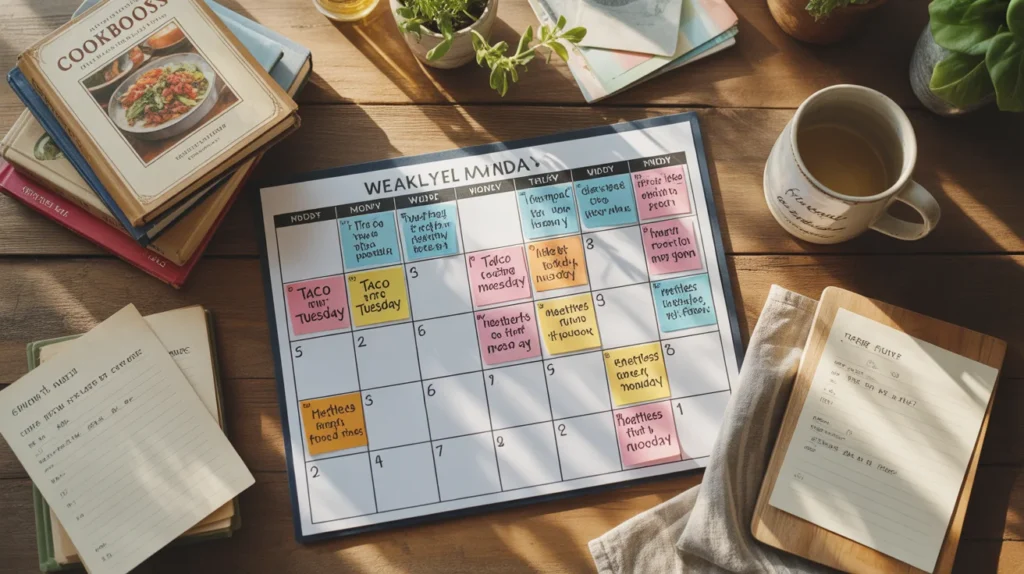
Start by checking your family’s schedule for the upcoming week. Identify your busiest nights — those are the evenings where fully prepped, reheat-and-eat meals will save you. Lighter evenings can handle recipes that need a bit of assembly.
Assign theme nights to simplify your planning. This reduces decision fatigue dramatically. A sample rotation might look like: Meatless Monday, Taco Tuesday, Pasta Wednesday, Stir-Fry Thursday, and Pizza Friday. You can customize themes based on what your family loves and browse our dinner prep ideas for inspiration.
Choose three to five core recipes that share overlapping ingredients. For example, a batch of grilled chicken can become salad bowls on Monday, wraps on Tuesday, and stir-fry on Thursday. This ingredient crossover strategy reduces waste and keeps your grocery list lean.
Step 2: Shop Smart (Saturday — 45 Minutes)
Before heading to the store, take a quick inventory of your pantry, refrigerator, and freezer. Building meals around ingredients you already have is one of the simplest ways to cut costs. Check out our grocery lists on a budget and printable grocery lists for ready-made shopping templates.
Organize your list by store section — produce, proteins, dairy, pantry staples — so you can move efficiently through the aisles without doubling back. This single habit alone can reduce your shopping time by up to 40 percent.
Buy versatile staple ingredients that work across multiple meals: brown rice, quinoa, chicken breast, ground turkey, sweet potatoes, broccoli, bell peppers, and canned beans. These form the backbone of most budget-friendly meal plans.

Step 3: Prep on Sunday (2 Hours)
Sunday afternoon is the sweet spot for most families. Dedicate about two hours — put on a podcast or some music, get the kids involved, and work through your prep in this order:
First 15 minutes — Get the oven and grains going. Preheat your oven for roasting vegetables and sheet pan proteins. Start your rice, quinoa, or other grains on the stovetop. These take the longest, so getting them going first is a smart use of time.
Next 30 minutes — Wash, chop, and portion produce. Cut all your vegetables at once. Dice onions and peppers for stir-fries, slice cucumbers and carrots for snack packs, and chop greens for salads. Store them in airtight containers lined with a paper towel to absorb moisture and extend freshness.
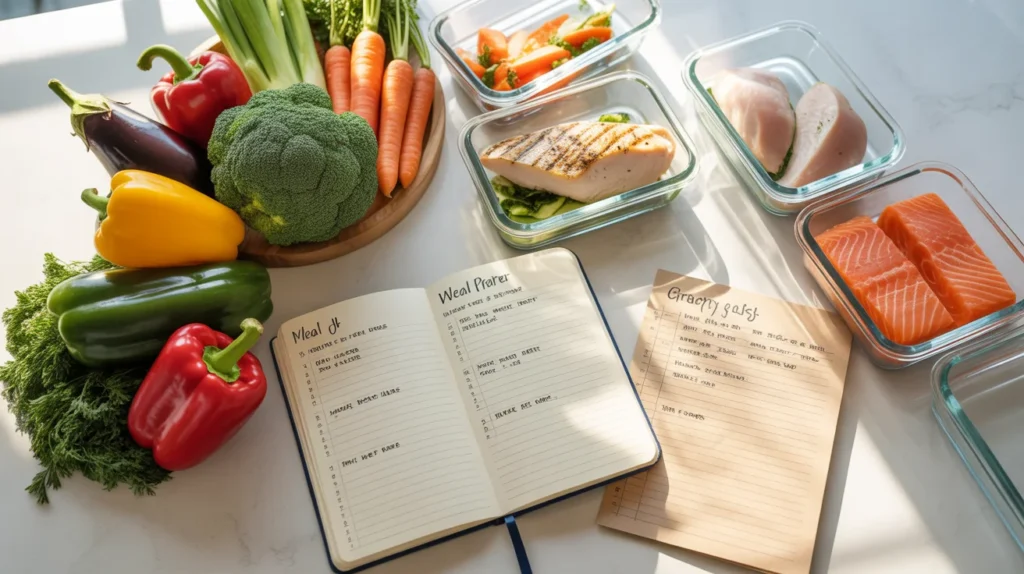
Next 45 minutes — Cook your proteins. Grill or bake chicken breasts, brown ground turkey, and roast a batch of salmon or tofu. Cooking proteins with basic seasoning — salt, pepper, garlic powder — keeps them versatile so you can flavor them differently throughout the week. Our high protein meal prep ideas offer dozens of options for families who want to stay fueled.
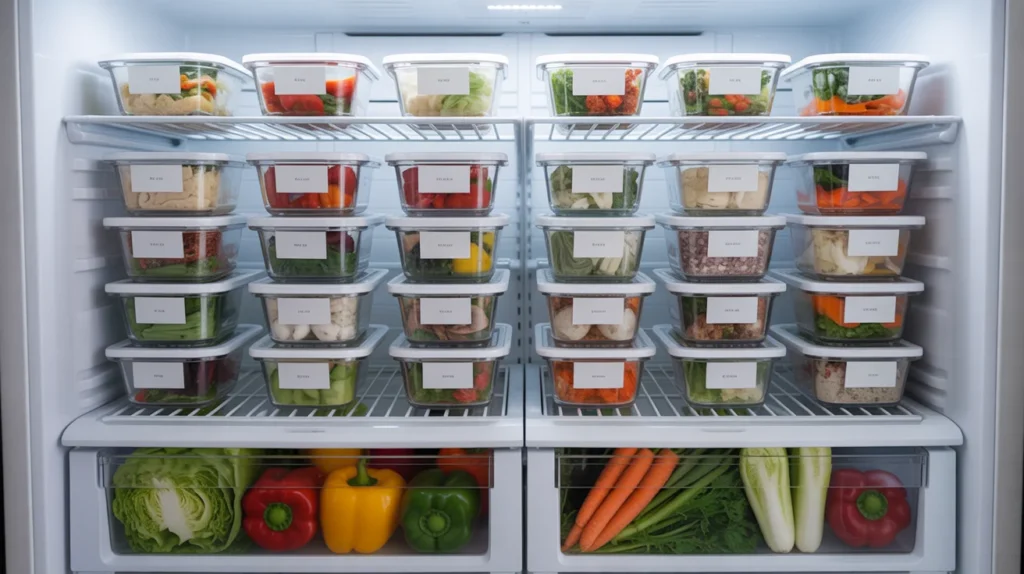
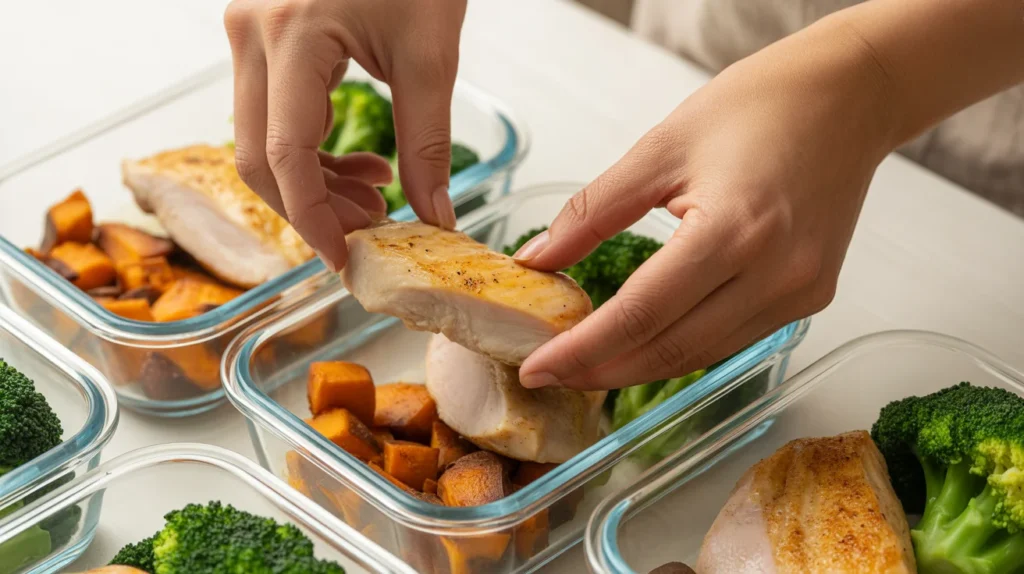
Final 30 minutes — Assemble, portion, and store. Divide everything into your containers. Label each with the meal name and the day you plan to eat it. For meals heading into the freezer, use freezer-safe bags or glass containers and mark them clearly with reheating instructions.
Pro tip: For one-pot meals and slow cooker recipes, you can assemble all the raw ingredients into a freezer bag on Sunday and simply dump them into the pot or slow cooker on the designated night.

Step 4: Store for Maximum Freshness
Proper storage is what separates a meal prep system that lasts through Friday from one that goes stale by Wednesday. Follow these core guidelines:
Allow all cooked food to cool to room temperature before sealing containers. Warm food trapped in a sealed container creates condensation, which speeds up bacterial growth. Keep your refrigerator at or below 40°F (4°C) and place meal prep containers on middle shelves, not the door.
Eat refrigerated meals within three to four days. Anything you plan to eat after Wednesday should go straight into the freezer. Use airtight, BPA-free containers or freezer-safe bags, and always label with the date and reheating instructions. Frozen prepped meals stay safe for up to three months when stored properly.
Practice the First-In, First-Out system: place newer meals behind older ones so you always eat the earliest prep first. This simple habit eliminates forgotten containers and prevents food waste.
For families looking to upgrade their storage game, our kitchen tools guide covers the best containers, bags, and accessories for every budget.
Sample Weekly Meal Prep Plan for a Family of Four
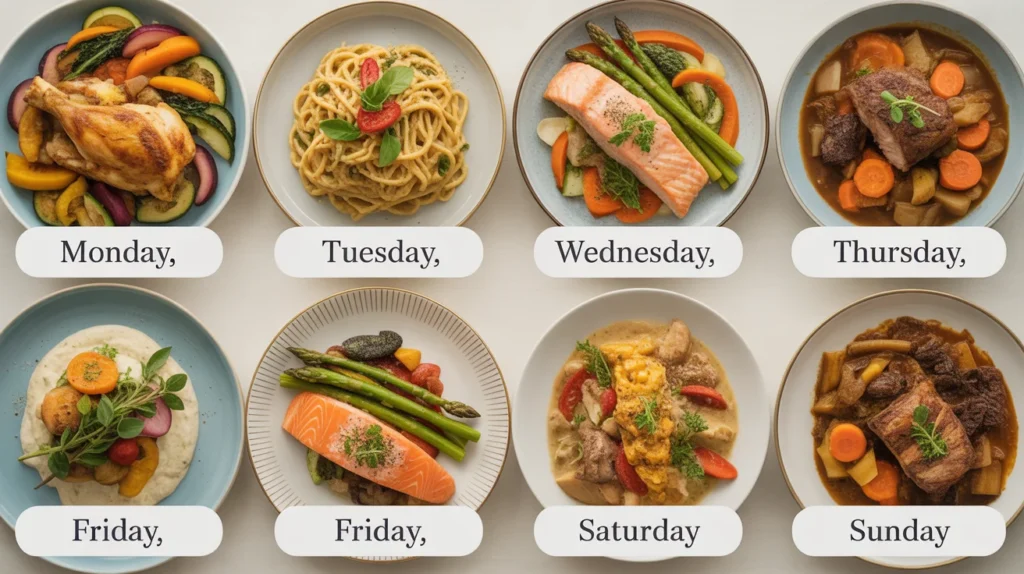
Here is a realistic seven-day meal plan that uses overlapping ingredients, shared batch-cooked components, and a mix of prep levels to keep things manageable throughout the week.
Monday — Meatless Monday: Black bean and sweet potato burrito bowls with cilantro-lime rice. (Fully prepped — reheat and serve.)
Tuesday — Taco Tuesday: Ground turkey tacos with pre-chopped lettuce, diced tomatoes, and shredded cheese. (Protein prepped, assemble fresh toppings at dinnertime.)
Wednesday — Pasta Night: One-pot chicken pasta with roasted broccoli and garlic. (Use Sunday’s prepped chicken. Cook pasta fresh — it takes 10 minutes.)
Thursday — Stir-Fry Thursday: Teriyaki chicken stir-fry with mixed vegetables over brown rice. (Chicken and rice prepped. Stir-fry the vegetables fresh for 8 minutes.)
Friday — Family Pizza Night: Homemade flatbread pizzas with prepped toppings. (Fun family activity — everyone builds their own.)
Saturday — Leftovers Night: Repurpose any remaining ingredients into grain bowls, wraps, or quesadillas.
Sunday — Fresh Start: This is your prep day. Keep dinner simple — rotisserie chicken with a quick side salad, or try a sheet pan dinner that doubles as prep for the upcoming week.
Browse our full collection of weekly meal prep plans for more themed menu ideas and seasonal variations.
Money-Saving Tips for Family Meal Prep on a Budget
Feeding a family of four healthy meals does not require a premium grocery budget. These practical strategies keep costs down without sacrificing nutrition or flavor.
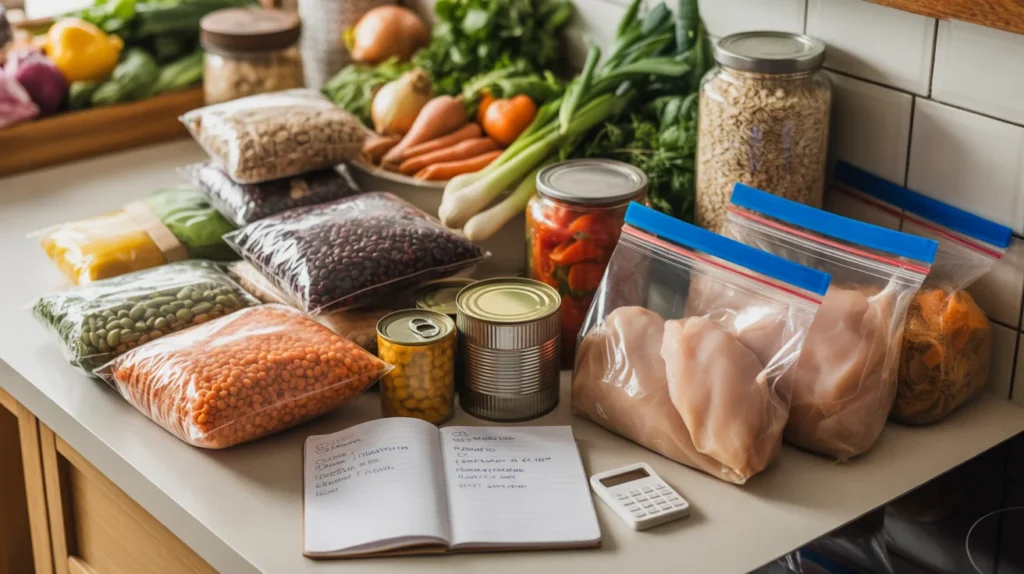
Buy proteins in bulk when they go on sale and freeze them in individual portions. A family-size pack of chicken thighs divided into four separate freezer bags gives you a month of protein at a fraction of the regular price. Seasonal produce is almost always cheaper and more flavorful than out-of-season options — plan your meals around what’s abundant and affordable.
Use pantry staples like dried beans, lentils, oats, and canned tomatoes as the foundation of your meals. These items cost very little per serving and pack serious nutritional value. Our meal prep under $50 per week plans prove that eating well on a tight budget is absolutely doable.
Repurpose leftovers creatively. Sunday’s roast chicken becomes Monday’s chicken salad and Wednesday’s pasta topping. Overripe bananas turn into breakfast prep banana muffins. Every ingredient gets a second life when you plan intentionally.
Getting Kids Involved in Weekly Meal Prep
One of the most underrated benefits of a weekly meal prep plan is the opportunity to involve your children in the kitchen. Kids who help with cooking tend to be more willing to try new foods and develop healthier eating habits that last into adulthood.
Assign age-appropriate tasks. Toddlers can wash vegetables and tear lettuce. Children aged five to eight can measure ingredients, stir batters, and help assemble containers. Older kids and teenagers can handle chopping with supervision, follow simple recipes independently, and even take ownership of planning one family meal per week.
Make it fun by letting kids pick a new recipe to try each week or choose their own toppings for build-your-own bowl nights. This sense of ownership transforms picky eaters into enthusiastic participants.

Quick Troubleshooting: Common Meal Prep Mistakes to Avoid
Even seasoned meal preppers hit bumps in the road. Here are the most common pitfalls and how to sidestep them.
Overcomplicating your first week. Start with just three recipes instead of trying to prep every meal for seven days. Build confidence, then scale up gradually. Our 30-minute meal prep plans are designed for exactly this purpose.
Not building in flexibility. Life happens — playdates run long, meetings go late, someone’s just not hungry. Always leave at least one night open for leftovers, takeout, or a simple 15-minute meal. A rigid plan that breaks at the first schedule change will not last.
Ignoring the freezer. Your freezer is the most powerful tool in your meal prep arsenal. Doubling a batch of chili, soup, or casserole and freezing half gives you an emergency dinner stash for the nights when everything falls apart.
Skipping breakfast and lunch prep. Weeknight dinners get all the attention, but prepping overnight oats, breakfast sandwiches, and lunch bowls rounds out your system and prevents the mid-week drive-through temptation.
Start Your Weekly Meal Prep Journey Today
A weekly meal prep plan is not about perfection. It is about creating a sustainable system that gives your family more time together, more nutritious meals, and fewer stressful evenings. Start small — even prepping one or two meals this coming Sunday will show you how much easier your week can feel.
The best meal prep plan is the one your family will actually follow. Pick a few recipes from our recipe collection, block out two hours this weekend, and take the first step. Your future weeknight self will thank you.
Looking for more ideas? Explore our full library of clean eating recipes, weight loss meal preps, and seasonal meal plans to keep your family’s weekly rotation fresh all year long.