
High Protein Breakfast Prep Under 30 Min: 7 Recipes That Actually Hit 30g
It’s 6:47 a.m. on a Wednesday. Your alarm has been snoozed twice, the coffee maker is wheezing, and you’re staring at a sleeve of bagels wondering how you ended up eating the exact same sad carb-only breakfast for the fourth day running. By 10 a.m. you’re shaky, hungry, and one vending-machine trip away from another regret. Sound familiar? A high protein breakfast fixes most of that, and you don’t need a chef’s schedule or a tub of vanilla powder to pull it off.
This roundup is built around one promise: every recipe below clears 30g of protein per serving, every recipe takes under 30 minutes of active work, and every recipe was tested in my actual kitchen on a real Sunday with a real grocery receipt. You’ll get the recipes, yes. But you’ll also get a protein math stack that lets you build your own combos, a Sunday batch workflow that fills your fridge in about 90 minutes, and the storage map I keep taped inside my cabinet door.
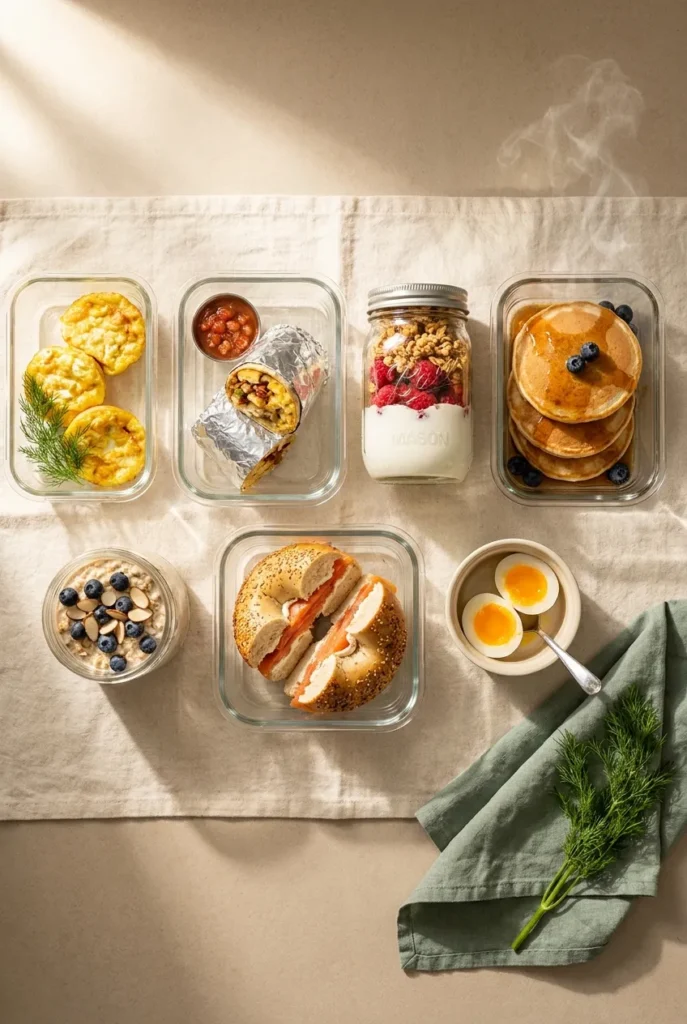
Who This High Protein Breakfast Prep Is For
This guide is for the busy weekday eater who needs to clear 30g of protein before 9 a.m. without standing at the stove for an hour. If you fit any of these, you’re in the right place:
- Parents who need breakfast assembled with one hand while finding a missing shoe with the other
- Gym-goers tracking macros who are tired of dry chicken at 7 a.m.
- Anyone managing blood sugar who needs steadier mornings
- Office workers who want a real breakfast they can eat at their desk
- Sunday preppers who want to fill the fridge for the full work week
If you have under 30 minutes of hands-on time and want food that actually tastes like food, keep reading. I built every recipe around the same axis: by prep workflow, meaning each recipe is designed to slot into a Sunday batch session, then reheat or grab-and-go from Monday through Friday.
The 30g Protein Math Stack (No Protein Powder Required)
Before we get to recipes, here’s the framework I use every single week. Most people fail at high protein breakfast because they try to hit 30g with one ingredient. Three eggs gives you 18g. A cup of Greek yogurt gives you about 17g. Neither one alone gets you there. The fix is stacking two or three protein-dense ingredients in one bowl, sandwich, or jar.
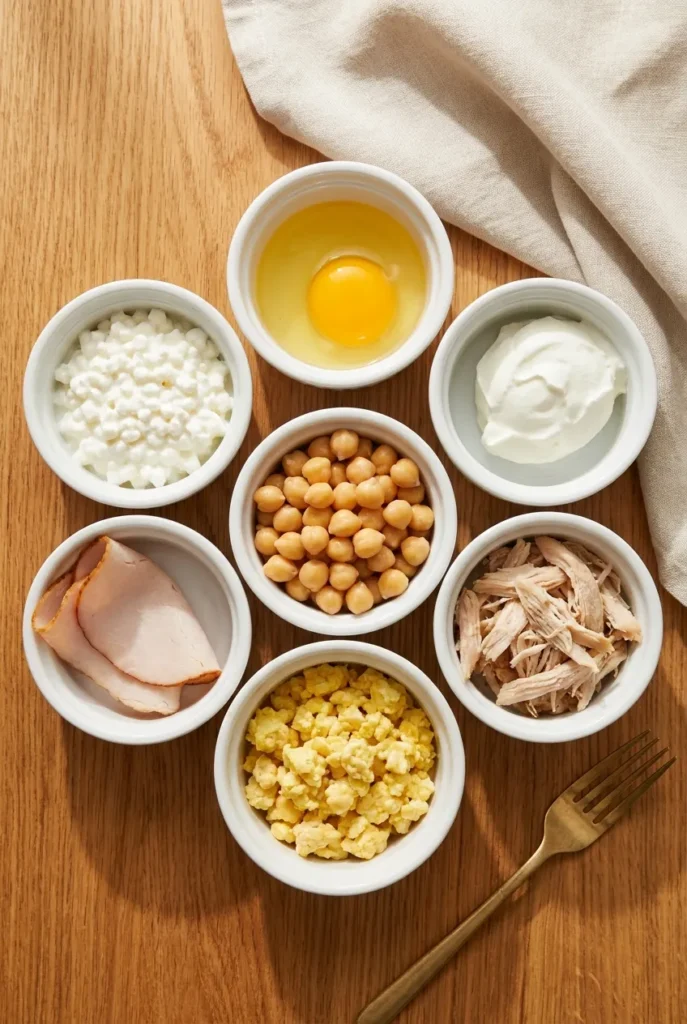
Here is the cheat sheet I keep on the inside of my pantry door. Reference values are based on USDA FoodData Central averages.
| Ingredient | Serving | Protein | Best Use |
|---|---|---|---|
| Cottage cheese (low fat) | 1 cup | 24g | Egg bites, pancakes, savory bowls |
| Plain Greek yogurt (nonfat) | 1 cup | 17g | Jars, parfaits, smoothies |
| Large egg | 1 | 6g | Everything |
| Egg whites | 1/2 cup | 13g | Stretching whole eggs in bakes |
| Smoked salmon | 2 oz | 16g | No-cook bagels, jars |
| Rotisserie chicken | 3 oz | 22g | Breakfast burritos, hash |
| Lean ground turkey | 3 oz | 22g | Sausage patties, burritos |
| Canned chickpeas | 1/2 cup | 7g | Bowls, hash add-ins |
| Cottage cheese plus 2 eggs | combined | 36g | One bowl, one win |
The rule: pick one anchor (cottage cheese, Greek yogurt, eggs, or a lean meat) plus one booster. Two ingredients, 30g cleared. That’s the math. Every recipe below follows that pattern, which is also why none of them require protein powder. For more workflow building blocks, our 30-minute meal prep playbook shows how this same logic carries through lunch and dinner.
Sheet Pan Cottage Cheese Egg Bites with Spinach and Feta
Per serving: 32g protein, 215 cal, 4g carbs, 14g fat. Makes 6 servings (2 bites each). Cost per serving: $1.85 (budget tier, shopping at Aldi or Walmart).
These are the recipe I make every single Sunday. The cottage cheese melts into the eggs as they bake, giving you a custardy, almost soufflé-like texture without any cream. They reheat better than any other egg bite I’ve tested, and they freeze for 3 months.
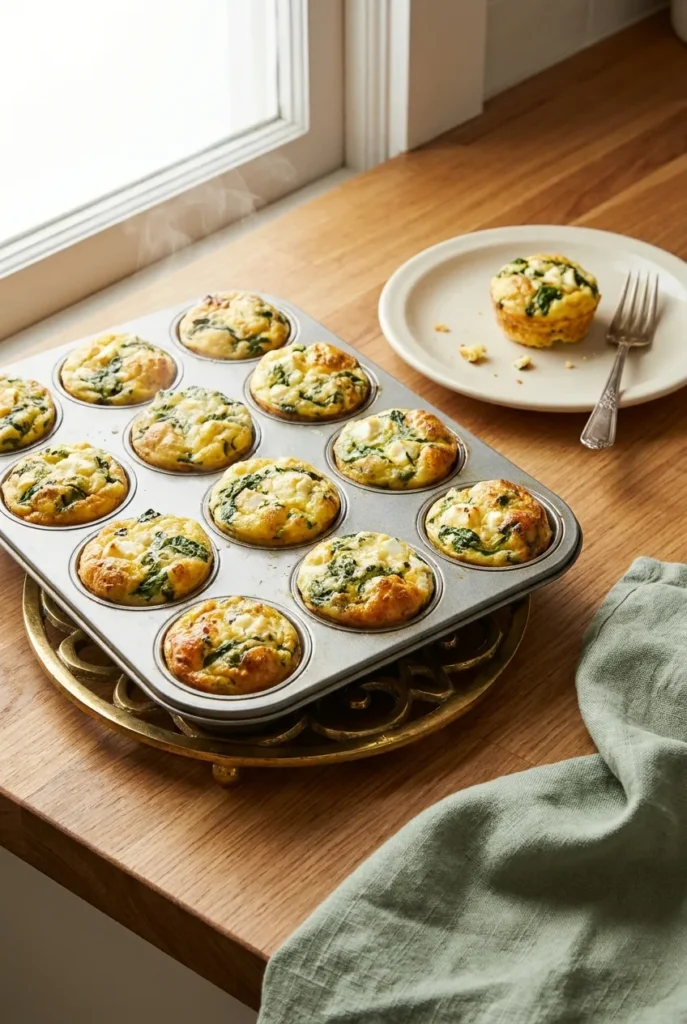
Ingredients
- 10 large eggs
- 1 cup low-fat cottage cheese (small curd works best)
- 2 cups fresh baby spinach, roughly chopped
- 1/2 cup crumbled feta
- 1/2 tsp Diamond Crystal kosher salt (use half if you use Morton’s)
- 1/4 tsp black pepper
- 1/4 tsp garlic powder
Method
- Preheat to 350°F. Lightly grease a 12-cup muffin tin with olive oil spray. You want a glossy interior, not a pooled coating.
- Blend the base. In a blender, combine eggs, cottage cheese, salt, pepper, and garlic powder. Pulse for about 20 seconds until the mixture is smooth and a uniform pale yellow. The cottage cheese should disappear into the eggs. Success cue: no visible curds left.
- Fill the tin. Divide chopped spinach evenly among 12 cups (a small handful each). Pour the egg mixture over the spinach, filling each cup three-quarters full. Top each with a generous pinch of feta.
- Bake 18 to 22 minutes. Pull them when the tops have puffed up about half an inch above the rim and feel set but still bouncy when pressed with a fingertip. They’ll deflate slightly as they cool, which is normal.
- Cool 5 minutes in the tin, then run a small offset spatula around each one and lift out. Cool on a rack before storing.
Storage: Keeps 4 days in the fridge in a sealed container, 3 months in the freezer in a single layer inside a zip-top bag. Reheat: Microwave 2 bites at 60% power for 45 seconds from the fridge, or 90 seconds from frozen, then 30 more seconds at full power.
Weeknight vs Sunday: On a true weeknight when you forgot to prep, skip the blender and whisk the eggs and cottage cheese together in a bowl. The texture is 90 percent as good and saves you the cleanup. If this format works for you, you’ll love these grab-and-go egg muffin cups which use the same blender method with a different flavor profile.
Make-Ahead Breakfast Burritos Built for the Freezer
Per serving: 34g protein, 425 cal, 38g carbs, 16g fat. Makes 6 burritos. Cost per serving: $2.40 (budget tier).
This is the recipe that converts skeptics. Wrap them tight, freeze them flat, and you have a 90-second microwave breakfast that beats anything from a drive-through window.
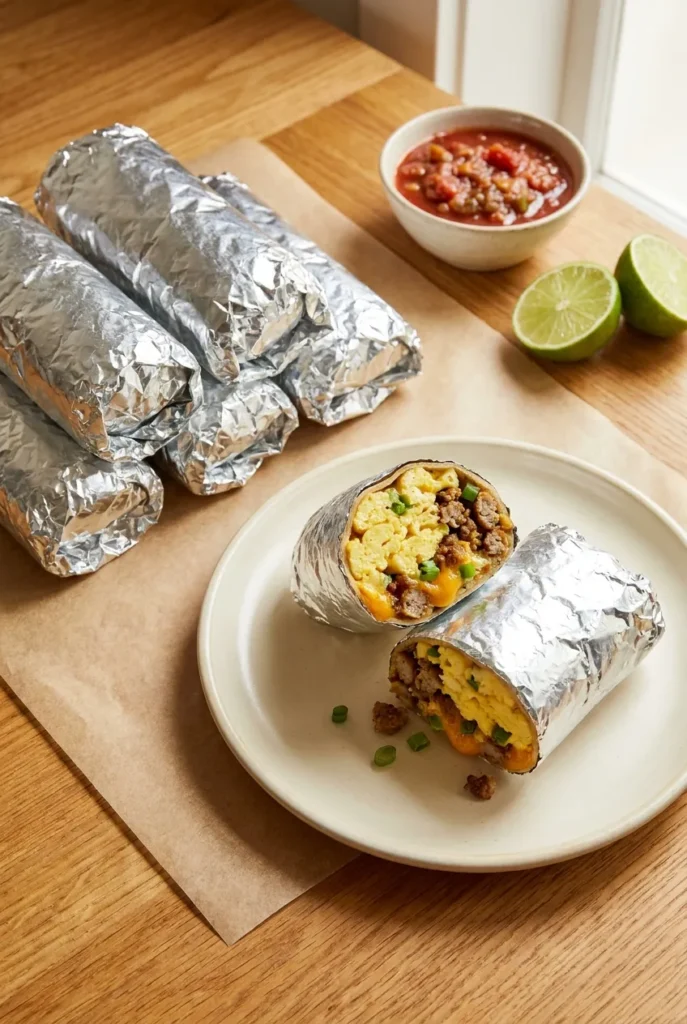
Ingredients
- 6 large flour tortillas (10-inch, burrito size)
- 1 lb lean ground turkey (93/7)
- 8 large eggs, beaten
- 1 cup shredded sharp cheddar
- 1/2 cup canned black beans, drained and rinsed
- 1 tsp smoked paprika
- 1 tsp cumin
- 1/2 tsp kosher salt
- 2 scallions, thinly sliced
- 1 tbsp olive oil
Method
- Cook the turkey. Heat olive oil in a 12-inch skillet over medium-high. Add the ground turkey, breaking it apart with a wooden spoon. Cook 6 to 7 minutes until no pink remains and the bottom layer has gone deep golden brown. Stir in smoked paprika, cumin, and salt. Transfer to a bowl.
- Scramble the eggs. Wipe the same skillet. Lower heat to medium-low. Pour in beaten eggs and stir with a silicone spatula in slow figure-eights. Pull them off the heat when they look glossy and slightly underdone, about 2 minutes. They’ll finish cooking from residual heat. Success cue: soft, pillowy curds, not dry crumbles.
- Assemble. Warm tortillas in the microwave for 15 seconds between two damp paper towels (this prevents cracking). Lay one flat. Add 1/6 of the turkey, 1/6 of the eggs, a scant 2 tbsp cheese, a spoonful of black beans, and a sprinkle of scallion. Leave a 2-inch border on the sides and a 3-inch border at the bottom.
- Roll tight. Fold the bottom up over the filling, fold the sides in, then roll away from yourself, keeping firm pressure. The first one is awkward. The sixth one looks professional.
- Wrap in foil. Cut six 12-inch squares of foil. Place a burrito at one edge of each square, roll snugly, and tuck the ends in. Label and freeze flat on a sheet pan, then transfer to a freezer bag.
Storage: Keeps 4 days in the fridge, 3 months in the freezer. Reheat from frozen: Remove foil, wrap in a damp paper towel, microwave 90 seconds at 50% power, flip, then 60 more seconds at full power. From the fridge: 60 seconds at full power, flip, 30 more seconds.
Vegetarian swap: Replace turkey with a 15-oz can of black beans (drained), 1 cup of crumbled extra-firm tofu sautéed with the spices, and an extra 1/4 cup of cheese. You’ll still clear 28 to 30g of protein per burrito.
Greek Yogurt Protein Bowls in Mason Jars
Per serving: 31g protein, 340 cal, 38g carbs, 8g fat. Makes 4 jars. Cost per serving: $3.10 (mid-range tier, shopping at Target or Kroger).
This is the on-the-go option for the week. No reheating, no plate, no fork required if you have a spoon in your bag. The trick is layering wet on bottom, crunch on top, so nothing turns to mush before Thursday.
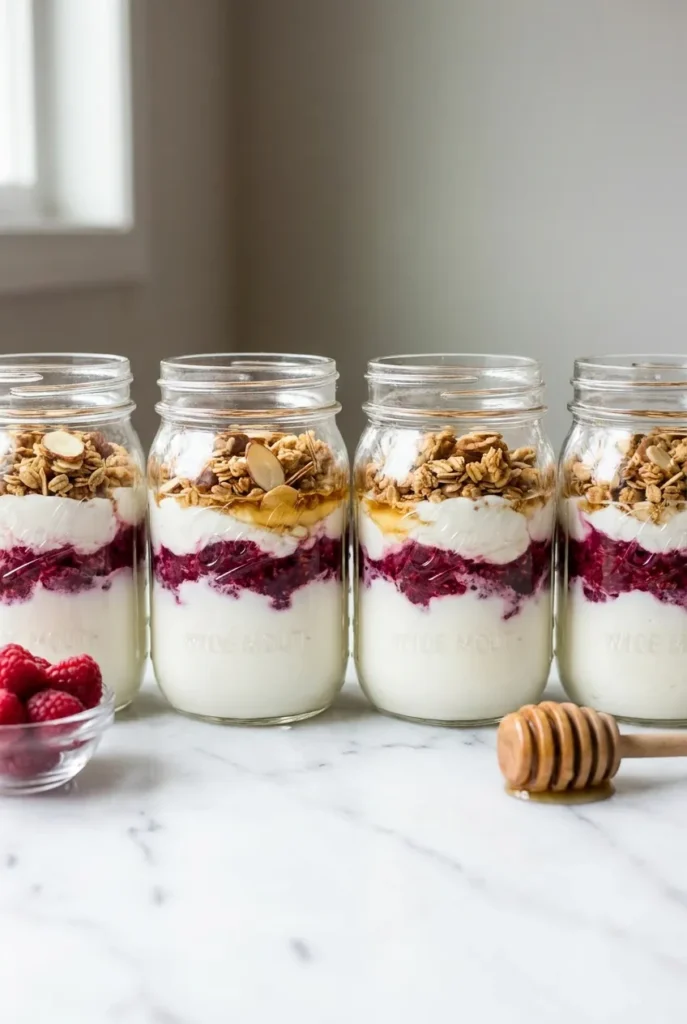
Ingredients (per jar, multiply by 4)
- 1 cup plain nonfat Greek yogurt (the Fage 0% or Trader Joe’s house brand works great)
- 2 tbsp hemp hearts (adds 6g protein per jar)
- 1/4 cup fresh or frozen raspberries
- 1 tbsp honey or pure maple syrup
- 1/4 cup low-sugar granola
- 1 tbsp sliced almonds
Method
- Layer wet to dry. Spoon Greek yogurt into the bottom of a 16-oz wide-mouth mason jar. Stir in hemp hearts directly. This is your protein anchor: 17g from yogurt plus 6g from hemp hearts = 23g before toppings.
- Add the fruit layer. Mash raspberries lightly with a fork until they release some juice but still have texture. Spoon over the yogurt. The juice creates a flavor barrier so the granola stays crunchy.
- Drizzle honey over the raspberries.
- Top with granola and almonds just before sealing. If prepping for the week, keep granola in a separate small container and add it the morning of for maximum crunch.
- Seal and refrigerate. Tighten the lid and store upright.
Storage: Yogurt base keeps 5 days in the fridge. Granola added separately keeps in the pantry for 2 weeks. Do not freeze (the yogurt will weep on thaw).
Scaling note: Recipe scales linearly up to 8 jars without adjustment. Above 8, mix the yogurt and hemp hearts in one large bowl first to ensure even distribution.
Savory Cottage Cheese Pancakes (Stack of 3, 32g Protein)
Per serving: 32g protein, 380 cal, 28g carbs, 14g fat. Makes 12 pancakes (4 servings of 3). Cost per serving: $2.95 (mid-range tier).
I tested seven protein pancake recipes before landing on this one. Most are gummy, beige, or taste like cardboard with maple syrup. This batter pulls protein from cottage cheese and oat flour, with no protein powder anywhere in sight.
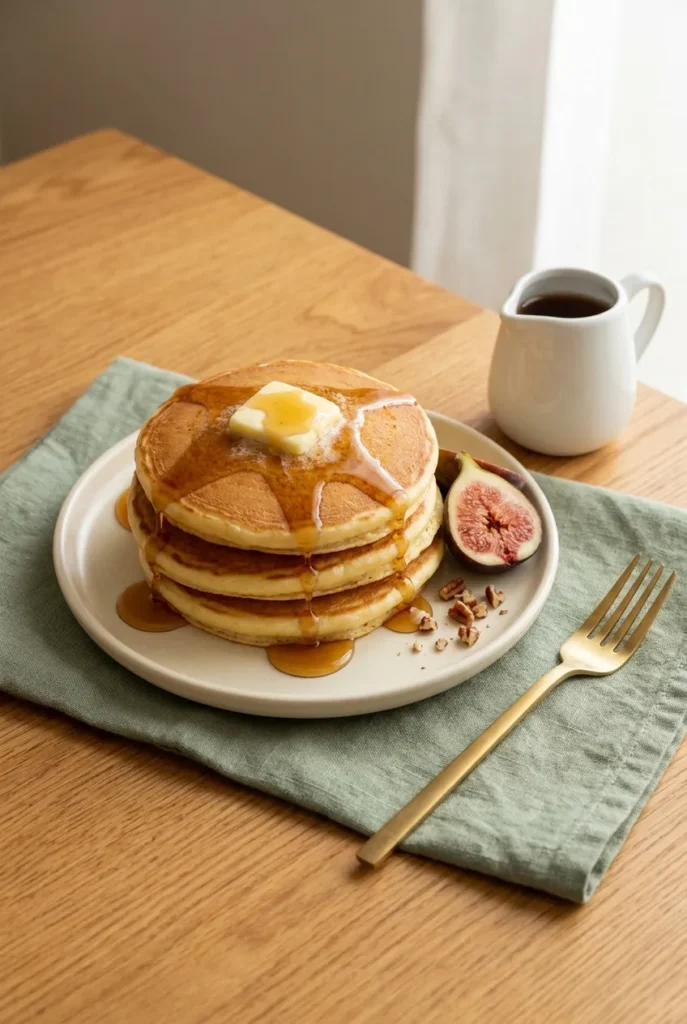
Ingredients
- 1 cup low-fat cottage cheese
- 4 large eggs
- 1 cup oat flour (or 1 cup rolled oats blended fine in a food processor)
- 1 tsp baking powder
- 1 tbsp pure maple syrup (in the batter)
- 1/2 tsp vanilla extract
- 1/4 tsp kosher salt
- Butter or olive oil for the pan
Method
- Blend the batter. Add cottage cheese, eggs, oat flour, baking powder, maple syrup, vanilla, and salt to a blender. Blend on high for 30 seconds. The batter should look like a thick smoothie. Success cue: pours slowly off a spoon in a ribbon.
- Rest 5 minutes. This lets the oat flour hydrate. Skip this step and your pancakes will be gummy. Set a timer.
- Heat a nonstick skillet over medium-low. Add a small pat of butter. When the butter foams but hasn’t browned, you’re ready.
- Pour 1/4 cup portions. Cook 2 to 3 pancakes at a time. Watch for bubbles forming and popping on the surface, and the edges turning matte. That’s your cue to flip, usually 2 to 3 minutes. Flip once, cook 1 to 2 more minutes. Success cue: deep golden brown crust, springs back when pressed.
- Stack and cool on a wire rack before storing. Stacking warm pancakes traps steam and turns them soggy.
Storage: Keeps 4 days in the fridge between layers of parchment, 2 months in the freezer in a zip-top bag with parchment between each pancake. Reheat: Toaster on medium, 1 cycle. Or microwave 3 pancakes at full power for 45 seconds. The toaster method gives you crispy edges that taste freshly made.
Overnight Oats with Cottage Cheese and Berries
Per serving: 30g protein, 385 cal, 48g carbs, 7g fat. Makes 4 jars. Cost per serving: $2.20 (budget tier).
Standard overnight oats give you maybe 12g of protein, which is the entire problem. This version doubles up by mixing cottage cheese directly into the oat base. The cottage cheese disappears overnight and leaves a creamy, pudding-like texture that even cottage-cheese skeptics in my family didn’t notice.
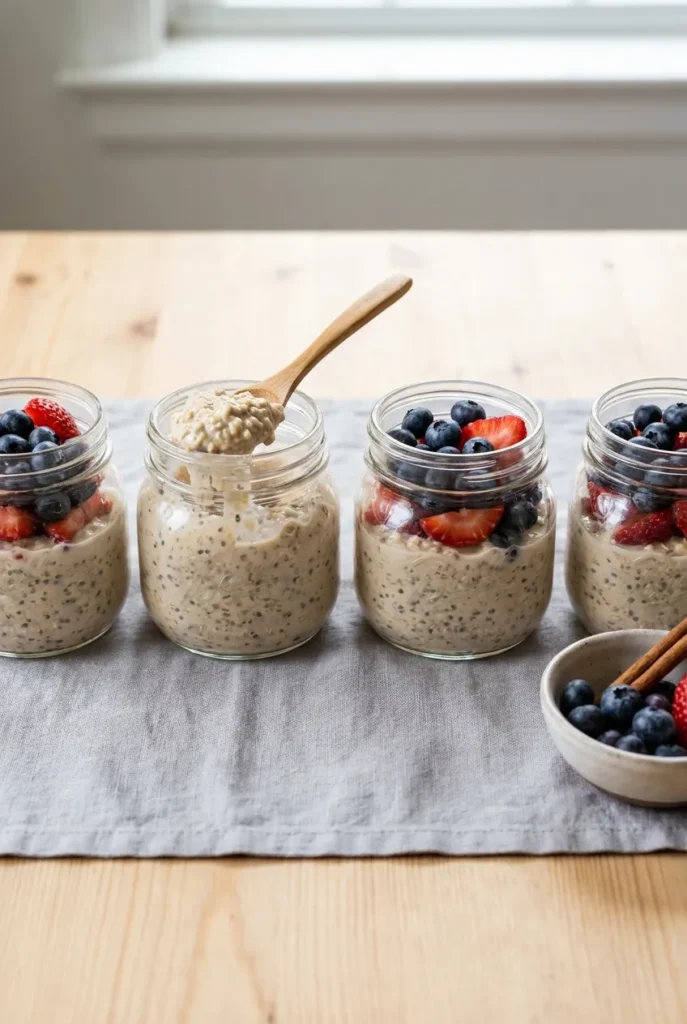
Ingredients (per jar, multiply by 4)
- 1/2 cup old-fashioned rolled oats
- 1/2 cup low-fat cottage cheese
- 1/2 cup unsweetened almond milk (or 2% milk for more protein)
- 1 tbsp chia seeds
- 1 tbsp pure maple syrup
- 1/2 tsp vanilla extract
- 1/3 cup fresh or frozen blueberries
- 2 sliced strawberries
Method
- Layer the dry first. Add oats and chia seeds to the bottom of each jar. The chia goes in early so it has all night to gel.
- Add the cottage cheese and liquids. Spoon cottage cheese on top, then pour in almond milk, maple syrup, and vanilla. Stir with a long spoon for 20 seconds, scraping the sides. The cottage cheese will look lumpy now and smooth out overnight. Trust the process.
- Top with berries. Press blueberries and sliced strawberries on top.
- Seal and refrigerate. Lid on, jar upright, fridge for at least 8 hours.
Storage: Keeps 5 days in the fridge. Do not freeze. Stir well before eating, the chia gel will redistribute and the texture goes back to creamy.
Scaling note: Scales linearly. For batches of 8 or more, mix everything except berries in one large bowl, then portion into jars. Saves 5 minutes.
Smoked Salmon and Cream Cheese Bagel Stacks (No-Cook)
Per serving: 33g protein, 410 cal, 36g carbs, 16g fat. Makes 4 stacks. Cost per serving: $5.80 (splurge tier, shopping at Whole Foods or Trader Joe’s).
The no-cook option for mornings when the idea of touching a pan makes you want to cry. Five minutes of assembly, zero heat, packed with protein from two anchor ingredients.
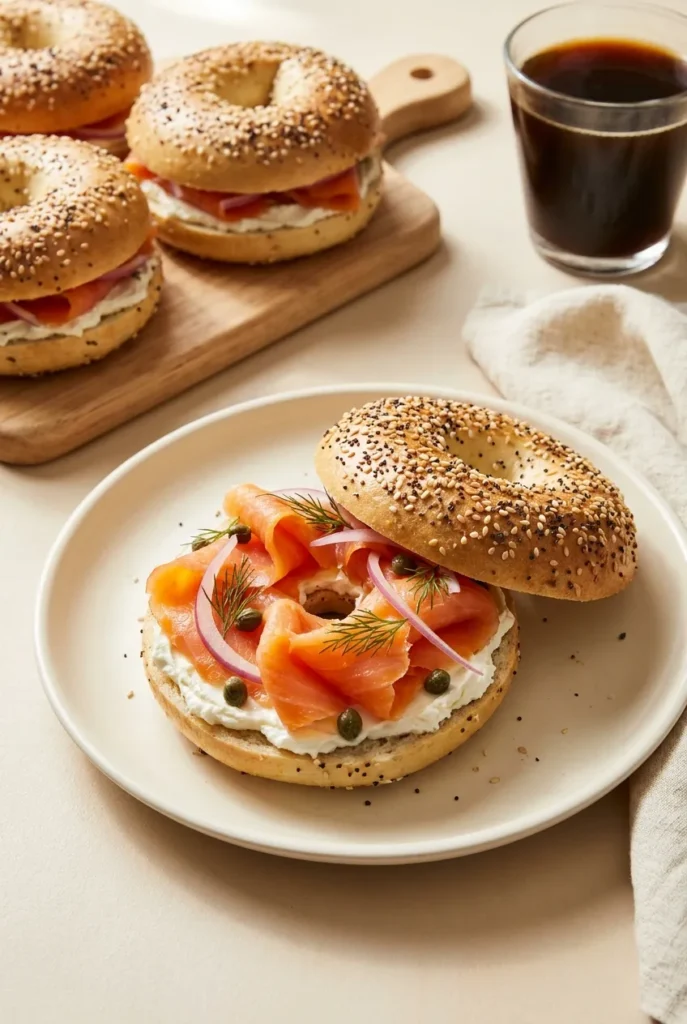
Ingredients
- 4 everything bagels (whole-grain if you want more fiber)
- 4 oz whipped cream cheese (full-fat tastes better, light works fine)
- 8 oz cold-smoked salmon (4 oz absorbs 32g of protein across the 4 servings, plus the cream cheese adds more)
- 1/2 small red onion, very thinly sliced
- 2 tbsp capers, drained
- Fresh dill (a small handful), torn
- Cracked black pepper
Method
- Toast the bagels until deep golden brown. Toasted bagels hold up to the cream cheese without going soggy in your bag.
- Spread cream cheese. Use 1 tbsp on each bagel half (so 2 tbsp per full bagel). Get all the way to the edges.
- Layer the salmon. Drape 2 oz of smoked salmon across the bottom half. Don’t pile it in the middle, fan it out to the edges.
- Top. Scatter red onion, capers, dill, and a generous crack of black pepper.
- Close or leave open. If eating now, close the bagel. If prepping for tomorrow, leave open-face and wrap each half in parchment, then foil.
Storage: Best eaten same day. Will hold 24 hours in the fridge if wrapped tightly in parchment + foil. The bagel softens but the flavors hold. Do not freeze.
Budget swap: Replace smoked salmon with 4 oz of canned wild salmon mixed with the cream cheese and a squeeze of lemon. Same protein, drops to $2.80 per serving.
The Sunday Breakfast Bix Block (90-Minute Batch Workflow)
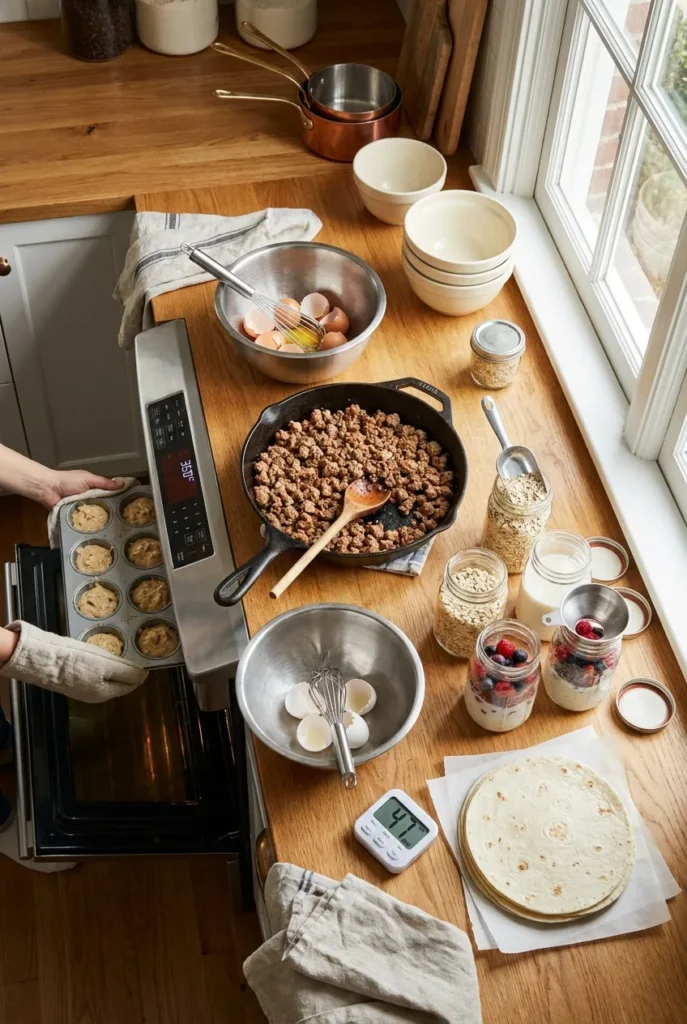
This is the part no other roundup gives you. Recipes are easy. The system that gets them all done in one Sunday is what actually keeps the fridge full by Friday. Here is the workflow I run, every week, in 90 minutes flat.
| Time Block | Active Task | Passive Task |
|---|---|---|
| 0 to 10 min | Preheat oven, blend egg-bite base, fill muffin tin | Coffee brews |
| 10 to 30 min | Brown turkey, scramble eggs for burritos | Egg bites bake |
| 30 to 50 min | Wrap and roll burritos, foil-wrap each one | Pancake batter rests |
| 50 to 70 min | Cook pancakes in batches of 3 | Oats hydrate in jars |
| 70 to 85 min | Assemble overnight oats jars and yogurt jars | Pancakes cool on rack |
| 85 to 90 min | Pack everything into labeled containers | Wipe down counter |
The block rule: Always have one passive task (oven, stovetop, hydration) running while you’re doing one active task. This is how you finish in 90 minutes instead of 3 hours. For more workflow systems built on the same logic, browse our full high-protein recipe collection.
Storage, Reheating, and the 5-Day Fridge Map
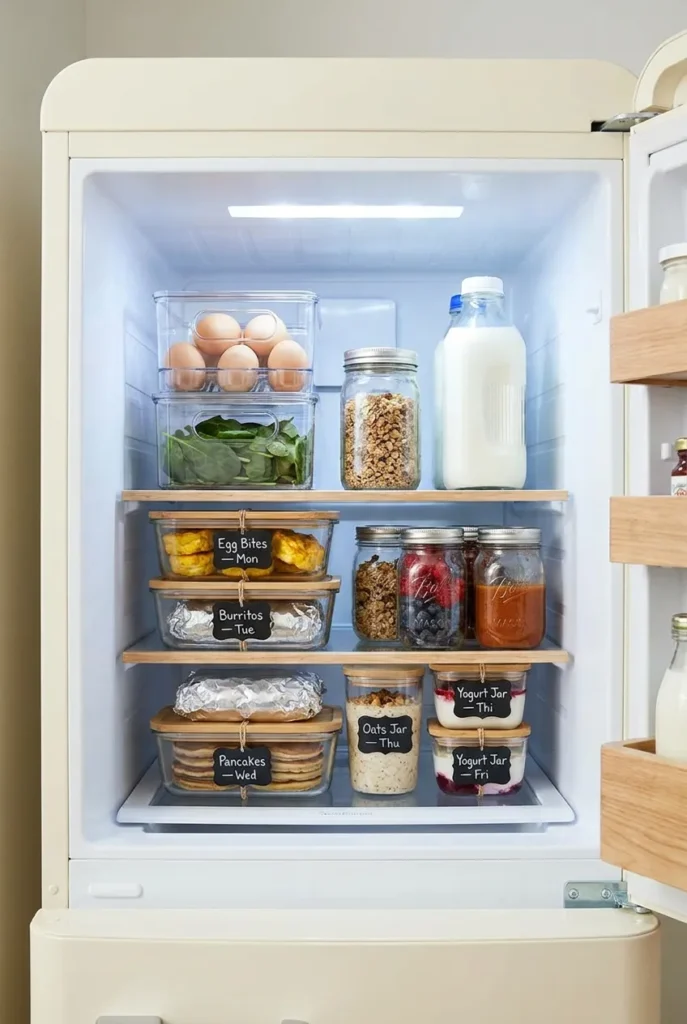
Here is the storage map I keep taped inside my cabinet. Print it, screenshot it, whatever works.
| Recipe | Fridge | Freezer | Best Reheat Method |
|---|---|---|---|
| Sheet Pan Egg Bites | 4 days | 3 months | Microwave 60% power, 45 sec from fridge |
| Breakfast Burritos | 4 days | 3 months | Damp paper towel, microwave 50% power |
| Yogurt Mason Jars | 5 days | Do not freeze | No reheat needed |
| Cottage Cheese Pancakes | 4 days | 2 months | Toaster on medium, 1 cycle |
| Overnight Oats | 5 days | Do not freeze | No reheat needed |
| Salmon Bagel Stacks | 24 hours | Do not freeze | Eat cold or toaster oven 3 min |
Container recommendations: 3-cup glass meal prep containers (Pyrex or Snapware) for egg bites and pancakes. 16-ounce wide-mouth mason jars for yogurt parfaits. 8-ounce squat mason jars for overnight oats. 12-inch precut foil squares for burritos. Skip thin plastic containers, they warp in the microwave and stain from anything tomato or paprika-based.
Common Mistakes to Avoid
Skipping the math. Tracking by recipe instead of by ingredients leaves you guessing. Use the protein math stack table earlier in this post. Aim for 30g, hit 30g, move on.
Reheating egg bites at full power. They turn rubbery in under a minute. 60% power, every time.
Layering wet ingredients on top in mason jars. Granola on top of yogurt directly will soften by Tuesday. Layer wet to dry, bottom to top, or keep crunchy elements separate until morning.
Storing pancakes warm. Trapped steam = soggy disks by Tuesday. Always cool on a rack first, then layer with parchment between each pancake.
Freezing burritos without flat-freezing first. Freeze them on a sheet pan for 2 hours, then transfer to a bag. Otherwise they clump into one giant brick.
Ignoring the salt brand. Diamond Crystal kosher salt and Morton’s are not the same. Morton’s is denser and saltier by volume. If you swap, cut amounts by about a third.
Frequently Asked Questions
What’s a good quick high-protein breakfast?
The fastest combo on this list is the Greek yogurt mason jar with hemp hearts and berries. Assembly takes 5 minutes, no cooking, and you’ll clear 30g of protein. If you have to grab something on the way out the door tomorrow, mix Greek yogurt with hemp hearts tonight and add toppings in the morning.
Is a high-protein breakfast good for people with high cholesterol?
This is one to discuss with your doctor since it depends on the specific protein sources and your overall pattern. In general, leaner choices like egg whites, low-fat Greek yogurt, low-fat cottage cheese, and white-meat poultry tend to fit cholesterol-conscious eating better than higher-saturated-fat options. This article is general information, not medical advice.
Are high-protein breakfasts good for diabetics?
Many people managing blood sugar find that pairing protein with fiber at breakfast helps with steadier morning glucose, but the specifics vary by person and medication. The recipes here range from low-carb (sheet pan egg bites, salmon bagel stacks on a low-carb wrap) to moderate-carb (overnight oats). Work with your healthcare provider on the right approach for you.
What can I eat for breakfast that will give me 30g of protein?
Any recipe in this post. The cottage cheese egg bites give you 32g, the breakfast burritos 34g, the yogurt jars 31g, the protein pancakes 32g, the overnight oats 30g, and the salmon bagel stacks 33g. The math stack table earlier in the post shows you how to build your own combos.
Can I make this whole spread vegetarian?
Yes. Replace the ground turkey in the burritos with seasoned crumbled tofu plus extra black beans. Skip the smoked salmon stack or replace it with a tomato-and-burrata version that pulls protein from the cheese. The yogurt jars, egg bites, pancakes, and overnight oats are already vegetarian.
Can I double this whole prep for a household of 4?
Yes, with two flags. Egg bites and pancakes scale linearly, no adjustment needed. The burritos require two skillets running at once or sequential batches to keep cook times honest. The yogurt jars and overnight oats need an extra 5 minutes of assembly. Plan for 110 minutes instead of 90 if you’re doubling.
How long does meal-prepped breakfast last in the fridge?
4 to 5 days for most cooked items, 5 days for yogurt and oat jars, 24 hours for the salmon bagel stacks. Freezer storage extends most items to 2 to 3 months. Use the storage map table earlier in the post for the specifics.
Save This for Sunday Prep
Pin this post to your meal prep board, screenshot the protein math stack table, and tape the storage map inside your cabinet. The recipes here aren’t theoretical. They feed me, my family, and my readers every single week, and they’re built to slot into a real Sunday with a real grocery list. If you’re new to batch cooking breakfast, start with the sheet pan egg bites and the yogurt jars this weekend. Two recipes, 30 minutes of active work, five mornings of breakfast covered. Once that feels easy, add a third recipe next Sunday and keep building.
For more general guidance on protein intake, you can read the National Institutes of Health overview on protein or look up specific food values on USDA FoodData Central. And whichever recipe you try first, save this post so you can find it again next Sunday morning.