
Summer Grilling Meal Prep: 10 High-Protein Recipes for the Whole Week
It’s 6:47 PM on a Tuesday. The thermometer outside still reads 91°F, your gym bag is in the trunk, and the only thing in your fridge is a sweating block of pre-portioned chicken you forgot to season. Sound familiar? Summer grilling meal prep solves this exact problem, and once you set up a Sunday rotation, you stop the 6 PM panic for the next twelve weeks.
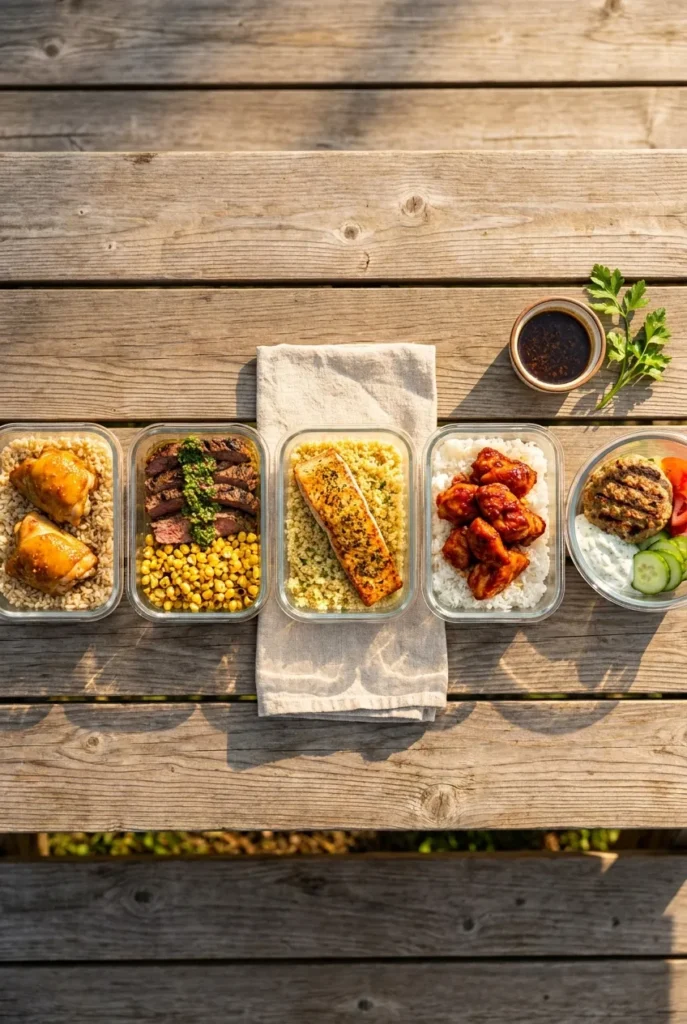
I run this rotation every summer from Memorial Day through Labor Day, and the same five lunches that used to bore me by Wednesday now last through Friday because of one small system change I’ll show you below. You’ll get ten tested recipes, the macros for each, the cost per serving at Target and Trader Joe’s pricing, and the storage rules that actually keep grilled meat juicy on day four. Let’s get into it.
Who This Summer Grilling Meal Prep Plan Is For
This guide is built for gym-goers and macro-trackers who want at least 35 grams of protein per lunch, a sub-$6 per-serving cost, and a Sunday grill session that takes 90 minutes or less. If you’re rotating chicken five days a week and your taste buds have filed a complaint, you’re the reader I had in mind.
It also works for couples, single preppers, and anyone whose grocery store of choice is Trader Joe’s, Target, or Kroger. Families of four can scale every recipe to 6 or 8 servings, and I’ve flagged the spots where seasoning does not scale linearly.
How This Roundup Is Organized
I built this list by protein type and cuisine flavor profile so you can pick a week’s worth of recipes without eating the same chicken thigh five days running. You’ll see chicken (three ways), steak (two ways), salmon (two ways), turkey, shrimp, and one all-veggie plant-protein option. Each recipe lists prep time, cook time, macros per serving, and a fridge-life window.
Every recipe is grilled (gas, charcoal, or pellet, your call), and every one is built to hold up cold or reheated. That second part matters more than people realize. A grilled chicken breast that’s spectacular at 6 PM Sunday can taste like cardboard by Tuesday lunch if you don’t rest, slice, and store it right.
The “Grill Once, Pivot Five” System (My Sunday Workflow)
Before the recipes, here’s the framework everything else is built on. Most meal prep guides tell you to cook five different meals on Sunday. That’s three hours minimum, two sinks of dishes, and a level of effort that nobody sustains past week two.
The “Grill Once, Pivot Five” approach is the opposite. You grill two proteins on Sunday (typically chicken thighs and either flank steak or salmon, batched at the same time), then build five lunches by changing only the sauce, the grain, and the vegetable underneath.
Here’s the pivot menu I use most weeks:
- Pivot 1: chimichurri + brown rice + charred corn
- Pivot 2: honey garlic glaze + jasmine rice + roasted broccoli
- Pivot 3: Greek yogurt-tzatziki + farro + cucumber and tomato
- Pivot 4: gochujang-mayo + short-grain rice + quick-pickled carrots
- Pivot 5: pesto + orzo + grilled zucchini
One protein cook, five distinct lunches, zero flavor fatigue. The sauces hold five to seven days in their own small jars, which is the trick most people miss. Now, the ten recipes.
Recipe 1: Honey Garlic Grilled Chicken Thigh Bowls
Boneless skinless chicken thighs are the workhorse of summer grilling meal prep. They have enough fat to stay juicy on day three, they soak up marinades faster than breasts, and they’re $4.99 a pound at Target right now. This honey garlic version is the recipe my Pinterest readers save most often in June.
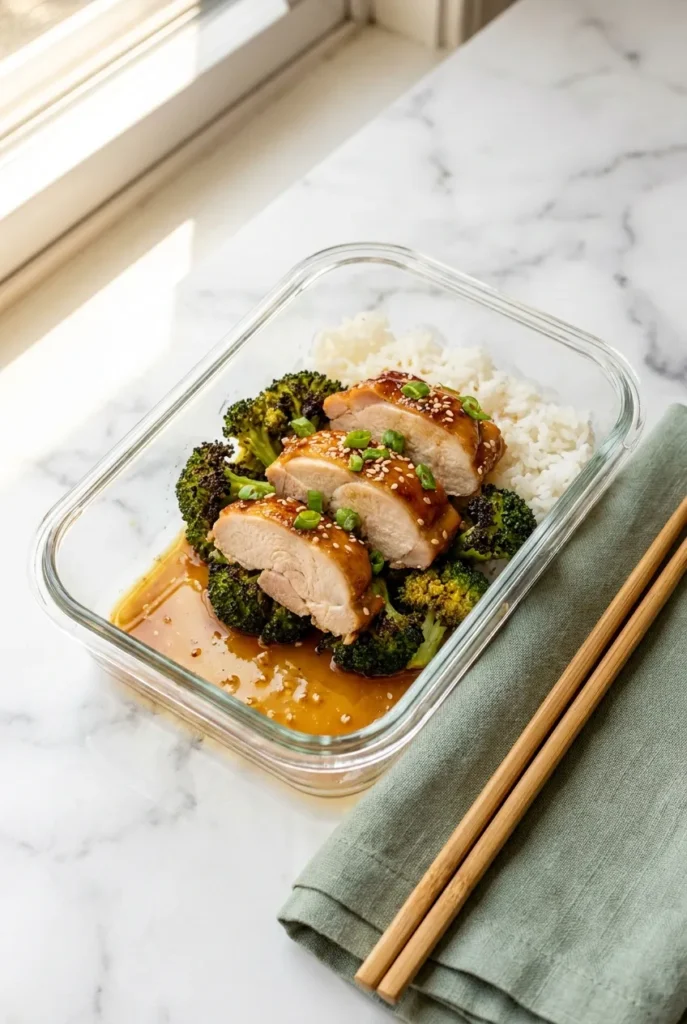
The marinade is a 4-3-2-1 ratio I memorized years ago: 4 tablespoons soy sauce, 3 tablespoons honey, 2 tablespoons rice vinegar, 1 tablespoon grated fresh ginger, plus 4 minced garlic cloves. Marinate two pounds of thighs for at least 30 minutes (overnight is better). Grill over direct medium-high heat, about 425°F, for 5 to 6 minutes per side until they hit 165°F at the thickest point. That internal temperature isn’t a suggestion; it’s the USDA minimum for poultry, and I’ll link the full chart below.
Macros per bowl: 42g protein, 48g carbs, 14g fat, 510 calories Cost per serving: $4.85 (Trader Joe’s pricing) Fridge life: 4 days. Pair this with our meal-prep rice and grains guide for jasmine rice that stays fluffy through Friday.
Recipe 2: Chimichurri Flank Steak Prep
Flank steak goes on sale at Target almost every Memorial Day weekend, and one 1.5-pound steak yields four perfect meal-prep portions. Chimichurri is the green sauce most home cooks underestimate. Bright, herby, garlicky, slightly acidic, and it pairs with everything from rice to roasted potatoes.
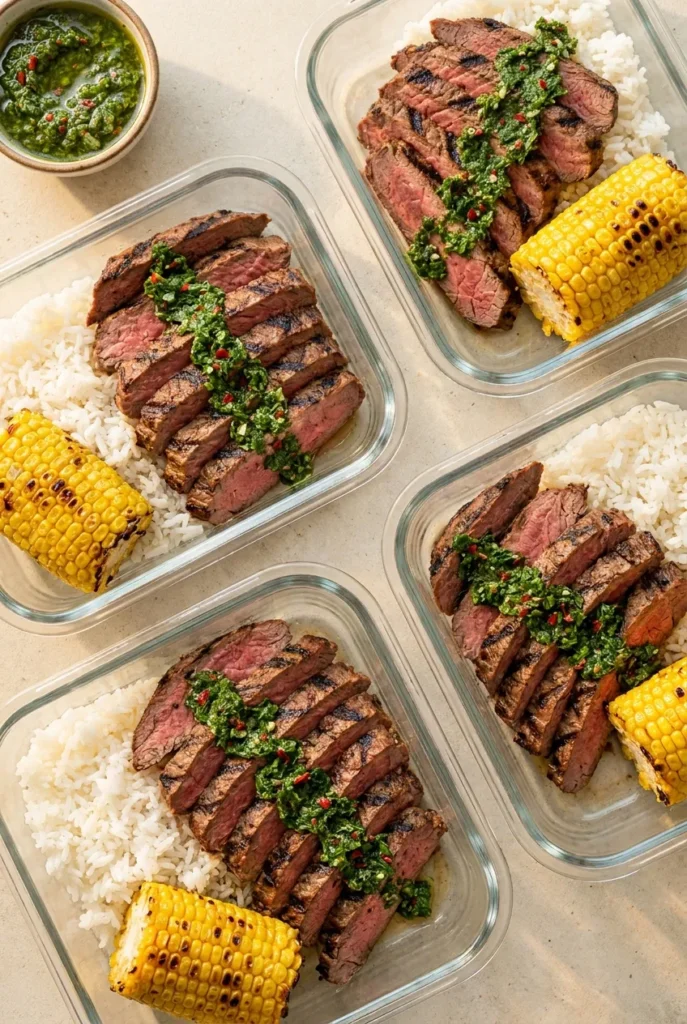
Rub the steak with kosher salt (I use Diamond Crystal, and if you’re using Morton, cut salt by a third), a tablespoon of olive oil, and a generous crack of black pepper. Grill over high direct heat, around 500°F, for 4 minutes per side for a 1-inch steak. Pull it at 130°F internal for medium-rare and let it rest 10 full minutes before slicing. The rest is non-negotiable. Slicing too early loses every drop of juice you just worked for.
For the chimichurri: a tightly packed cup of flat-leaf parsley, 4 garlic cloves, 1 tablespoon dried oregano, 2 tablespoons red wine vinegar, a half teaspoon red pepper flakes, and a half cup of olive oil. Pulse in a food processor; do not puree. The texture should be loose-chopped, not smooth.
Macros per bowl: 38g protein, 42g carbs, 22g fat, 530 calories Cost per serving: $5.40 Fridge life: 4 days for the steak, 7 days for the chimichurri stored separately.
Recipe 3: Lemon Herb Grilled Salmon
Salmon is the splurge of this rotation, but Target’s Wild Alaskan frozen salmon goes on sale to about $7.99 a pound in summer, which puts a 6-ounce portion right at our $4 to $6 target. Salmon also reheats better than almost any other meat-prep protein because the fat keeps the muscle fibers tender.
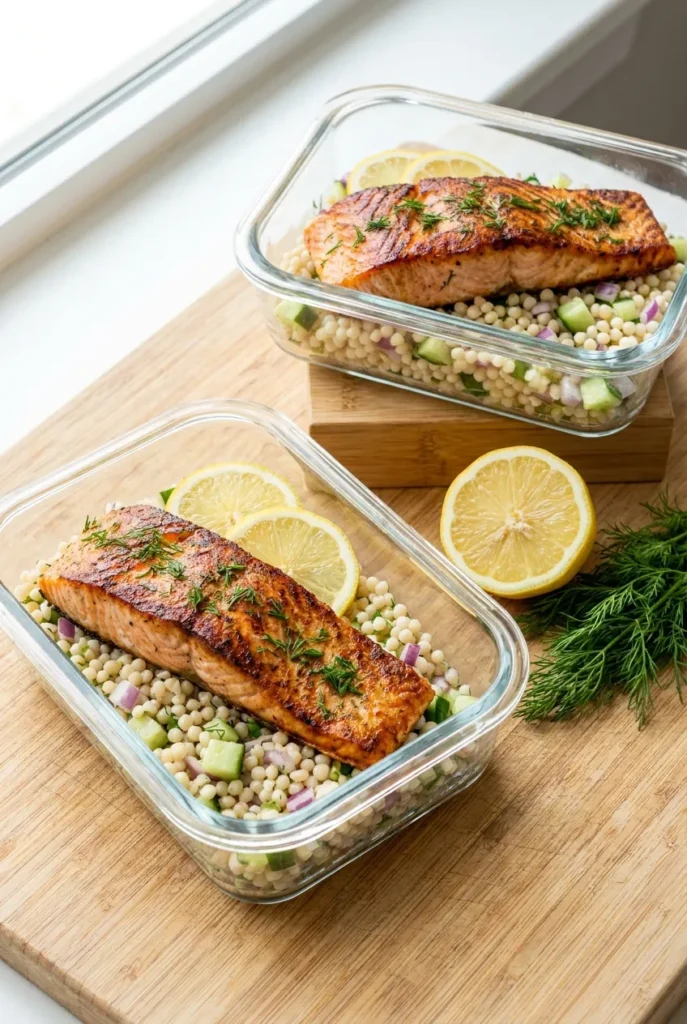
Pat the salmon dry with paper towels (this is the single biggest skin-crisping factor), brush with olive oil, and season with kosher salt, black pepper, and a teaspoon of dried dill per fillet. Grill on a well-oiled grate over medium-high heat, about 400°F, skin-side down for 5 minutes, then carefully flip for 2 minutes. Pull at 125°F to 130°F; the residual heat will carry it to a safe 145°F as it rests.
A salmon meal prep tip nobody tells you: portion the fillets after grilling, not before. A whole 1.5-pound side cooks more evenly than four pre-cut portions, and you control the serving size at packing.
Macros per bowl: 36g protein, 38g carbs, 18g fat, 480 calories Cost per serving: $5.75 Fridge life: 3 days. Salmon’s the one protein I don’t push past day 3 because the texture turns chalky.
Recipe 4: Gochujang Grilled Chicken
Gochujang is Korean fermented chili paste, and a $4 tub from Trader Joe’s lasts six weeks in the fridge. This is the recipe that broke me out of plain-grilled-chicken monotony three summers ago, and it’s now permanent in my rotation.
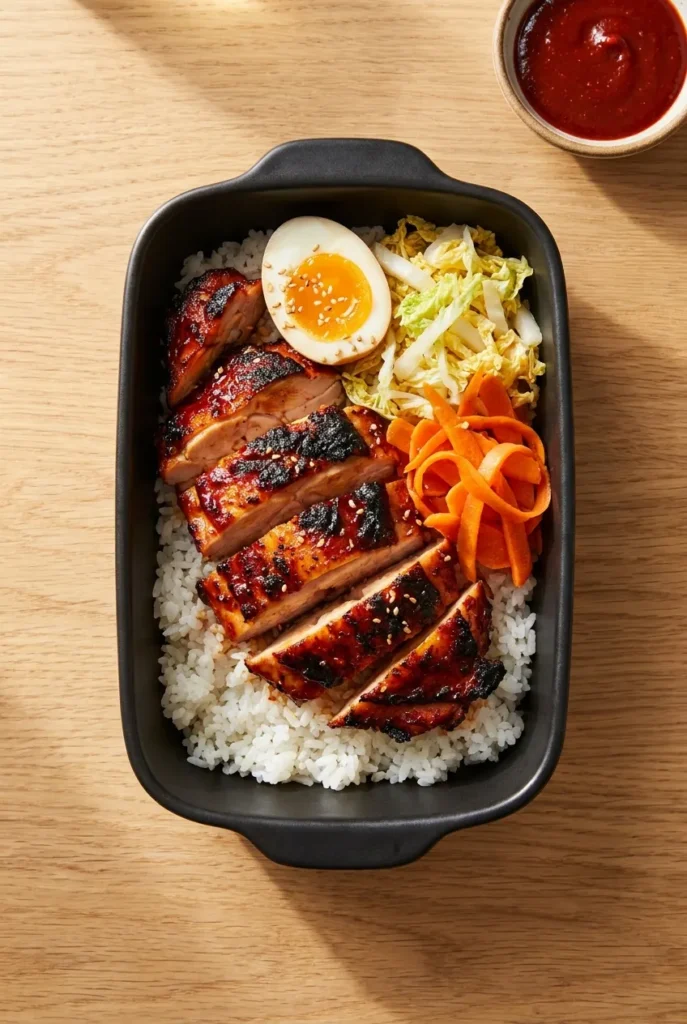
The marinade is 3 tablespoons gochujang, 2 tablespoons soy sauce, 2 tablespoons honey, 1 tablespoon toasted sesame oil, 4 minced garlic cloves, 1 tablespoon grated ginger. Marinate chicken thighs at least 1 hour. Grill over medium heat (not high; the sugars in gochujang and honey burn fast) for 6 to 7 minutes per side until 165°F internal.
Weeknight vs weekend tip: On Sunday, I make the marinade from scratch. On a Tuesday rescue prep, I mix 2 tablespoons of plain Trader Joe’s gochujang sauce with a splash of soy and a squeeze of honey. Both work; one’s just lazier.
Macros per bowl: 40g protein, 50g carbs, 12g fat, 500 calories Cost per serving: $4.20 Fridge life: 4 days.
Recipe 5: Greek Grilled Turkey Burger Bowls
Ground turkey meal prep is the unsung hero of high-protein cooking. It’s $4.49 a pound at Target, and a single pound makes four 5-ounce patties that grill in 8 minutes flat. Greek-flavored turkey burgers paired with tzatziki and a chopped Mediterranean salad is a 45-minute Sunday cook that fills four containers.
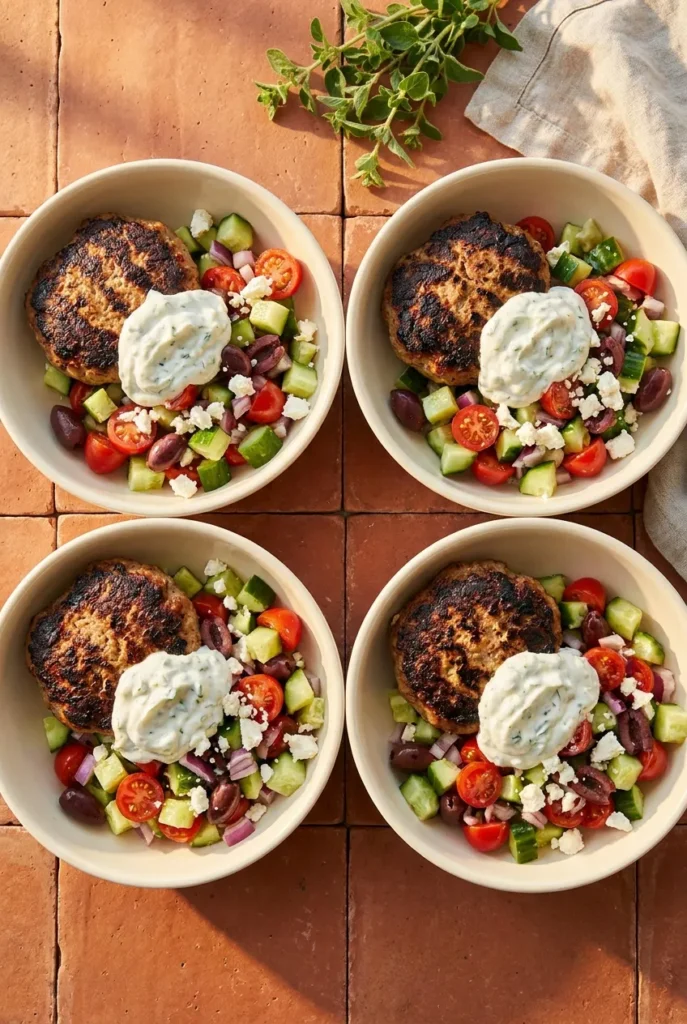
Mix 1 pound ground turkey (93/7 lean), a quarter cup grated red onion, 2 garlic cloves minced, 1 tablespoon dried oregano, 1 teaspoon kosher salt, the zest of one lemon, and a quarter cup of crumbled feta. Form into 4 patties about three-quarters of an inch thick, with a slight thumb dimple in the center (this stops the dome-up problem). Grill over medium-high heat, around 425°F, for 4 minutes per side until 165°F internal.
Tzatziki: 1 cup Greek yogurt (Trader Joe’s plain whole-milk works perfectly), half a cucumber grated and squeezed dry, 1 garlic clove minced, 1 tablespoon lemon juice, 1 teaspoon dried dill, salt to taste. Mix it Sunday and it gets better by Wednesday.
Macros per bowl: 38g protein, 18g carbs, 22g fat, 410 calories Cost per serving: $4.90 Fridge life: 4 days.
Recipe 6: Carne Asada Meal Prep Bowls
Skirt steak (or flap steak if your store carries it) is the cut for carne asada. It’s leaner than flank, soaks up marinade in 30 minutes flat, and grills in under 6 minutes total. The marinade does most of the heavy lifting here.
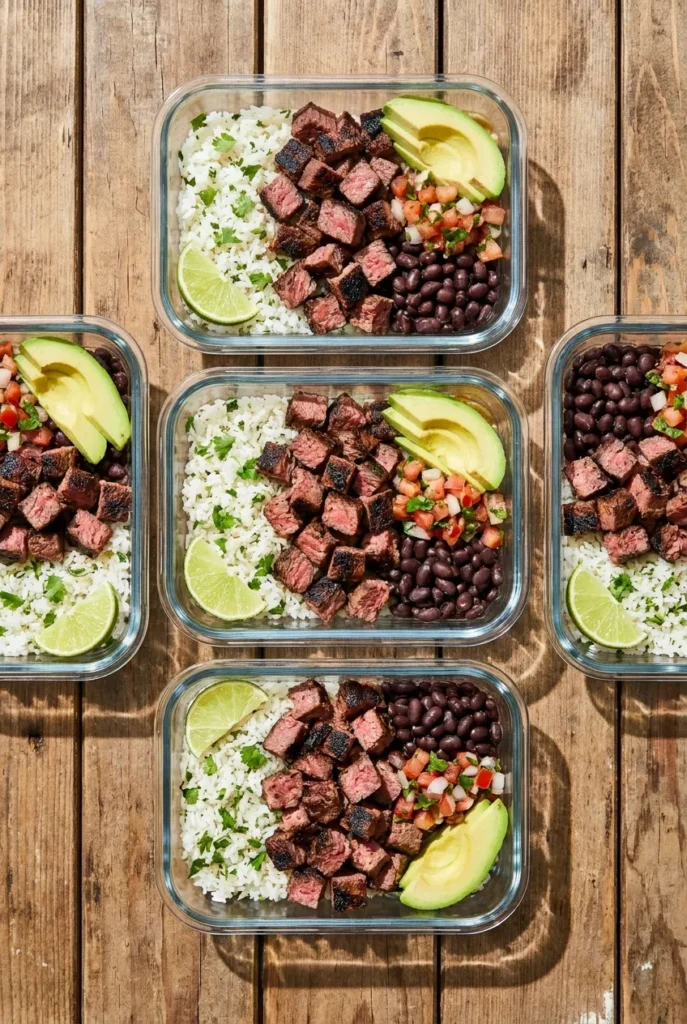
Marinade: a third cup of orange juice, a quarter cup of lime juice, a quarter cup of olive oil, 4 minced garlic cloves, 2 teaspoons cumin, 1 teaspoon smoked paprika, 1 teaspoon kosher salt, half a teaspoon chili powder, a handful of chopped cilantro. Marinate 1.5 pounds of skirt steak for 30 minutes to 4 hours (longer than 4 hours and the acid starts to mush the texture).
Grill over high direct heat, 500°F, for 3 minutes per side. Skirt steak is thin, so it cooks fast. Rest 5 minutes, then dice into small cubes (not slice; dicing distributes the char crust throughout each bite).
Macros per bowl: 41g protein, 52g carbs, 18g fat, 560 calories Cost per serving: $5.95 Fridge life: 4 days. Pack the avocado in a separate small container and add the day of eating, since it browns by day 2.
Recipe 7: Cajun Shrimp Skewer Bowls
Frozen shrimp is the speed weapon of summer meal prep. Trader Joe’s sells 16/20-count raw deveined shrimp at $9.99 a pound, which works out to about $5 per serving for a generous 6-ounce portion.
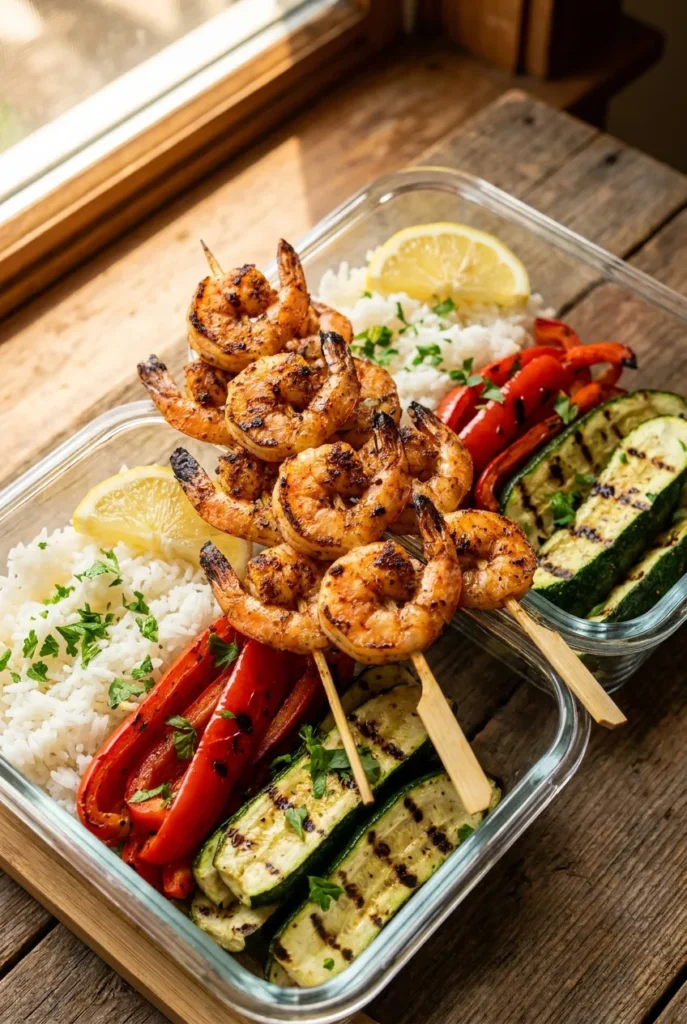
Thaw shrimp under cold running water for 10 minutes. Toss with 2 tablespoons olive oil, 1 tablespoon Cajun seasoning (I use the Trader Joe’s blend), and a pinch of kosher salt. Skewer 6 to 8 shrimp per skewer (soak wooden skewers 30 minutes first or they’ll torch). Grill over high heat for 2 to 3 minutes per side until pink and curled into a loose C shape, not a tight O (a tight O means overcooked).
Shrimp is the one recipe in this lineup I prep for only 3 days at most because the texture goes rubbery faster than other proteins. If you need 5 days of lunches, do shrimp Wednesday and Sunday rather than all on Sunday.
Macros per bowl: 36g protein, 44g carbs, 10g fat, 410 calories Cost per serving: $5.25 Fridge life: 3 days.
Recipe 8: Pesto Chicken Kebab Prep
Chicken breast on kebabs sounds basic until you cut it into 1.5-inch chunks, soak them in pesto for 30 minutes, and grill them with peppers and red onion on the same skewer. This is the recipe I lean on when I want a lower-fat option than thighs.
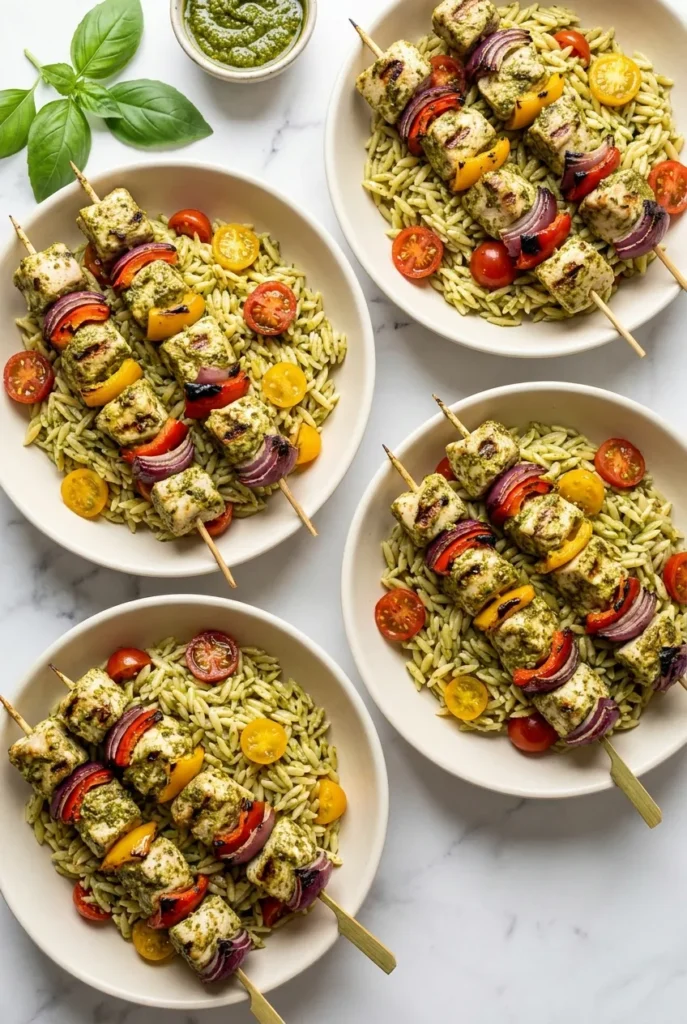
Cut 1.5 pounds of chicken breast into 1.5-inch cubes. Toss with a third of a cup of basil pesto (Trader Joe’s refrigerated pesto is excellent and not the shelf-stable kind), 1 tablespoon olive oil, 1 teaspoon kosher salt, and the juice of half a lemon. Thread onto soaked skewers alternating with chunks of bell pepper and red onion. Grill over medium-high heat for 3 to 4 minutes per side until 165°F.
For the orzo base, cook orzo in salted water, drain, toss while warm with 3 tablespoons of pesto and a handful of halved cherry tomatoes. Lets the pasta absorb the flavor before it cools.
Macros per bowl: 44g protein, 46g carbs, 16g fat, 530 calories Cost per serving: $4.65 Fridge life: 4 days.
Recipe 9: Maple Soy Grilled Teriyaki Salmon
The second salmon in the rotation, because if you love salmon, two recipes are not too many. The maple-soy glaze caramelizes into a sticky almost-candied crust without burning, which is the trick most teriyaki recipes fail.
Glaze: 3 tablespoons real maple syrup (not pancake syrup), 3 tablespoons soy sauce, 1 tablespoon rice vinegar, 1 teaspoon grated ginger, 1 garlic clove minced. Brush salmon with half the glaze, grill skin-side down over medium heat (375°F to keep sugar from burning) for 4 minutes, flip, brush with remaining glaze, grill 2 more minutes to 130°F. Rest 3 minutes.
Pair with brown rice, steamed edamame, and a small handful of pickled ginger for a bowl that feels like takeout but lives in your fridge.
Macros per bowl: 35g protein, 42g carbs, 16g fat, 460 calories Cost per serving: $5.90 Fridge life: 3 days.
Recipe 10: Balsamic Grilled Veggie & Chicken Combo
The lowest-fat option in the lineup, and the recipe I make when I’ve eaten too much red meat and need to reset. Grilled zucchini, summer squash, red bell pepper, and red onion over the same chicken breast you used in the pesto kebabs, but here the protein is whole-grilled and sliced after resting.
Marinade for both veggies and chicken: a quarter cup of balsamic vinegar, 3 tablespoons olive oil, 2 garlic cloves minced, 1 tablespoon Dijon mustard, 1 teaspoon Italian seasoning, salt and pepper. Marinate chicken 30 minutes, veggies 15 minutes. Grill chicken breast 6 to 7 minutes per side over medium-high heat (425°F) to 165°F. Grill veggies on a perforated grill pan or directly on the grates for 3 to 4 minutes per side.
Serve over farro or quinoa with a small drizzle of extra olive oil and a sprinkle of fresh basil.
Macros per bowl: 39g protein, 38g carbs, 12g fat, 410 calories Cost per serving: $4.45 Fridge life: 4 days.
Containers, Storage, and the Summer 2-Hour Rule
Glass containers win for grilled meal prep, full stop. Plastic absorbs marinade smells (gochujang and garlic in particular) and the surfaces stain. I use 3-cup Pyrex Simply Store glass containers for single-portion lunches and 5-cup for family-style. The lids are dishwasher-safe, the bases survive freezer-to-microwave swings, and a 10-piece set runs about $30 at Target.
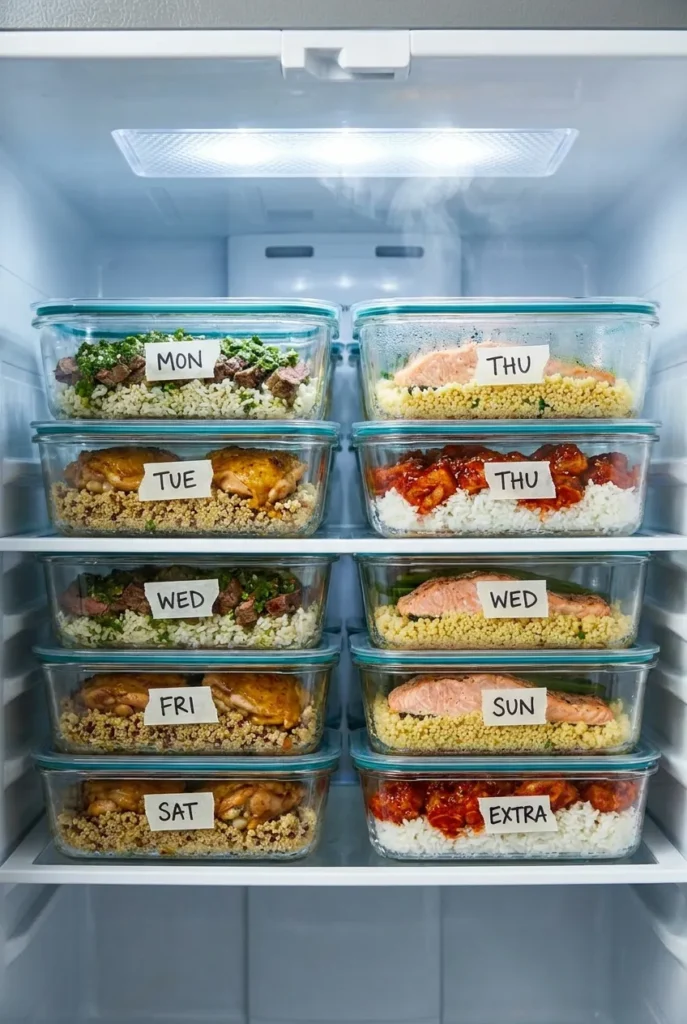
Now the food safety part most blogs skip. Per USDA guidance, perishable food left out more than 2 hours must be discarded, and that window drops to 1 hour when the outdoor temperature is above 90°F. In practical terms: if you’re grilling at 4 PM on a 92°F July afternoon, your meat needs to be in a sealed container in the fridge by 5 PM, not sitting on the patio table while you finish your drink. I time my grill session so the last batch comes off the grate and goes directly into containers within 15 minutes. USDA FSISUSDA FSIS
For reheating: glass containers, lid cracked, 2 minutes at 50% microwave power, stir, 1 more minute at 70%. The half-power start lets the protein come up to temperature without overshooting, which is the difference between juicy day-three chicken and rubbery day-three chicken. The USDA recommends reheating leftovers to an internal temperature of 165°F, so check the thickest piece with your thermometer if you’re particular. USDA FSIS
Fridge life summary:
- Chicken thighs and breast: 4 days
- Flank steak and carne asada: 4 days
- Salmon: 3 days
- Shrimp: 3 days
- Turkey burgers: 4 days
- Grilled vegetables: 4 days
- All sauces stored separately: 5 to 7 days
Freezer life: Most grilled proteins freeze well for 2 to 3 months if you portion them flat in freezer-safe bags with the air pressed out. Thaw overnight in the fridge, never on the counter.
Common Mistakes That Ruin Grilled Meal Prep
A few errors I see again and again, every one of them learned the hard way:
- Slicing chicken or steak too soon. Rest, rest, rest. Three minutes for chicken, five for steak, ten for flank or carne asada. Slicing hot meat dumps the juice on your cutting board, not in your container.
- Marinating in plastic bags overnight in summer heat. Use glass or a sealed container in the fridge, never a bag on the counter “to come to room temp.” Salmonella thinks summer counters are a vacation rental.
- Skipping the meat thermometer. Eyeballing grill doneness is how meal prep ends up either dry or undercooked. A $15 instant-read thermometer pays for itself in week one.
- Packing containers while everything is still hot. Steam condenses into water, water makes mushy rice. Let proteins cool 10 minutes uncovered before sealing, but don’t leave them out longer than 30.
- Skipping the sauce-separate rule. Sauces on the side, every time. A salad dressed Sunday is a soggy salad Wednesday.
Build Your Own Summer Grilling Meal Plan
Want to take the guesswork out? Here’s a four-week rotation that hits every recipe above without repeating proteins within five days:
Week 1: Honey garlic chicken (Mon-Tue), chimichurri flank steak (Wed-Thu), lemon herb salmon (Fri) Week 2: Gochujang chicken (Mon-Tue), Greek turkey burgers (Wed-Thu), Cajun shrimp (Fri) Week 3: Carne asada (Mon-Tue), pesto chicken kebabs (Wed-Thu), maple soy salmon (Fri) Week 4: Balsamic chicken veggie combo (Mon-Tue), honey garlic chicken (Wed-Thu), chimichurri flank (Fri)
Sunday becomes a 90-minute grill session twice a week (Sunday for Mon-Tue-Wed, and a 20-minute Wednesday refresh for Thu-Fri). Total weekly cost lands between $26 and $32 per person for five lunches. If you want a deeper system, our Sunday meal prep guide walks through the full workflow including grocery shopping order and prep sequence.
If your grill is broken, the apartment ban hits, or you just want an indoor backup, my sheet pan chicken and veggies meal prep replicates 7 of these 10 recipes in a 425°F oven with similar texture results.
FAQ: Summer Grilling Meal Prep
How long does grilled chicken meal prep last in the fridge? Properly cooled and sealed in an airtight container within 2 hours of cooking (1 hour if it’s above 90°F outside), grilled chicken keeps 4 days at 40°F or below. Salmon and shrimp are shorter at 3 days, ground meats like turkey at 4 days.
Can you meal prep grilled food for the entire week?
Yes, but not in a single Sunday cook. Most grilled proteins peak in texture at days 2 to 4. For a full Mon-Fri lineup, do a Sunday grill for Monday through Wednesday and a quick Wednesday refresh for Thursday and Friday. Shrimp and salmon should always be on the second cook.
How do you reheat grilled meat without drying it out?
Microwave at 50% power for 2 minutes, stir or flip, then finish at 70% for another minute. The lower-power start lets the inside warm before the outside overcooks. For salmon and shrimp, a 90-second hit at 60% power is usually enough. Add a teaspoon of water or broth to the container before reheating to create steam.
What is the safe internal temperature for grilled meal prep meat?
Poultry (all cuts, including ground) should reach 165°F, ground meats should reach 160°F, and beef, pork, lamb, and veal steaks, chops, and roasts should reach 145°F with a 3-minute rest. Salmon and other fin fish should hit 145°F. Always check with an instant-read thermometer at the thickest point. USDA
What meats are best for summer grilling meal prep?
Chicken thighs lead because of fat content and forgiveness on day three. Flank steak, skirt steak, and ground turkey are close behind. Salmon is the best fish option for reheating. Avoid lean chicken breast on its own for week-long prep; it dries out by day 3 unless you marinate aggressively.
Can I grill meal prep food in advance and freeze it?
Yes. Most grilled proteins freeze well for 2 to 3 months when portioned flat in freezer bags with air pressed out. Thaw overnight in the fridge before reheating. Grilled vegetables freeze less well; their texture turns watery. Stick to roasting or grilling vegetables fresh each week.
Is summer grilling actually healthy for meal prep?
Grilling lets fat drip away from the meat, which lowers total fat per serving compared to pan-frying. It also adds zero added oil if you grill on a clean preheated grate. The high-protein, controlled-portion structure of meal prep on its own supports most health goals. The main caution is to avoid charring meat heavily; minimize char by using indirect heat for thicker cuts and flipping more often. For full food safety guidelines on grilling temperatures, cross-contamination, and outdoor handling, the USDA FSIS grilling and food safety resource covers every scenario in depth. ugaUSDA FSIS
Save This for Your Next Sunday Prep
That’s the full system: ten recipes, one Sunday workflow, five flavor pivots, and the storage rules that keep grilled meat eatable through Friday. Save this post to your Pinterest meal prep board so you have the macros and cost-per-serving handy at the grocery store. If you cook one this week, the honey garlic chicken thighs are the easiest entry point and the recipe with the highest reader save rate.
Pair this rotation with our rice and grains meal prep guide so the base under every protein stays fluffy through day four. Summer’s the easiest season to fall in love with meal prep again. Grill once, eat well all week.