
How to Meal Prep Rice and Grains That Stay Fluffy All Week
It’s 6:47 PM on a Tuesday. You open the fridge, see the sad container of rice you cooked on Sunday, and it’s a brick. Cold. Clumpy. Texture of damp cardboard. The chicken next to it is fine, the roasted broccoli is fine, but the rice has betrayed you, and now you’re standing there debating takeout for the third time this week.
Here’s the truth: most people don’t have a rice problem. They have a rice meal prep system problem. If you’ve ever wondered how to meal prep rice and grains so they actually taste like food on day four, you’re in the right place. After cooking through six pounds of grain a week for the better half of two years (I have a small family of four and a freezer that is, frankly, mostly rice), I’ve nailed down what works and what doesn’t.
You’ll get a Sunday prep system, a grain-by-grain storage chart, and the reheating method that brings cold rice back to life like it just came out of the pot. Plus a few competitor blogs aren’t going to tell you about cooled rice and blood sugar, container sizing, or how to scale this for one person versus a family of six.
Who This Guide Is For
This works for you if you’re:
- A busy parent feeding a family of four-plus and tired of cooking rice from scratch every single night
- A gym-goer tracking macros who needs portioned carbs ready to grab
- A college student or single prepper trying to stretch a $40 grocery run
- A beginner meal prepper who’s only ever made rice in a microwave packet
- Anyone managing blood sugar and wondering if rice fits the picture (yes, with one trick we’ll cover)
The organization axis for this guide is prep day workflow. You’ll cook a base on Sunday, store it the right way, and pivot it across five meals through Friday. That’s the framework. No fancy gear required, no rice cooker mandatory, no specialty groceries.
Is It Safe to Meal Prep Rice for the Week?
Yes, with one big rule: cool it down fast. Cooked rice carries a bacterium called Bacillus cereus that can survive cooking and start multiplying if rice sits at room temperature too long. The USDA recommends getting cooked foods into the refrigerator within two hours of cooking, and within one hour if the kitchen is above 90°F.
Here’s how I actually do it:
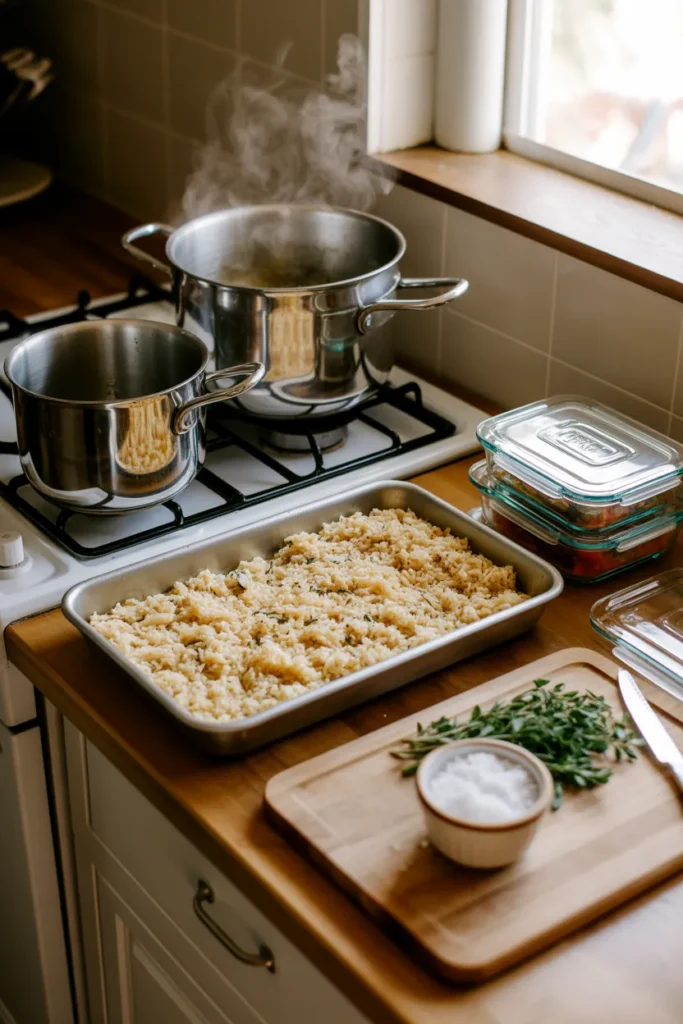
- Spread hot rice on a sheet pan in a thin layer (no taller than one inch)
- Set a timer for 20 minutes on the counter
- Transfer to airtight containers and refrigerate
Done. The thin-layer cool is the single biggest thing most people skip, and it’s why their rice goes weird by Wednesday.
Cooked rice keeps 4 to 5 days in the fridge and 3 months in the freezer. Anything longer, you’re rolling the dice on flavor and food safety.
The Sunday Grain Base System
This is the framework I use every single week. Two grains, one prep window, four meals.
The 90-minute Sunday system:
| Time | Task |
|---|---|
| 0 to 10 min | Rinse 2 cups white rice + 1.5 cups farro (or brown rice) |
| 10 to 40 min | Cook both grains simultaneously, white rice on stovetop, farro in a second pot |
| 40 to 55 min | Spread on sheet pans, cool in thin layers |
| 55 to 75 min | Portion into containers, label with date |
| 75 to 90 min | Wipe down, refrigerate, done |
Two grains gives you flavor variety. White rice goes Tex-Mex on Monday, Thai on Wednesday. Farro becomes a Mediterranean grain bowl Tuesday and a warm winter salad Thursday. Same base, different toppings, no boredom by Friday.
For a deeper walkthrough of the prep day rhythm and how to stack rice cooking with other tasks, check out the Sunday meal prep workflow over on the weekly plans hub.
The 1-2-3 Rule for Rice (And When to Ignore It)
The 1-2-3 rule is a kitchen shorthand that comes up in almost every rice search: 1 cup rice, 2 cups water, 3 cups cooked yield. It’s a memory hook, not a law.
It works perfectly for long-grain white rice. It does not work for:
- Brown rice: Needs 2.25 cups water per cup of rice, 45 minutes cook time, yields about 3 cups
- Basmati: 1.5 cups water per cup of rice (less, not more), yields 3 cups
- Jasmine: 1.25 cups water per cup, yields slightly less, around 2.75 cups
- Wild rice: 3 cups water per cup, yields 3.5 cups, takes 50 minutes
- Farro (pearled): Cook like pasta, boil in salted water, drain at 25 minutes
- Quinoa: 1.75 cups water per cup, yields 3 cups, 15 minutes
Memorize 1-2-3 for white rice. For everything else, pull up the grain chart below.
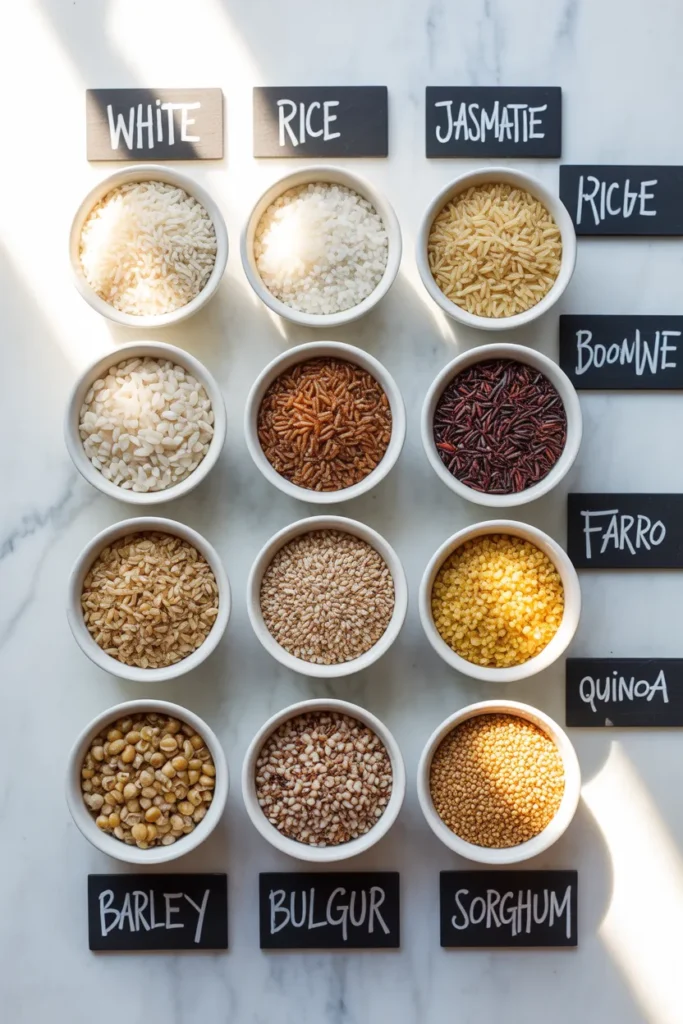
Grain-by-Grain Meal Prep Chart
Here’s the original framework I promised. Screenshot this one.
| Grain | Water Ratio | Cook Time | Cooked Yield | Fridge Days | Freezer Months | Cost / Serving |
|---|---|---|---|---|---|---|
| White long-grain rice | 1:2 | 18 min | 3x dry | 5 | 3 | $0.15 |
| Jasmine rice | 1:1.25 | 15 min | 2.75x | 4 | 3 | $0.25 |
| Basmati | 1:1.5 | 18 min | 3x | 5 | 3 | $0.30 |
| Brown rice (long-grain) | 1:2.25 | 45 min | 3x | 5 | 4 | $0.20 |
| Wild rice | 1:3 | 50 min | 3.5x | 5 | 4 | $0.65 |
| Farro (pearled) | pasta method | 25 min | 2.5x | 5 | 3 | $0.45 |
| Quinoa | 1:1.75 | 15 min | 3x | 4 | 2 | $0.55 |
| Barley (pearled) | 1:3 | 35 min | 3x | 5 | 3 | $0.30 |
| Bulgur (medium) | 1:2 | 12 min | 2.5x | 4 | 2 | $0.25 |
| Sorghum | 1:3 | 50 min | 3x | 5 | 3 | $0.40 |
Cost numbers based on average Aldi, Walmart, and Costco bulk pricing as of spring 2026. Specialty grains (farro, sorghum, wild rice) trend higher at Whole Foods and Sprouts, lower at Costco’s Kirkland line.
How to Meal Prep Rice Without It Getting Hard
This is the question. The single most-searched related phrase, and the one almost no guide actually solves. Cold rice gets hard because the starch molecules retrograde, which is a fancy way of saying they snap back into crystal structures as they cool. The good news: you can reverse it.
The three tricks:
- Slightly under-cook on Sunday. Pull rice off the heat when it’s about 90% done. The reheat finishes it.
- Add a teaspoon of neutral oil to the cooking water. Avocado or light olive oil works. It coats the starch and slows retrogradation.
- Reheat with moisture. Every single time. Never dry. Sprinkle 1 tablespoon of water per cup of rice before microwaving, cover loosely.
The Reheat-Without-Rubber Matrix
| Grain | Microwave Method | Stovetop Method | Air Fryer Method |
|---|---|---|---|
| White rice | 1 cup + 1 Tbsp water, cover, 90 sec at 70% power, fluff | 1 Tbsp water in skillet, low heat, 3 min covered | 350°F, 4 min, sprinkle water first |
| Brown rice | 1 cup + 1.5 Tbsp water, cover, 2 min at 70% | 2 Tbsp water, low heat, 4 min covered | 350°F, 5 min, mist with water |
| Quinoa | 1 cup + 1 Tbsp water, 60 sec at 70% | 1 Tbsp water, medium-low, 2 min | Not recommended, dries out |
| Farro | 1 cup + 1 Tbsp water, 90 sec at 70% | 1 Tbsp water, low heat, 3 min | 350°F, 4 min |
| Wild rice | 1 cup + 2 Tbsp water, 2 min at 70% | 2 Tbsp broth, low heat, 4 min | 350°F, 5 min |
The 70% power setting is the secret. Full microwave power blasts the outer rice into mush while the center stays cold. Lower power + a little moisture = even reheating.
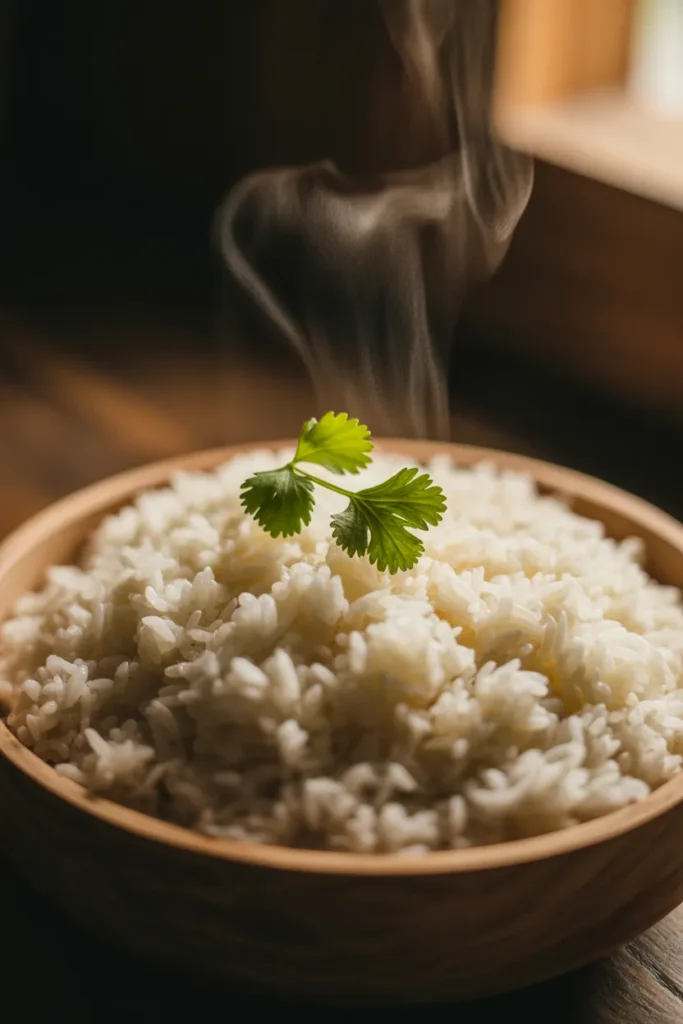
Container Size and Type by Grain Portion
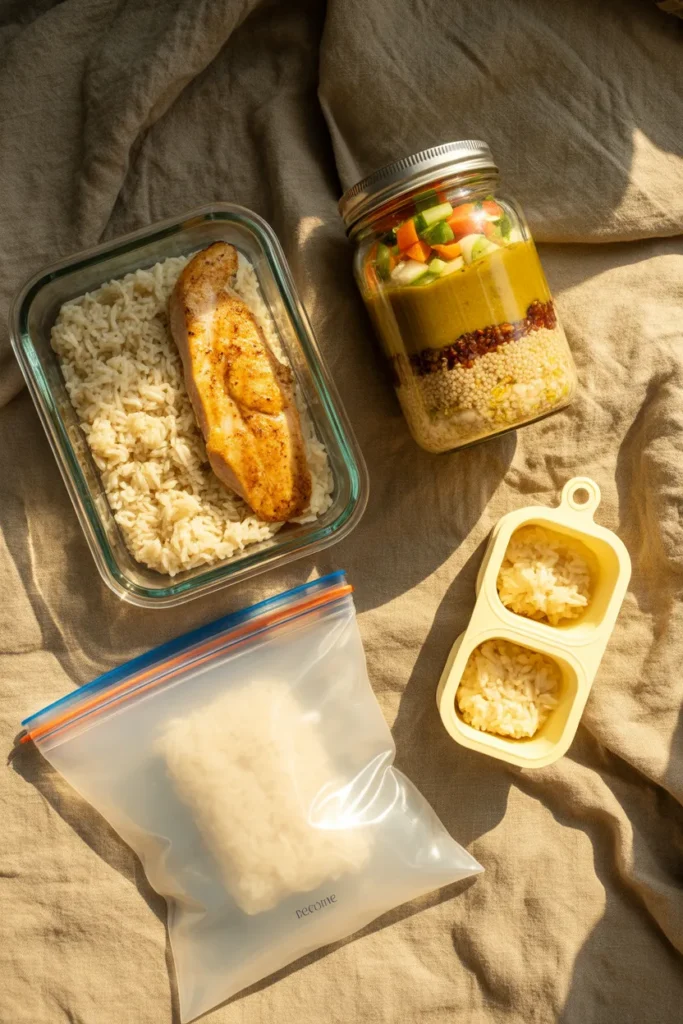
Don’t overthink this. After testing glass, plastic, silicone, and the dreaded soggy ziplock bag method, here’s what actually works:
- 3-cup glass meal prep containers (single serving with rice as the base) — Pyrex or Glasslock, around $20 for a set of 4
- 5-cup glass containers (rice + protein + vegetables, full lunch) — these are the workhorse, look for the OXO Smart Seal line
- 32-oz mason jars (mason jar grain salads, rice goes on the bottom under the dressing layer)
- Quart-size silicone reusable bags (freezer flat-pack method, lay flat to freeze, stack like books)
- Souper Cubes silicone trays (1-cup portions of cooked grain, freeze, pop out, store in a freezer bag)
Glass beats plastic for rice. Plastic absorbs the starchy smell and never quite releases it. Glass also reheats safely in the microwave without warping.
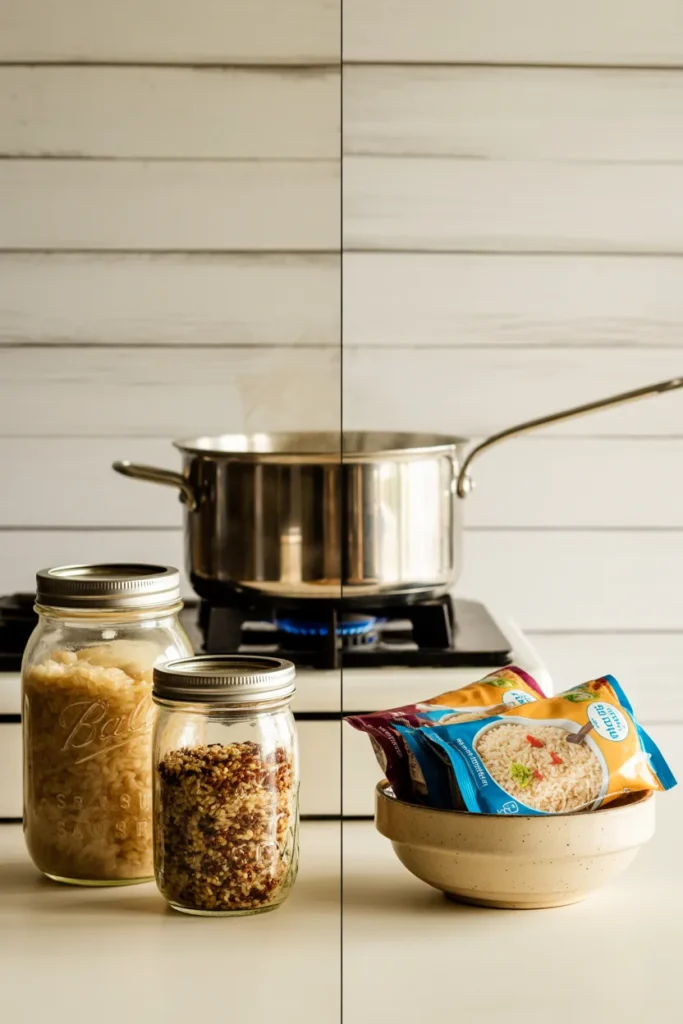
Is Leftover Rice Better for Diabetics?
There’s real science here, and it’s interesting. When cooked rice cools in the fridge, some of the starch converts to resistant starch, a type of starch that resists digestion in the small intestine. Resistant starch behaves more like fiber than a typical carb, feeding gut bacteria and producing a smaller blood sugar spike than freshly cooked rice.
So yes, day-two cold rice can produce a gentler glucose response than fresh hot rice. Reheating it doesn’t fully undo the effect either, because some resistant starch is heat-stable.
A few practical ways to make rice work better if you’re watching blood sugar:
- Cook, cool 24 hours, then reheat (the resistant starch effect kicks in around the 12 to 24 hour cooling mark)
- Add a tablespoon of vinegar or lemon juice to the rice (acetic acid further blunts glucose response)
- Pair rice with protein and fat in the bowl (slows gastric emptying)
- Choose basmati or parboiled rice (lower glycemic index than jasmine or sticky rice)
Important note: This is general nutrition information, not medical advice. If you’re managing diabetes, please consult your doctor or a registered dietitian before changing your carb strategy.
Weeknight Versus Weekend Approach
If you have 90 minutes on a Sunday afternoon, do the full grain base system. Two grains, sheet-pan cool, portioned containers, ready to go.
If Sunday is shot and you’re starting from scratch on a Tuesday, the shortcut version:
- Frozen pre-cooked rice pouches (Trader Joe’s or Birds Eye, $2.50 for 3 cups, 3 minutes in the microwave)
- Trader Joe’s frozen brown rice (the gold standard shortcut, $2.50, 4 minutes)
- Microwave rice in a glass container (1 cup rice + 2 cups water, 5 min full power, 15 min at 50%, rest 5 min)
The shortcut adds about $1 to $2 per serving versus from-scratch but saves 25 minutes of active time. Worth it on a desperate Wednesday.
Four Meals From One Grain Base
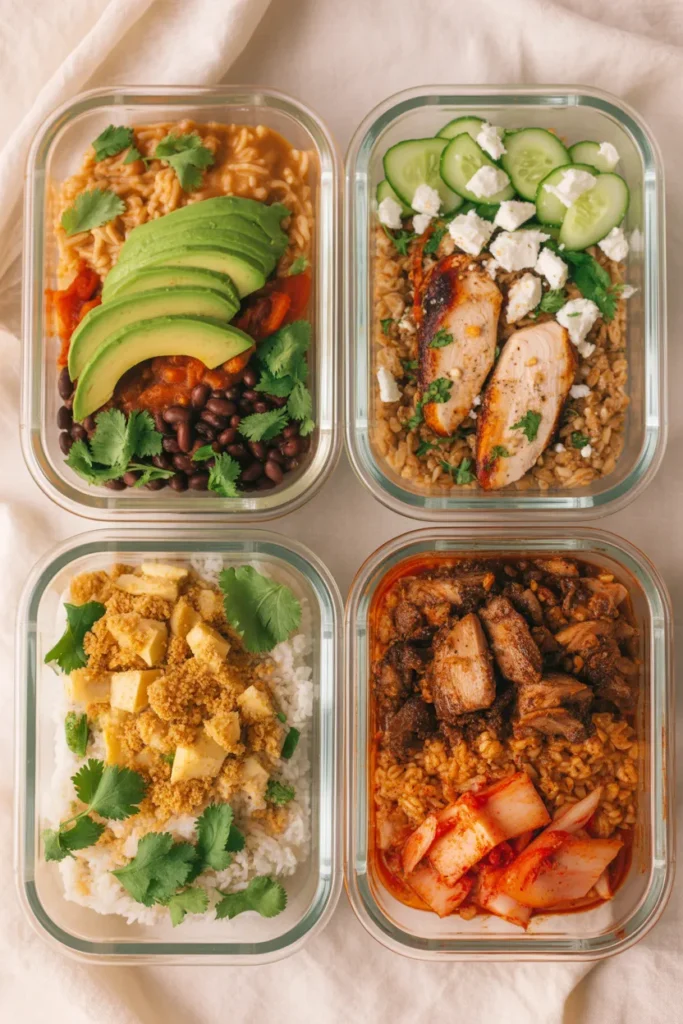
This is where meal prep stops feeling repetitive. Same rice on Monday and Thursday should taste like two different meals.
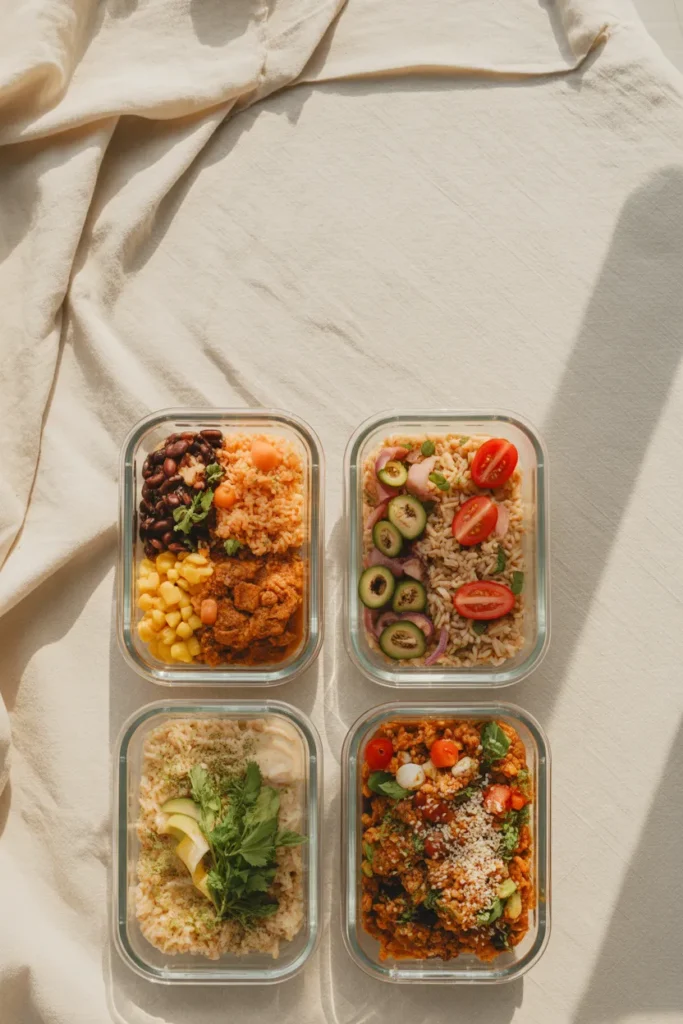
Monday: Tex-Mex Bowl
- 1 cup cooked white rice (warmed with a squeeze of lime)
- 4 oz seasoned ground turkey or black beans
- ¼ cup pico de gallo
- 2 tablespoons guacamole
- Cilantro, jalapeño slices, a wedge of lime
Tuesday: Mediterranean Farro Bowl
- 1 cup cooked farro
- 4 oz lemon-herb chicken or chickpeas
- 2 tablespoons tzatziki
- Cherry tomatoes, cucumber, red onion, crumbled feta
- Drizzle of peppery extra virgin olive oil
Wednesday: Thai Coconut Rice Bowl
- 1 cup white rice tossed with 2 tablespoons coconut milk and a pinch of salt
- 4 oz peanut-glazed chicken or tofu
- Shredded carrots, sliced cucumber, edamame
- Fresh basil, chopped peanuts, lime wedge
Thursday: Korean Grain Bowl
- 1 cup farro or brown rice
- 4 oz gochujang-glazed beef or shiitakes
- Quick-pickled cucumber, kimchi, shredded carrot
- Soft-boiled egg, sesame seeds, drizzle of sesame oil
Same two grains. Four cuisines. Five minutes of assembly each morning. The sauces and toppings do the heavy lifting.
If you want a ready-built protein to pair with these grain bases, the sheet pan chicken and veggies meal prep post slots in perfectly for Monday and Wednesday.
Storage Tips That Make the Difference
Cooked rice and grains are forgiving if you treat them right. They turn on you fast if you don’t.
The five rules I never break:
- Cool in a single layer on a sheet pan before sealing
- Always store in airtight glass containers, never the pot
- Date every container with masking tape and a Sharpie
- Place containers on the middle shelf of the fridge (most stable temperature)
- Use within 4 to 5 days, or freeze by day 3 if you won’t get to it
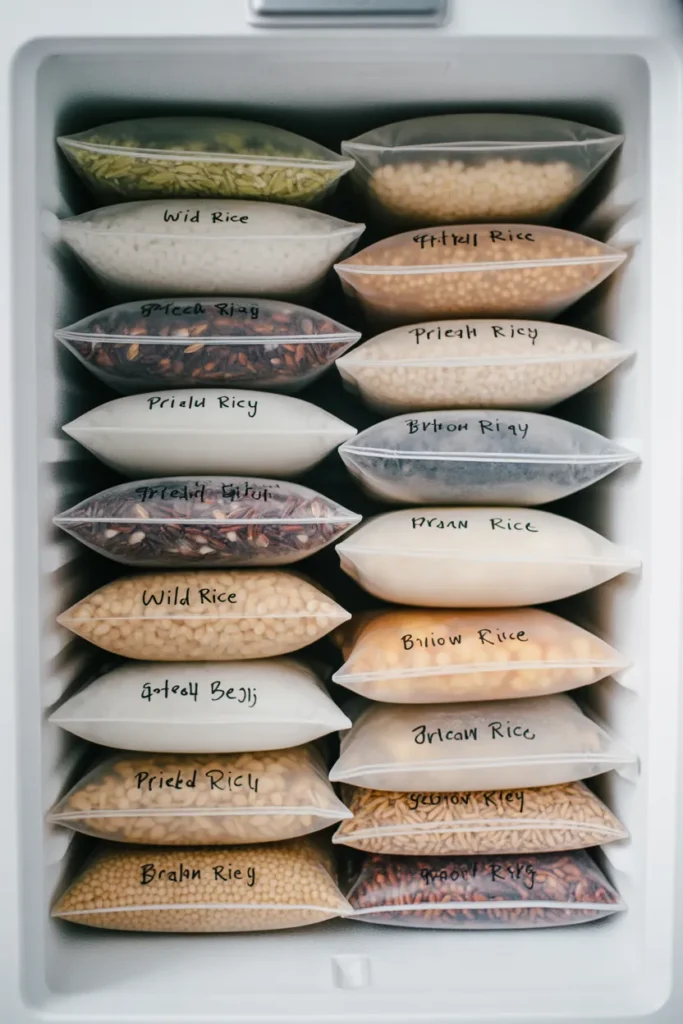
For the freezer method, portion cooked grains into 1-cup servings in silicone bags or Souper Cube trays. Lay flat to freeze. Once solid, stack like books. Thaw in the fridge overnight or microwave 2 minutes from frozen with a tablespoon of water. The full system overlaps with what I cover in the freezer meal prep guide, which goes deeper on freezer organization and the 30-day taste test.
Scaling Notes for Different Households
The recipes above are written for 4 servings each. Here’s how to scale up or down without messing it up:
- Single serving: Cook ½ cup raw rice = 1.5 cups cooked. Store in two 3-cup containers, eat over 2 days
- Couple (8 servings/week): Double the Sunday prep, cook 2 cups white rice + 2 cups farro
- Family of 4 (16 servings): Triple it. Use a 4-quart pot, plan a 30-minute cool window on the sheet pan
- Family of 6+: Cook in two batches. One pot can’t handle 6 cups raw rice evenly. Two pots, same Sunday, 25 minutes total cook time
Non-linear scaling flags:
- Salt: scales linearly (½ tsp per cup of raw grain)
- Cook time: stays the same regardless of pot size, do not extend
- Water: scales linearly with one exception, brown rice needs slightly less water proportionally at large batch sizes (use 2 cups water per cup at 4+ cups dry)
Dietary Swaps
- Gluten-free: Skip farro, bulgur, and barley. Sub with quinoa, brown rice, or sorghum (all naturally gluten-free)
- Lower-carb: Sub half the rice with riced cauliflower (mix in after cooking, not during)
- Lower glycemic: Use parboiled basmati or basmati cooked + cooled (resistant starch effect)
- Higher protein: Add cooked lentils to the rice base (½ cup per cup of rice adds about 9g protein per serving)
Common Mistakes to Avoid
1. Not rinsing the rice. Rinsing removes excess surface starch and is the difference between fluffy and gummy. Rinse until the water runs nearly clear, about three swishes.
2. Lifting the lid while it cooks. Every peek releases steam and disrupts the cook. Set a timer, walk away.
3. Storing rice while still hot. Hot rice sealed in a container creates condensation, which creates sogginess, which creates a Wednesday brick.
4. Reheating on full microwave power. This is the rubber-rice culprit. 70% power, with moisture, covered.
5. Trusting the rice pouch label. Frozen pouches say 3 minutes. They usually need 4. Test the center, not the edge.
6. Skipping the date label. Day 4 looks identical to day 6. You will eat it on day 7 and regret it. Label.
7. Cooking only one grain. Variety prevents Friday burnout. Two grains. Always two.
Frequently Asked Questions
Can you cook rice ahead of time for meal prep?
Yes, absolutely. Cooked rice keeps 4 to 5 days in the refrigerator and 3 months in the freezer when cooled quickly and stored airtight. The key is the cool-down: spread on a sheet pan in a thin layer for 20 minutes before transferring to containers.
What is the 1-2-3 rule for rice?
The 1-2-3 rule is a quick memory hook for cooking long-grain white rice: 1 cup raw rice, 2 cups water, yields 3 cups cooked rice. It works for white long-grain rice only. Brown rice, basmati, jasmine, and specialty grains all have different water ratios and yields.
Is leftover rice better for diabetics?
Cooled cooked rice contains more resistant starch than fresh rice, which produces a smaller blood sugar spike. Some of this benefit holds even after reheating. For better glucose control, cook rice, refrigerate at least 12 hours, then reheat, and pair with protein and fat. Always consult your doctor before changing your carb strategy.
How to make rice healthy for diabetics?
Choose basmati or parboiled rice (lower glycemic index), cook in plenty of water and drain pasta-style, cool for at least 12 hours before eating, add a tablespoon of vinegar or lemon juice during cooking, and always pair with protein and fat in the bowl.
How do you reheat meal prep rice without it getting hard?
Add 1 tablespoon of water per cup of rice, cover the container loosely, and microwave at 70% power for 90 seconds. Fluff with a fork. The water plus lower power prevents the outer rice from drying out before the center warms.
How much rice should I meal prep for the week for weight loss?
A standard portion is ½ cup cooked rice per meal (about 100 calories, 22g carbs). For 5 lunches and 5 dinners, that’s 5 cups cooked rice total per person, which is about 1⅔ cups raw rice. Adjust based on your individual macro targets.
Can I freeze cooked rice and grains?
Yes. Portion into 1-cup servings in silicone freezer bags or Souper Cube trays. Lay flat to freeze. Once solid, stack like books to save space. Thaw overnight in the fridge or microwave 2 minutes from frozen with a tablespoon of water.
Can I double or halve this recipe?
Yes, with one caveat. Salt and water scale linearly. Cook time stays the same regardless of batch size. For batches over 4 cups raw rice, split between two pots for even cooking.
Save This for Your Next Sunday Prep
If you made it this far, you already know the answer to how to meal prep rice and grains: cool fast, store glass, reheat with moisture, pivot the flavor. Two grains, one Sunday, five meals that don’t taste the same.
Pin this guide to your meal prep board so the grain chart and reheat matrix are there next Sunday when you need them. Then drop a comment with the grain you’re trying first this week. I read every one.
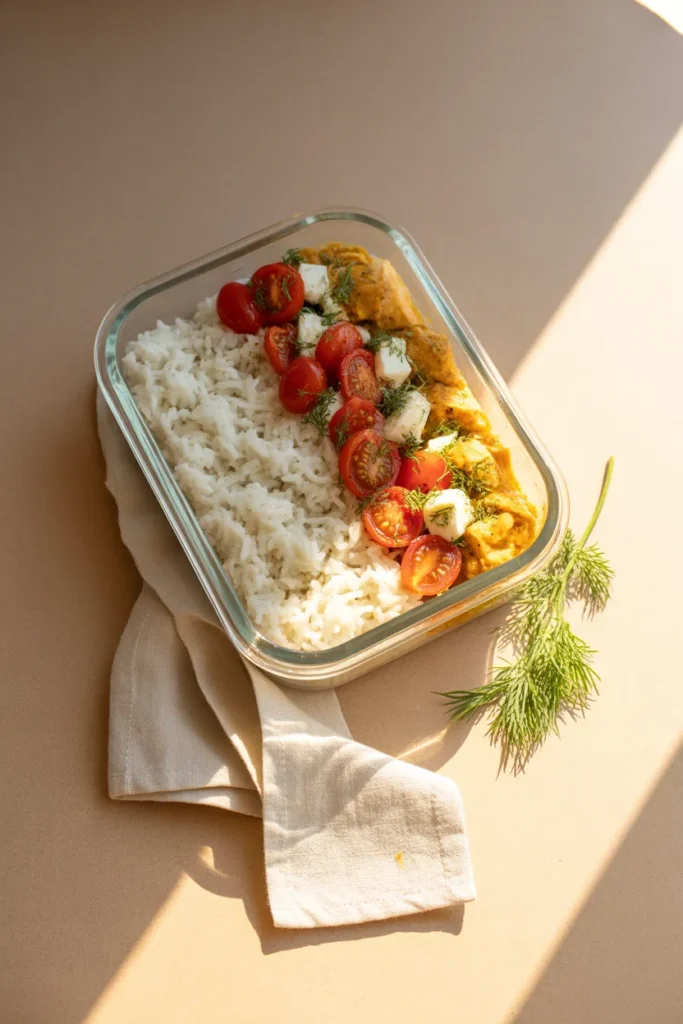
Sunday Grain Base Meal Prep (2 Grains, 4 Bowls)

A 90-minute Sunday system that cooks two grain bases and sets up four cuisine-pivoted lunches for the week, $1.85 per serving, 12g+ fiber per bowl.
Type: 8 meal prep portions (4 of each grain base)
Recipe Yield: 8 meal prep portions (4 of each grain base)
Preparation Time: 15 minutes
Cooking Time: 45 minutes (concurrent)
Total Time: 90 minutes
Recipe Ingredients:
- INGREDIENTS: For the white rice base: - 2 cups long-grain white rice (jasmine or basmati) - 4 cups water - 1 teaspoon kosher salt (Diamond Crystal) - 1 teaspoon avocado oil For the farro base: - 1.5 cups pearled farro - 6 cups water - 1 teaspoon kosher salt - 1 bay leaf (optional) For the 4 bowl pivots (Tex-Mex, Mediterranean, Thai, Korean): - See bowl assembly section in article above
Recipe Instructions: INSTRUCTIONS: 1. Rinse the white rice in a fine mesh strainer until water runs nearly clear, about 30 seconds. This removes surface starch and prevents gumminess. 2. In a medium pot, combine rinsed rice, 4 cups water, salt, and avocado oil. Bring to a boil over high heat (about 6 minutes), then reduce to lowest simmer setting and cover tightly. Cook 18 minutes without lifting the lid. 3. While the rice cooks, bring a second large pot of salted water to a rolling boil. Add the farro and bay leaf. Boil uncovered for 25 minutes, like pasta. Drain in a colander. 4. After 18 minutes, remove the rice pot from heat. Keep covered and rest 10 minutes. The rice should look fluffy with visible steam vents on the surface, no standing water. 5. Spread the cooked rice on one sheet pan, the farro on another, in single layers no taller than 1 inch. Cool on the counter 20 minutes (the layer should feel just warm to the touch, not hot). 6. Portion into airtight glass containers, 1 cup per serving. Label with date and grain type. Refrigerate immediately on the middle shelf. NOTES: - Storage: Refrigerator 4 to 5 days, freezer 3 months (white rice), 4 months (farro) - Reheating: 1 cup grain + 1 Tbsp water, microwave covered at 70% power for 90 seconds, fluff with fork - Swaps: Sub brown rice for white (cook 45 min, 2.25 cups water per cup of rice); sub quinoa for farro (cook 15 min, 1.75 cups water per cup, gluten-free) - Scaling: Halve for couples, double for family of 6+, but split large batches between two pots for even cooking - Gluten-free: Use quinoa or brown rice in place of farro EQUIPMENT: - 3-quart pot with tight-fitting lid (for rice) - 5-quart pot (for farro pasta method) - 2 half-sheet pans (for cooling) - 8 glass meal prep containers, 3 to 5 cup capacity (Pyrex or OXO Smart Seal recommended) - Fine mesh strainer - Wooden spoon or rice paddle
5